
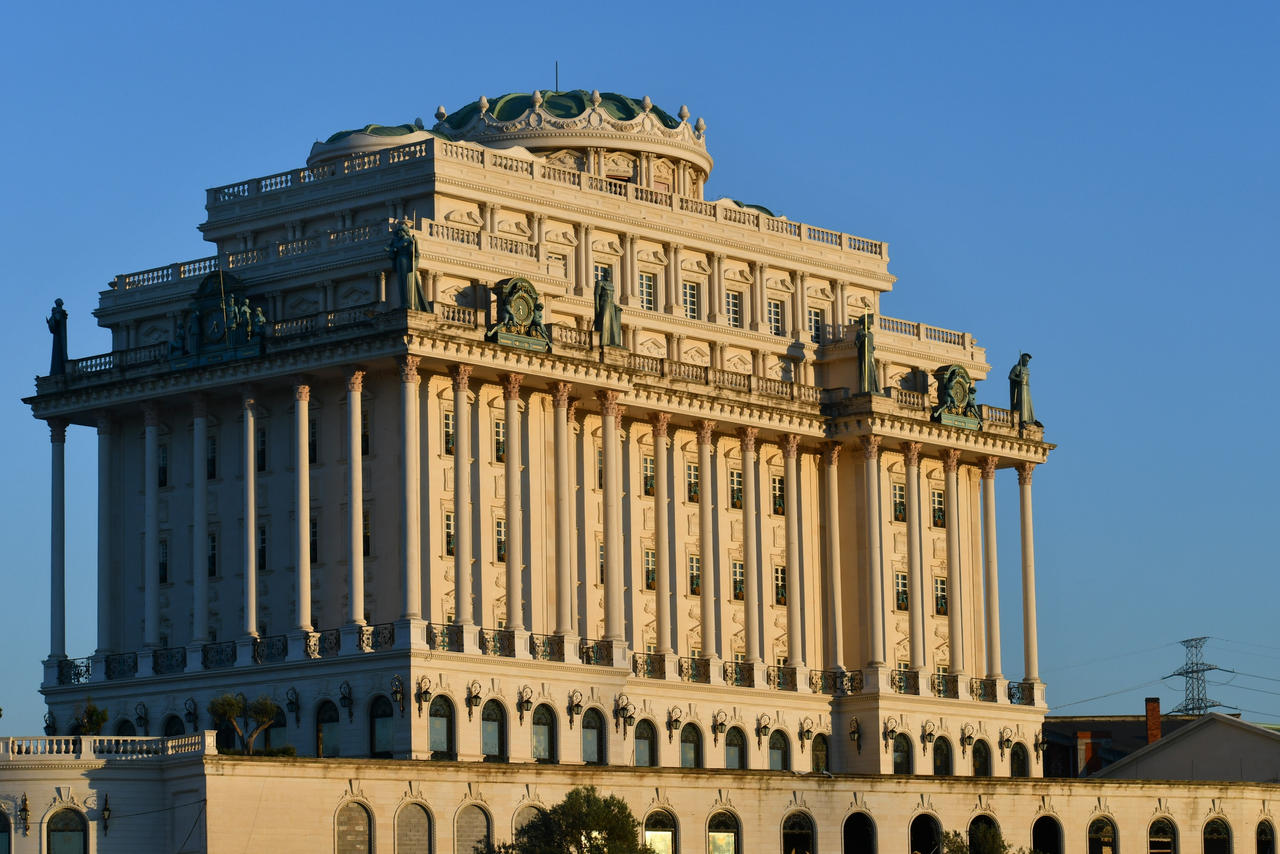
f you are driving along the Tirana–Durrës highway, you will not be able to miss the Amadeus Palace. It rises from a flat plain of Albanian landscape like one more misplaced royal fantasy, more like still from the back of a middle eastern fairytale than any reality. Gold plated domes, endless rows of arches, polished white marble, balconies with columns, it is breath-taking, surreal, and inexplicably strange. But, and here is the fun part, it is completely empty.
The first stone of Amadeus Palace was laid in 2011, when Albania was riding high on ambitious new architectural plans to create mega-monuments and touristic attractions by inviting foreign investment into its developing tourism economy. This was meant to be among the country’s proudest attractions – a luxurious five-star hotel that was meant to drive the Albanian tourism market. And in appearance, it did just that. It is a monument of bling, adorned with a valiant posture gleaming in the sun. But beyond its gates, silence reigns.
The Architecture: Between fantasy and identity
Amadeus Palace is an architectural puzzle. It does not fit into one particular style, it fuses elements of neo-Baroque, oriental influences with neoclassical elements, creating a theatrical semblance of imperial exaggeration. The gold-colored dome is reminiscent of Islamic and Middle Eastern architecture, while the symmetric arrangement of the building and its colonnades suggest that of European palaces. The interior is peculiarly wide and echoey hallways with extravagant mouldings, chandeliers and an abundance of different marbles heaped upon one another. No two rooms are quite the same. Some rooms are done in soft beige and creams, while others are produced in stark black and white. Then you have columns that are twisted, fluted, and golden. It is a visual over-indulgence that is both mesmerizing and baffling at the same time. It is difficult to ascertain whether this design was ever meant to signify Albanian culture, or if it was just a figment of the mind brought to life, a fantasy with no script or purpose.
A hotel without guests
The building has all the hallmarks of a hotel: huge reception spaces, meandering corridors filled with guest rooms, and expansive ballrooms. The guest rooms have variety with some appearing as quaint and intimate spaces while others are grand and suite-like. However, nothing has ever welcomed a guest.
Why?
That’s the million-dollar question. Rumors abound, of course. Some have said it was truly never intended to open, and that it had other purposes for nefarious or non-disclosed reasons. Others have referenced legal wrangling issues, that permits had been stopped, or that there simply wasn’t a viable market for something so luxurious in the location.
Behind this grand ambition are Besim Elshani and Elisabeta Gjoni, the couple behind “Amadeus Group”. Elshani is a businessman of Kosovar-Albanian descent now residing in Slovenia, and he has had a combination of luxury projects completed and projects that have not seen completion. Their vision was to create a place where art and hospitality would merge together, a landmark for the region, if you will. But with all the leakiness of a grape fruit, the project came to a halt for reasons that have never been fully revealed. Some say expenses took off, others suggest bureaucratic hurdles emerged. Regardless, the palace remain frozen in time.
What does it stand for?
For many locals and tourists Amadeus Palace has become a symbol. For some it stands for lost opportunity, a luxury time capsule of a prosperous endeavor never realized. For others it is a celebration of ambition, a symbolic representation of how far Albania has come, and how far it will still have to go, to establish an authentic identity in tourism and design.
But perhaps the greatest value of Amadeus Palace is in its mystery. It provokes questions. Questions of purpose, questions of aesthetics, questions of planning. It reflects the complex relationship Albania has with modernity, wealth, and image-making.
As Besim Elshani said in an interview once, “Our vision was not to build a hotel, but a monument of dreams — where art, culture and hospitality would unite to create history. Now it stands quiet, but the story isn’t over.”
This extended silence provides a moment of reflection for all of us. It pushes us to contemplate the tenuous balance between what is possible and aspiration. And to realize that sometimes the most important tales are those that weren’t fulfilled. Amadeus Palace may stand silent for now, but its true voice is the inquiry and dream it instills.