
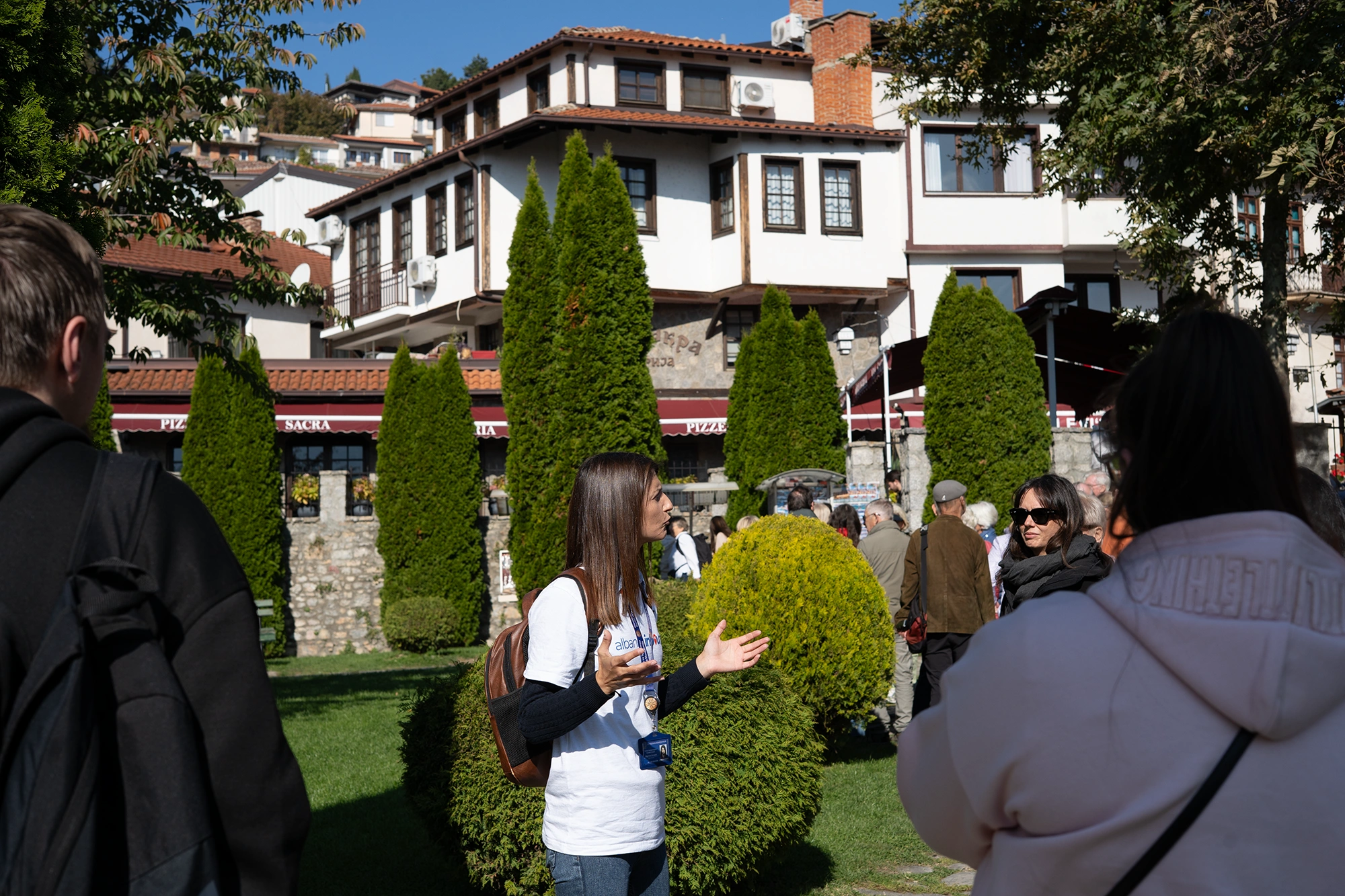
In Albania, light settles on stone in a special way. It does not merely sit on and touch surfaces, it glides slowly through thick walls, reflects off tiles, filters through small wooden windows, and gently fills the space with a serenity that somehow feels anachronistic to contemporary times. The interaction of stone and light gives traditional Albanian architecture a sense of being more than a visual sensation; it is an experience, a way of feeling time or living slowly.
Berat – The city where every window tells a story
Referred to as the “city of a thousand windows,” Berat is the quintessential example of the harmony between Mediterranean light and a country of stone. The whitewashed dwellings that ascend the hill are almost like a collective orchestra, playing in silence, in tune with the sun. The stone walls, red roofs, and windows aligned with the hillside create a landscape that has seemingly remained unchanged for hundreds of years.
Strolling along the cobblestone streets of Mangalem or Gorica is an experience akin to being in a painting that is continuously illuminated differently with every sunbeam that passes.
Berat is more than a museum city, it is a living experience of serenity. One understands why, when sitting on stone terraces, with the scent of the Osum River carried on the pleasant evening breezes, time is measured in sunbeams, not by watches.
Gjirokastër – Stone that tells history
Gjirokastër greets visitors with a brilliant stone landscape in the south. The city is recognized as a UNESCO World Heritage Site and its material is its story. Dark gray stones of the roofs create an exhilarating landscape, reflecting the Mediterranean sun like metal.
The stone towers, steep streets, and sheltered courtyards interpret the Albanian reality, with a house being a world unto itself, built, and adorned across generations.
For the visitor, Gjirokastër is a journey into every wooden door, every arched window, every courtyard double-filled with flowers illuminates a lifestyle valuing minutia, detail, and the dancing of light.
Theth – The silence of the North
Located in the north among the jagged mountains is Theth, one of the most gorgeous villages in the Albanian Alps. Stone here has a different feel: the temperature is cold, it’s rough, it weaves into wild nature. The houses of Theth, with their cold stone walls and steep timber roofs, are designed to get people through the long and harsh winters, while keeping them warm inside.
In this quiet village where silence is paramount, the morning light brightens the peaks and flows gently into every window. Theth is for those who want the freshest spirit of nature and live life at its natural pace.
Dhërmi – Mediterranean light on white stone
In the southwestern part of the country where the mountains meet the sea, Dhërmi retains one of Albania’s loveliest coastal villages.
Narrow streets wind between white stone houses, while the scents of olive trees and sea salt linger in the air. The light here is distinctly different, strong, sparkling, translucent, and seems to turn every wall into a vibrant canvas at all times of the day.
The evening sunset, as solar light fades behind the Ionian Sea, brings the meaning of Mediterranean calm into focus, the feeling of calm does not need words. Just light.
A way to live, not just to see
The stone of Albania exist not only as remnants of their past, but as invitations to live mindfully. In these homes, light does not merely have aesthetic meaning, it becomes a part of life, a cadence that pushes you to slow down, look, and breathe. To traverse Berat, Gjirokastër, Theth, or Dhërmi alongside stone is to travel inward, where stone speaks of endurance, and light, of ephemeral beauty in every moment.
Therefore, when you have the opportunity to visit Albania, please do not see it simply as a summer vacation. Come instead with an eye toward traveling with stone and light; a place where architecture speaks silently, and meaningfully.