
Tired of Europe’s overcrowded beaches and overpriced cities? There’s a hidden corner of the Mediterranean with Greek-style coastlines and prices that feel like a forgotten era. It’s time you discovered Albania, where the heart of its coastal magic beats along the stunning Albanian Riviera.
Summary
- Albania blends sun-soaked Riviera beaches, UNESCO-protected hill towns, dramatic alpine landscapes, a colorful capital, and delicious, affordable cuisine.
- Base in lively Sarandë and day-trip to idyllic Ksamil; explore Ottoman-era heritage in Berat and Gjirokastër; hike Theth and cruise the Lake Koman Ferry; then dive into Tirana’s creative energy with Blloku and Bunk’Art.
- Expect warm hospitality, safety, and great value (about €40–60/day), with May–June and September as ideal months and a rental car best for reaching hidden gems.
- A perfect first week balances 3 days on the coast, 2 in the stone cities, and 2 in Tirana.
- The gateway to this sun-drenched coast is the city of Sarandë. Picture a lively, crescent-shaped bay buzzing with energy, where palm-lined promenades lead to waterfront restaurants serving grilled fish just pulled from the Ionian Sea. It’s the region’s main hub, a vibrant and convenient base for exploring all the best beaches in the Albanian Riviera.
- Just a short drive south lies the undisputed crown jewel: Ksamil. This is where the coastline transforms into something that many travelers say rivals the Caribbean. Picture yourself on a white-sand shore, dipping your toes into brilliant turquoise water as three lush green islands beckon from just offshore. For just a few euros, you can rent a small boat or paddleboard to find your own semi-private cove for the afternoon.
So, how do you choose between the two? The choice between Sarandë vs Ksamil for families or couples is simple: think of Sarandë as your energetic home base for dining and convenience, and Ksamil as your breathtaking day-trip destination for pure beach bliss. This strategy allows you to experience the lively hub and the tranquil paradise, giving you the perfect introduction to Albania’s incredible coast.
Step Back in Time: A Guide to Albania’s UNESCO Heritage Cities
While the coastline dazzles, Albania’s soul is often found nestled in its ancient hillsides. Two cities, both protected as UNESCO World Heritage sites, offer a breathtaking journey into a past rarely seen elsewhere in Europe: Berat and Gjirokastër. They are not just ruins, but living towns where centuries of history feel completely alive.
- First, there’s Berat, famously known as the “City of a Thousand Windows.” Here, brilliant white houses seem to climb over one another up a steep hill, their dark-framed windows gazing out like a thousand eyes. Wandering through the historic Mangalem quarter below the city’s castle feels like stepping onto a perfectly preserved film set, with every cobblestone alley leading to another stunning view of the Osum River valley below.
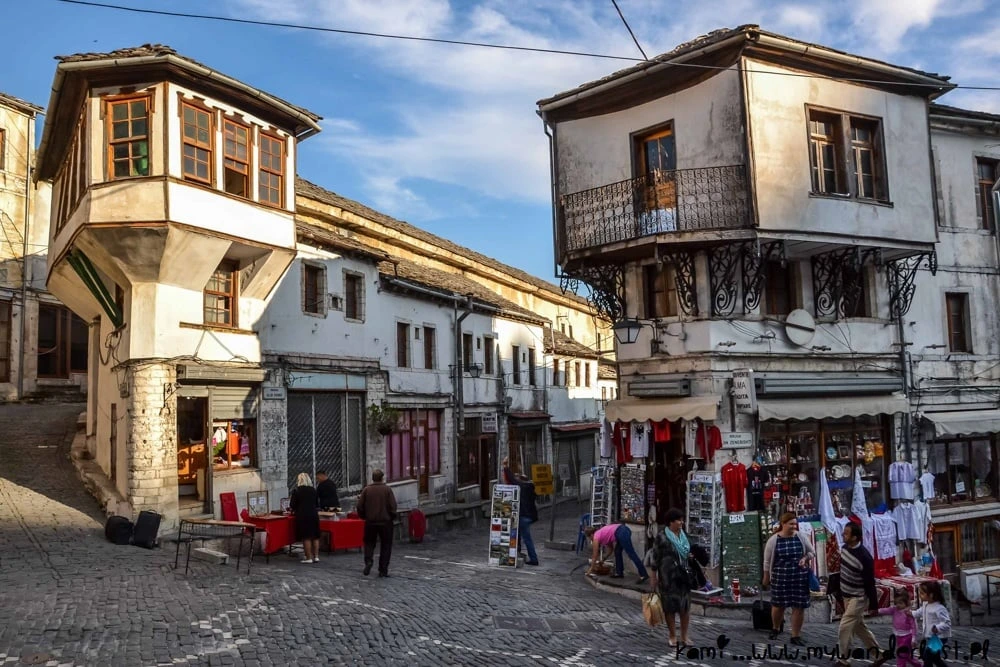
- A few hours south lies Gjirokastër, the “City of Stone.” The atmosphere here is different—more imposing and dramatic. The town is a masterpiece of unique, fortress-like houses covered in distinctive slate-stone roofs that shimmer after it rains. Dominating it all is a massive castle, one of the biggest in the Balkans, offering commanding views of the valley. Exploring its depths gives you a real sense of the city’s historic power.
What makes these places so special is that they are two of the last surviving examples of towns built in the architectural style of the Ottoman era. Visiting them is like walking through a living museum, offering a window into a world that has vanished almost everywhere else.
Beyond the Beaches: Epic Adventure in the Albanian Alps
If you thought Albania was just sun and sea, its northern region will completely change your perspective. Here, the landscape erupts into the jagged, limestone peaks of the Albanian Alps, also known as the Accursed Mountains. Despite their formidable name, these mountains are incredibly beautiful, offering scenery so dramatic it rivals anything you’d find in Switzerland, but with a wild, untouched feeling that’s purely Albanian. This is where you trade your flip-flops for hiking boots.
- At the heart of this adventure lies Theth National Park, a remote valley accessible by a winding mountain road. The village of Theth itself is a tiny, charming hub where stone houses with shingled roofs are scattered across green pastures. It’s the perfect base for some of Europe’s most rewarding hikes. A popular day-trek takes you from the village through lush forest to the “Blue Eye of Theth,” a stunningly clear, ice-cold spring that glows in brilliant shades of turquoise.
- Often, the journey is just as spectacular as the destination. To reach this region, many travelers take the Lake Koman Ferry, a trip frequently hailed as one of the world’s most beautiful boat rides. This slow-moving passenger ferry glides for three hours through a narrow, winding reservoir, surrounded on all sides by sheer, green-draped cliffs. It feels less like a commute and more like navigating a lost-world canyon.
This rugged northern region offers a profound sense of escape and raw nature that perfectly complements the historic charm and coastal relaxation found elsewhere. But Albania’s energy isn’t just found in its quiet mountains; it pulses strongest in its colorful, surprising capital.
A Guide to Tirana: Europe’s Most Colorful and Surprising Capital
After leaving the quiet mountains, you’ll feel Tirana’s vibrant pulse immediately. Once a city of uniform grey communist-era buildings, it has undergone a stunning transformation. A famous project in the early 2000s saw the city’s facades painted in a rainbow of bright colors, breathing life and optimism back into the streets. Today, a walk through the capital is a visual treat, where every corner reveals a new splash of creative energy, from street art murals to boldly painted apartment blocks. This is a city that chose to be cheerful, and its personality is infectious.
The heart of this modern energy beats strongest in the Blloku district. In an incredible twist of history, this neighborhood was once a forbidden zone, exclusively reserved for high-ranking communist officials and completely off-limits to the public. Today, it’s the complete opposite: the trendiest, most dynamic part of the city. The streets are packed with chic cafes, stylish boutiques, and lively cocktail bars where young Albanians gather day and night, making it the perfect place to soak up the city’s forward-looking vibe.
Yet, Tirana doesn’t hide its complex past; it transforms it. To understand the country’s decades of isolation, you can literally step inside a secret nuclear bunker at the Bunk’Art museums. These massive underground shelters, built by the former paranoid regime, have been converted into immersive history and contemporary art exhibits. Wandering through the maze of preserved rooms and eerie tunnels offers a fascinating glimpse into 20th-century Albanian life, connecting you to the story behind the country’s incredible revival.
What to Eat in Albania: A Delicious and Affordable Guide
Exploring Albania is a treat for your taste buds, too. The country’s cuisine is a delightful blend of Mediterranean freshness and hearty Balkan comfort, all at incredibly affordable prices. Imagine sun-ripened tomatoes, grilled fish straight from the Ionian Sea, and savory meats, often sourced from the very village you’re eating in. It’s simple, fresh, and deeply satisfying.
You’ll find a few national treasures on almost every menu.
- Be sure to grab a warm slice of Byrek , a flaky filo pastry filled with cheese, spinach, or meat—it’s the perfect on-the-go snack.
- For a classic dinner, order Tavë Kosi , a surprisingly comforting dish of tender lamb baked in a tangy, savory yogurt sauce.
- Another must-try is Fërgesë, a rich and creamy dip made from peppers, tomatoes, and fresh cheese, best scooped up with crusty bread.
Beyond the food, you’ll quickly encounter Albanian hospitality in the form of Raki. This potent, traditional fruit brandy is more than just a drink; it’s a symbol of welcome. Don’t be surprised if a local offers you a small glass—it’s a gesture of friendship, and accepting it is a wonderful way to connect with the culture.
From street-side snacks to sit-down meals, Albanian food is always flavorful and easy on the wallet, making it one of the hidden gems of European cuisine.
Your Albania Trip Planner: Essential Travel Questions Answered
- The most common question is, “Is Albania safe for tourists?” The answer is a resounding yes. Travelers consistently report feeling safe and welcomed, thanks in large part to besa, a deeply ingrained cultural code of honor and hospitality. This tradition means that guests are treated with the utmost respect and protection, making for a warm and inviting atmosphere almost everywhere you go.
- Albania’s affordability is another of its main draws, allowing you to have a rich experience without breaking the bank. For a comfortable trip, a travel budget of around €40-60 per day is a realistic target for a solo traveler covering accommodation, delicious meals, and local activities. While the official currency is the Albanian Lek (ALL), planning in Euros makes it easy to grasp just how far your money can go compared to other Mediterranean destinations.
- To make the most of your adventure, timing and transportation are key. The best time to visit Albania is during the shoulder seasons—from May to June or in September. You’ll enjoy beautiful, sunny weather perfect for both beaches and hiking, but with far fewer crowds than in July and August. To truly unlock the country’s hidden gems, from secluded coves to mountain villages, renting a car is highly recommended. It gives you the freedom to explore at your own pace.
How to Plan Your Perfect First Trip to Albania
You now have a map to three distinct Albanian experiences: the sun-drenched coast, the timeless stone cities, and the dramatic alpine mountains. The question is no longer if you should visit, but how you will design an unforgettable journey.
Consider a perfect week:
- start with three days of bliss on the Riviera,
- then spend two days stepping back in time in Gjirokastër and Berat.
- Finish your trip by soaking up the colorful, vibrant energy of Tirana for two days before heading home, full of memories.
The perfect trip isn’t about seeing everything—it’s about answering what calls to you most. Is it the turquoise water, the echoes of history, or the crisp mountain air? Your own excitement is your best compass. Choose your starting point, and you’ll have taken the first real step from dreaming about this hidden gem to actually experiencing it.
Q&A
Question: Should I base myself in Sarandë or Ksamil on the Albanian Riviera? Short answer: Use Sarandë as your energetic, convenient base and visit Ksamil for dreamy beach days. Sarandë is a lively hub with a crescent-shaped bay, palm-lined promenades, and waterfront restaurants grilling fish from the Ionian—ideal for dining, amenities, and day trips along the coast. Ksamil, a short drive south, is the crown jewel for white sand and turquoise water with three green islets just offshore; rent a small boat or paddleboard for a few euros to find a secluded cove. For families or couples, this combo balances convenience (Sarandë) with pure beach bliss (Ksamil).
Question: What makes Berat and Gjirokastër unmissable? Short answer: They’re living Ottoman-era towns with distinct personalities and UNESCO protection. Berat, the “City of a Thousand Windows,” stacks white houses up a hillside below its castle, with the Mangalem quarter’s cobbled lanes opening to views over the Osum River. Gjirokastër, the “City of Stone,” feels grand and dramatic, with fortress-like homes capped by slate roofs and a massive hilltop castle (one of the Balkans’ largest) surveying the valley. Together they offer a rare, immersive window into an architectural world that has vanished in most of Europe.
Question: What kind of adventure awaits in the Albanian Alps? Short answer: Expect jagged limestone peaks, remote valleys, and hikes that feel both wild and accessible. Base in Theth National Park, where a scattering of stone houses sits in a green alpine bowl and trails lead through forests to the icy-turquoise Blue Eye of Theth. Getting there can be part of the magic: many travelers ride the Lake Koman Ferry—often hailed as one of the world’s most beautiful boat trips—gliding for three hours through a narrow reservoir walled by sheer, green-cloaked cliffs. It’s a raw, rejuvenating counterpoint to the coast and historic towns.
Question: Why is Tirana worth a stop? Short answer: It’s a colorful, creative capital that transforms a complex past into vibrant present-day energy. In the early 2000s, drab communist-era blocks were repainted in bold hues, and today murals and bright facades set a lively tone. The Blloku district—once a sealed enclave for party elites—is now the city’s trendiest area, packed with cafes, boutiques, and bars. To engage with history, step into the Bunk’Art museums, vast underground bunkers reimagined as immersive exhibits that connect Albania’s 20th-century story to its modern revival.
Question: Is Albania safe and affordable, and when should I go and how do I get around? Short answer: Yes—travelers consistently report feeling safe and warmly welcomed, thanks in part to besa, a cultural code of honor and hospitality. It’s great value: plan roughly €40–60 per day for a solo traveler covering stays, tasty meals, and activities; the currency is the Lek (ALL), but thinking in Euros helps with planning. Aim for May–June or September for sunny weather and fewer crowds than peak summer. To unlock secluded coves and mountain villages, renting a car is highly recommended. For a first week, try 3 days on the Riviera, 2 in Gjirokastër and Berat, and 2 in Tirana.