
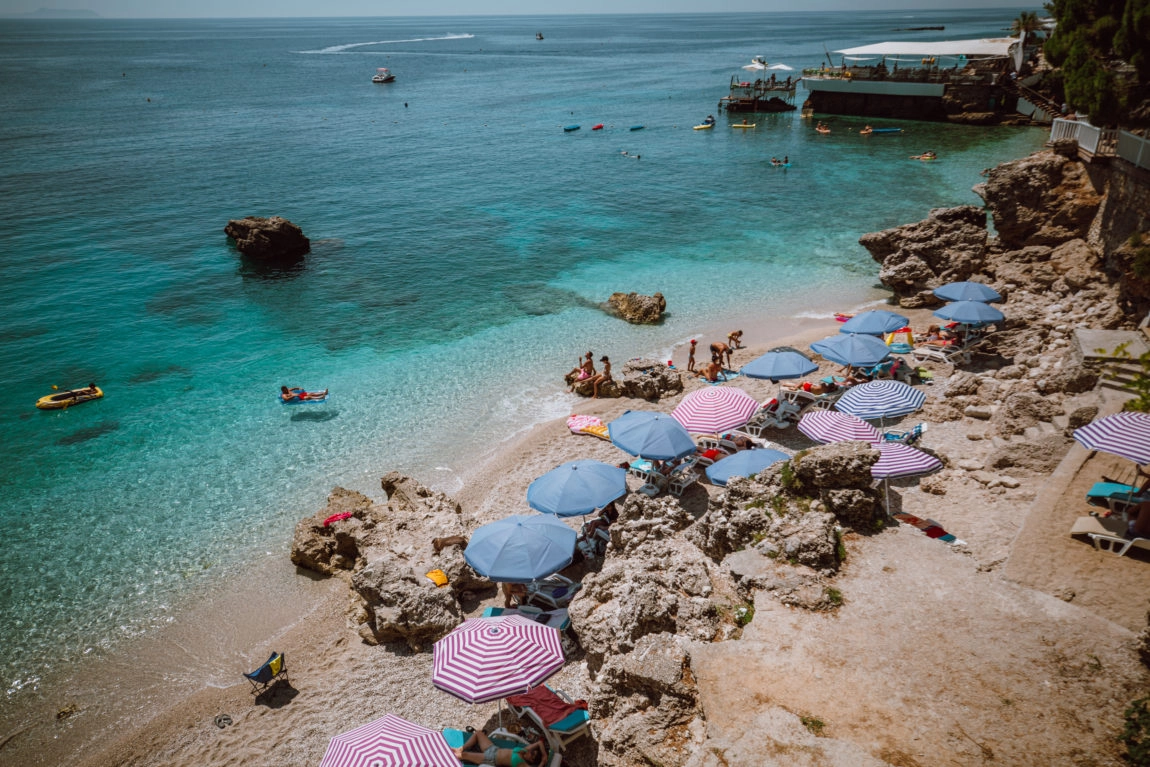
Photography Hotspots Albania: Discover Hidden Photo Gems
You’ve seen the turquoise waters of the Maldives and the dramatic peaks of the Swiss Alps—but what if you could capture both in one of Europe’s best-kept secrets? Photography hotspots in Albania are rapidly emerging as the ultimate budget-friendly alternative to the continent’s most expensive destinations. Here, you aren’t just taking quick snapshots; you are stepping into a vibrant visual frontier. Search interest for ‘Photography Hotspots albania’ and ‘photography hotspots albania’ keeps climbing as travelers seek affordable adventures with Albania scenic views.
Photographing famous landmarks often involves fighting aggressive crowds just to get a clean shot. Across breathtaking Albania scenic views, however, the “untouched” nature simply means there are far fewer tourists wandering into your frame. Embracing the “Inspired Explorer” mindset requires shifting your focus away from dodging photobombers and toward composing stunning landscapes across three distinct regions: the rugged northern Alps, the vibrant southern Riviera, and the central historic stone cities. For travelers curious about Albania landscape photography, these routes balance dramatic peaks with quiet coastlines.
Treating your trip as a purposeful photo-expedition guarantees your portfolio will stand out before the rest of the world catches on.
Summary
Albania delivers crowd-light, budget-friendly photography across three standout regions: the northern Accursed Mountains (Theth), the central stone cities of Berat and Gjirokastër, and the southern Riviera around Sarandë, Ksamil, the Blue Eye, and Butrint. This guide highlights when and how to shoot them best—golden-hour peaks, long-exposure waterfalls, polarization for glare-free springs, geometric framing in historic quarters, and silhouette/blue-hour seascapes. A lean gear list (wide lens, extra batteries, cleaning kit, CPL) and basic drone rules keep you agile and compliant on the trail. Suggested timing (May–June or September) and a sample weeklong flow help you build a distinctive Albanian portfolio before the crowds arrive.
Capturing the Raw Majesty of Theth and the ‘Accursed Mountains’

Tucked in Northern Albania, the Accursed Mountains offer some of Europe’s most dramatic scenery. Capturing these jagged peaks requires careful timing, as midday sunlight creates “flat” images without depth. By arriving during the Golden Hour, long shadows stretch across the valley, instantly revealing the rugged textures of the stone.
Beyond the towering peaks, exceptional landscape photography relies on the region’s vibrant waterways. To make the rushing cascades of the Grunas Waterfall look like smooth, flowing silk, you need to capture motion rather than freeze it. This “silk effect” uses a long exposure—simply keep your camera perfectly stable on a tripod while the shutter stays open for a few seconds to beautifully blur the moving water.
Plan your daily trek carefully to catch the best time to photograph Albanian Alps landmarks:
- Theth Church: Sunrise. The soft morning light perfectly separates the solitary stone roof from the dark, imposing mountains.
- Grunas Waterfall: Late morning. Wait for the sun to breach the steep canyon walls to illuminate the water’s mist.
- Blue Eye of Theth: Midday. Direct overhead sunlight is absolutely required to reveal the pool’s piercing turquoise colors.
When night falls, this isolated mountain valley becomes a stargazer’s dream. Theth registers exceptionally low on the “Bortle Scale”—a helpful system used to measure light pollution—meaning the Milky Way is clearly visible to the naked eye. You won’t need complex astrophotography settings for Theth National Park; just a steady tripod and a 15-second exposure will easily capture the cosmos.
Turning Berat’s ‘Thousand Windows’ and Gjirokastër’s Stone Streets into Geometric Art
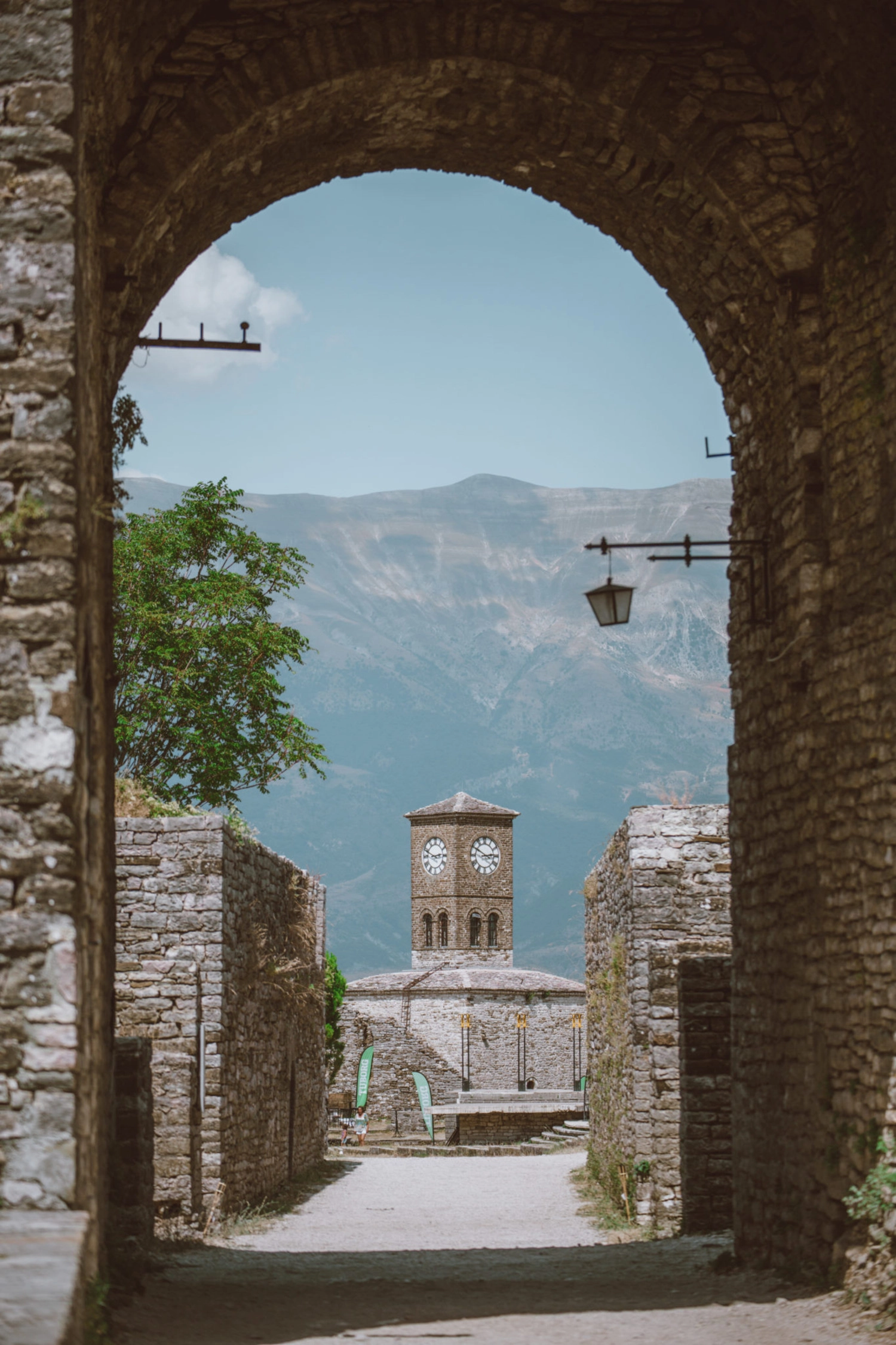
Stepping into central Albania feels like walking onto a carefully designed movie set. When capturing Ottoman architecture in Berat and Gjirokastër, the secret to a professional-looking shot lies in where you stand rather than what camera you hold. To photograph the famous “Thousand Windows” of Berat without distorting their scale, avoid shooting directly beneath them. Instead, walk across the Osum River to the Gorica Bridge to gain a sweeping, elevated perspective of the stacked white houses.
From this vantage point, the slow-moving water below offers a massive creative advantage. You can use the river’s glassy surface to mirror the hillside, instantly doubling the visual impact of the architecture. This is a perfect opportunity to practice framing—using foreground objects to draw a border around your main subject. By positioning the bridge’s stone railings at the edges of your screen, you create a natural “window” that guides the viewer’s eye straight toward the hillside.
Those iconic whitewashed walls do more than just look pretty; they actually help illuminate your photos. In photography, bright surfaces create what is known as natural bounce light. As the afternoon sun hits the historic facades, the white stone acts like a giant reflector, softening harsh shadows and casting a warm, even glow across the alleyways. You don’t need heavy flash equipment when the city itself bounces the perfect amount of light onto your subject.
Further south, Gjirokastër’s winding cobblestone paths provide another fantastic tool for geometric composition. These intricate stone patterns create strong leading lines in urban environments—visual paths that pull attention from the bottom of your photo deep into the background. Simply point your smartphone slightly downward, letting the silver stones guide the eye toward the towering fortress above.
Beating the Reflection: How to Photograph the Blue Eye and Butrint’s Ancient Walls

While mirroring works beautifully for city rivers, water reflections become your enemy when photographing what lies beneath. The mesmerizing Blue Eye spring is famous for its vibrant cavern, but bright sunlight often creates a blinding surface glare. To cut through this light and start capturing crystal clear waters, you need a technique called circular polarization. If you do not own special camera gear, simply hold a pair of polarized sunglasses directly over your smartphone lens; this instantly strips away the shiny glare, revealing the rich blues and greens hidden below the surface.
Elevation is the secret to capturing the true depth of this natural wonder. Instead of battling the crowds down at the water’s edge, look for the small metal balcony built up the hillside to discover the best viewpoints. Shooting straight down from this high-angle platform lets your camera peer directly into the dark, pupil-like center of the spring without distortion.
Once you finish capturing this woodland magic, a short drive south introduces a completely different textural playground. Photographing the ancient ruins of Butrint National Park provides the perfect chance to master natural framing. Think of the crumbling Roman arches and overgrown doorways as ready-made borders for your pictures. By stepping back and letting these stone windows surround a distant towering column, you instantly give the photo a striking sense of depth.
The Riviera Glow: Finding the Ultimate Sunset Spots in Sarandë and Ksamil
If you are wondering where the best sunset spots in Sarandë are, the undisputed champion is Lëkurësi Castle. Position yourself at this hilltop fortress 45 minutes before the sun dips below the Ionian Sea. Arriving early gives you the perfect window to capture the bay soaking up the warm, vibrant light before the crowds arrive and twilight sets in.
Capturing dramatic coastal photos often means playing with shadows. When framing the Ksamil islands, try silhouetting—a simple technique where your subject becomes a dark, solid outline against a bright sky. Just tap your smartphone screen on the brightest clouds to instantly darken the islands in front of you. After the sun vanishes, stick around for the “Blue Hour,” that peaceful 20-minute window when the sky turns a deep, moody cobalt. Timing these twilight photos with low tide is a brilliant move, as the receding water reveals rough rock textures that add striking detail to your foreground.
To guarantee you capture these vivid colors, prioritize these top 3 sunset spots on the Riviera:
- Lëkurësi Castle: Best for sweeping panoramic city views.
- Ksamil Beach 7: Ideal for silhouetting offshore islands.
- Borsh Beach: Perfect for capturing empty, endless coastline reflections.
Pack Light, Shoot Right: Essential Gear for Balkan Trails and Drone Flying Rules
Trekking the Accursed Mountains requires a smart approach to your bag. Rather than hauling heavy equipment, carry one versatile zoom lens to handle both wide valleys and tight cobblestone streets. Since coastal winds bring dust and sea spray, protecting your equipment from the elements is vital for landscape photography gear.
Balance weight with capability using the ‘Inspired Explorer’ Packing List:
- Wide lens: Captures massive mountain scales and deep gorges.
- Extra batteries: Cold high-altitude air drains power fast.
- Cleaning kit: Easily wipes away salty coastal mist.
- CPL filter: Acts like polarized sunglasses for your camera to cut water glare.
Taking to the sky means learning the drone flying regulations for tourists in Albania. While casual flying is widely accepted, launching your drone in protected National Parks requires advance permission from the local Civil Aviation Authority. A simple online registration beforehand keeps your flights legal.
Your 7-Day Roadmap to the Perfect Albanian Portfolio
You no longer need crowded destinations for breathtaking shots. By understanding the contrast between Northern and Southern Albania, you can confidently chart a route from the rugged Accursed Mountains down to the turquoise Riviera. To avoid harsh summer haze, plan your adventure for May, June, or September, when the natural light stays beautifully soft and shadows lend depth to ancient stone.
Instead of just snapping quick tourist photos, you can now frame history and nature with genuine intention. Pack extra memory cards, charge your batteries, and pick one spot from this list to make it the centerpiece of your next photo expedition.
Q&A
Question: When is the best time to visit Albania for photography, and how could I structure a 7-day trip?
Short answer: Aim for May–June or September to avoid harsh summer haze and crowded scenes while enjoying soft, depth-rich light. A simple one-week flow: start in the north (Theth and the Accursed Mountains) for golden-hour peaks, silky waterfalls, and stargazing; move to the central stone cities (Berat, Gjirokastër) for geometric compositions and bounce-lit alleys; finish on the southern Riviera (Sarandë/Ksamil) for Blue Eye clarity at midday, Butrint’s natural frames, and sunset/blue-hour seascapes. If you’re chasing sunsets, factor in Lëkurësi Castle, Ksamil Beach 7, and Borsh Beach.
Question: What are the must-know shooting tips for Theth and the Accursed Mountains?
Short answer: Time is everything. Shoot the Theth Church at sunrise for soft separation between stone and peaks; Grunas Waterfall in late morning when sun lightens the mist; and the Blue Eye of Theth at midday to unlock its turquoise. Use a tripod and a few-second shutter for the “silk effect” on waterfalls. After dark, Theth’s low Bortle rating means easy astrophotography—mount a steady tripod and start around a 15-second exposure to pull in the Milky Way without complex setups.
Question: How do I compose striking images in Berat and Gjirokastër?
Short answer: Step back for cleaner geometry. In Berat, cross to the Gorica Bridge for an elevated view of the “Thousand Windows,” then use the Osum River’s calm surface for mirror-like reflections and frame the scene with the bridge railings. Leverage the city’s white facades as natural reflectors that soften shadows and add a warm glow. In Gjirokastër, angle your camera slightly downward so the cobblestone patterns become strong leading lines guiding the eye toward the hilltop fortress.
Question: How can I beat glare at the Blue Eye and add depth to photos in Butrint?
Short answer: Cut water glare with circular polarization. If you lack a CPL filter, hold polarized sunglasses over your phone lens to strip shiny reflections and reveal the Blue Eye’s blues and greens. Skip the crowded edge and shoot from the small metal balcony above for a distortion-free, top-down view into the spring’s “pupil.” In Butrint, step back and use Roman arches and overgrown doorways as natural frames around distant columns to create immediate depth.
Question: What minimal gear should I pack, and what are the drone rules?
Short answer: Pack light but purposeful: carry one versatile zoom (to handle wide valleys and tight streets), bring extra batteries (cold and long days drain power), a cleaning kit (for dust and sea spray), and a CPL filter (to kill water glare). A tripod is invaluable for long-exposure waterfalls and night skies. For drones, casual flying is broadly accepted, but protected National Parks require advance permission from the Civil Aviation Authority; complete a simple online registration beforehand to stay compliant.