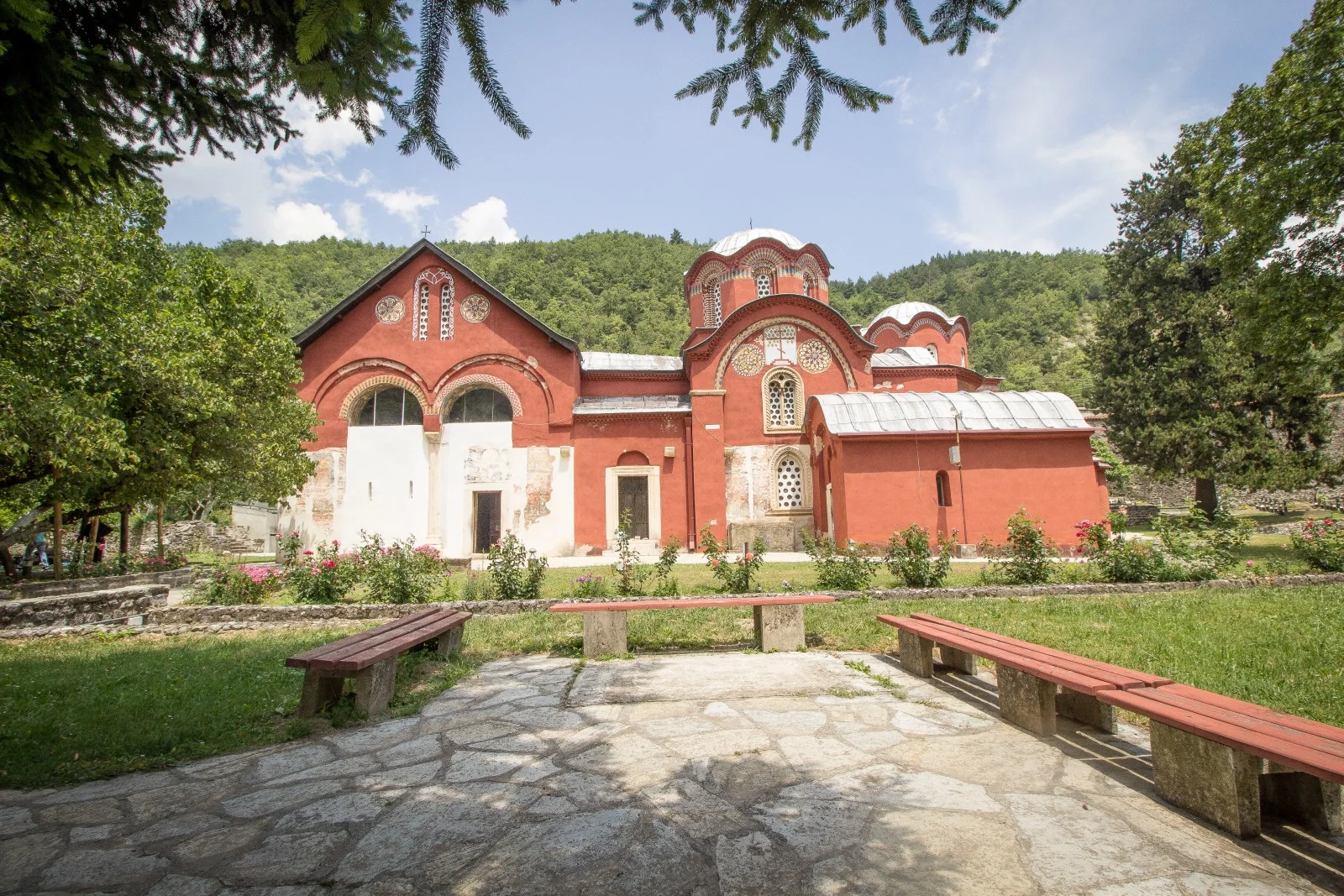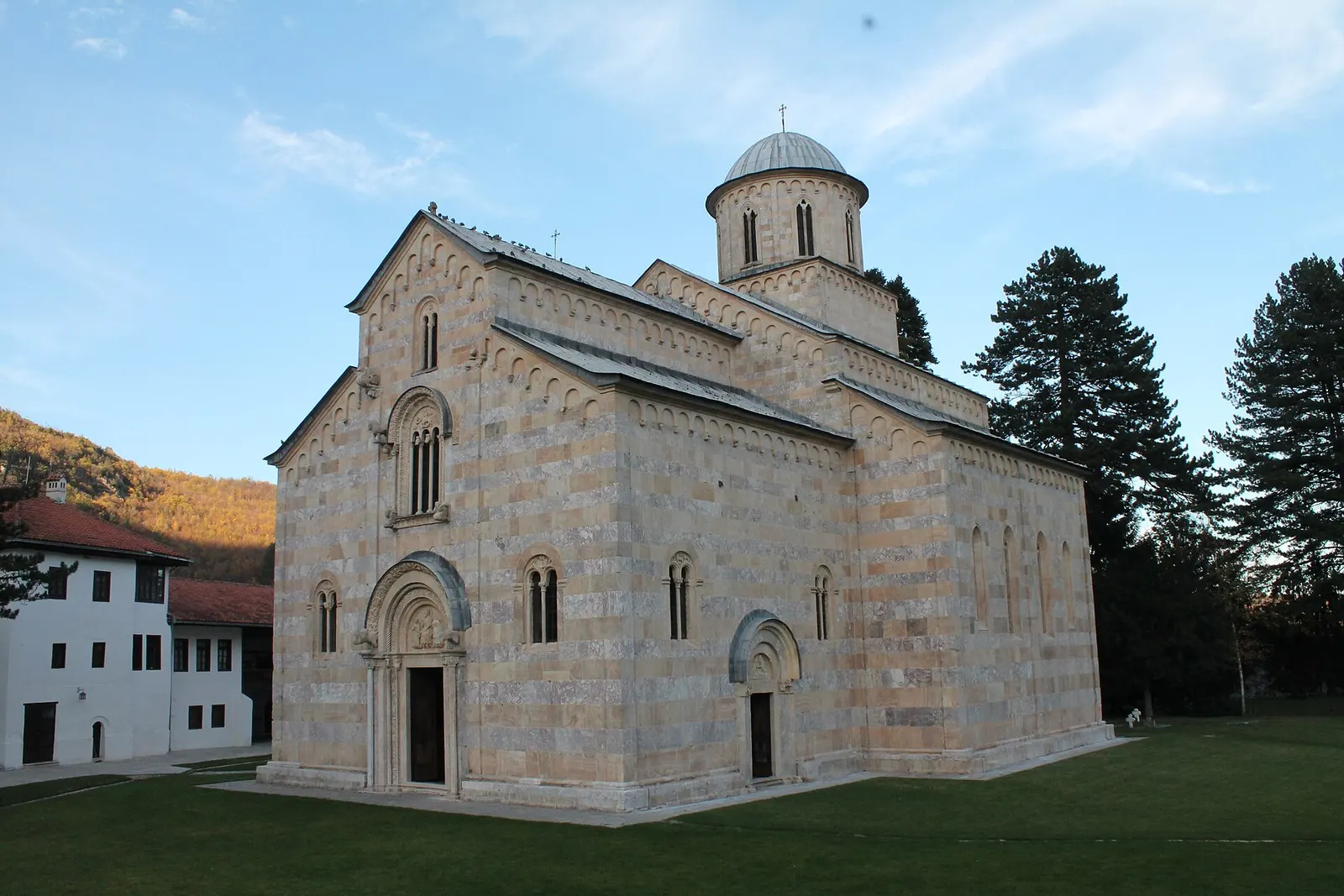
Construction began in 1327 under the Serbian king Stefan Dečanski and was completed by his son Stefan Dušan. The main architect was a Franciscan friar, Vita of Kotor, which helps explain the church’s blend of Romanesque and Byzantine traditions. With walls built in alternating bands of pale and pinkish marble, it is by far the largest medieval church in the Balkans, which is how it earned the name Visoki, meaning “high”. Since 2004 it has been part of the UNESCO World Heritage site Medieval Monuments in Kosovo.
The greatest treasure lies inside: one of the largest preserved collections of medieval frescoes in the region, with more than a thousand painted scenes and several thousand portraits covering the walls. Visitors can also see the carved stone portals and windows and the tomb of the monastery’s founder. Modest dress is expected, and it is worth bringing identification, as access to the monastery is supervised.
A visit to Visoki Dečani offers a rare and peaceful encounter with one of the finest achievements of medieval art in south-eastern Europe.