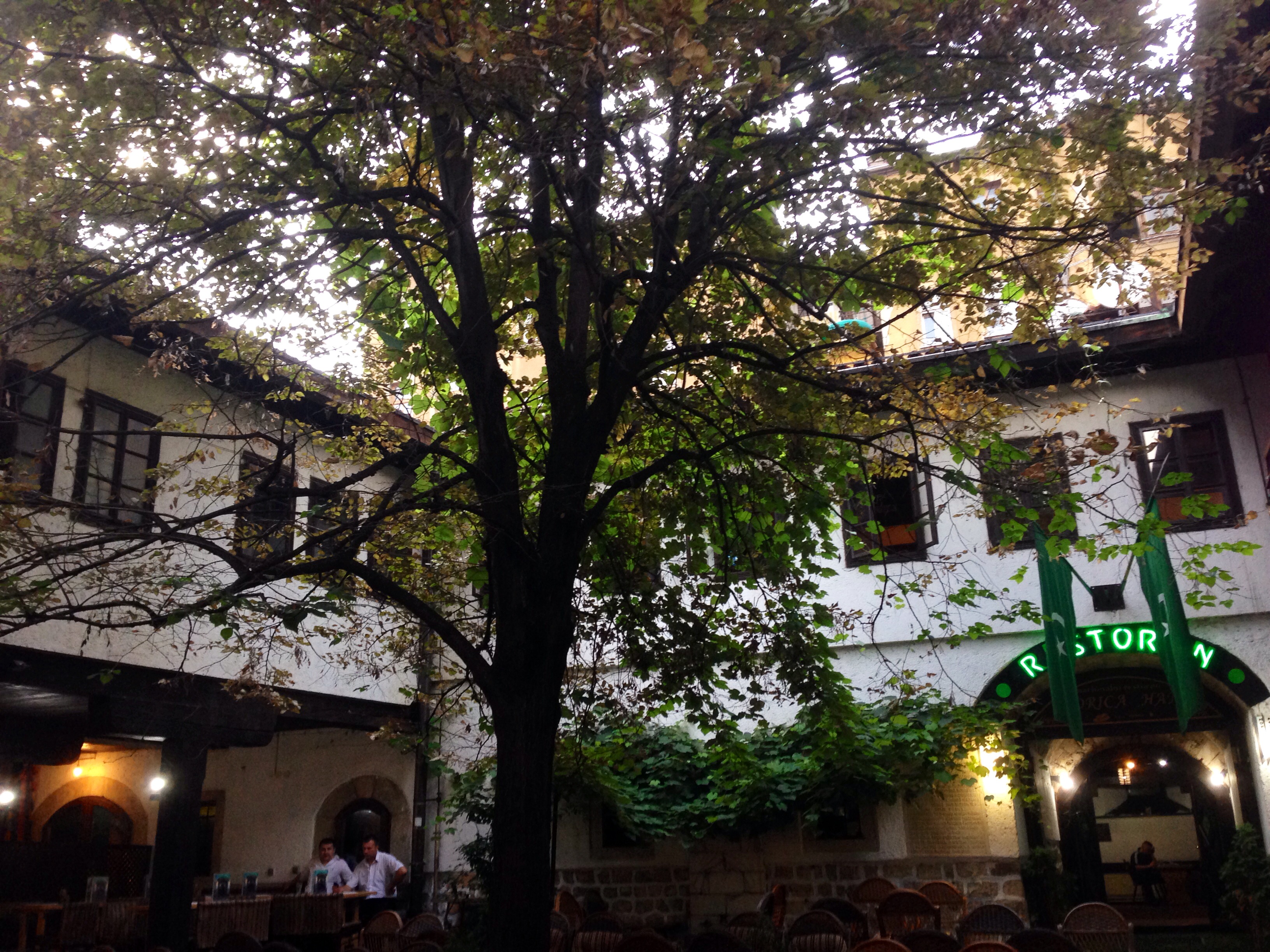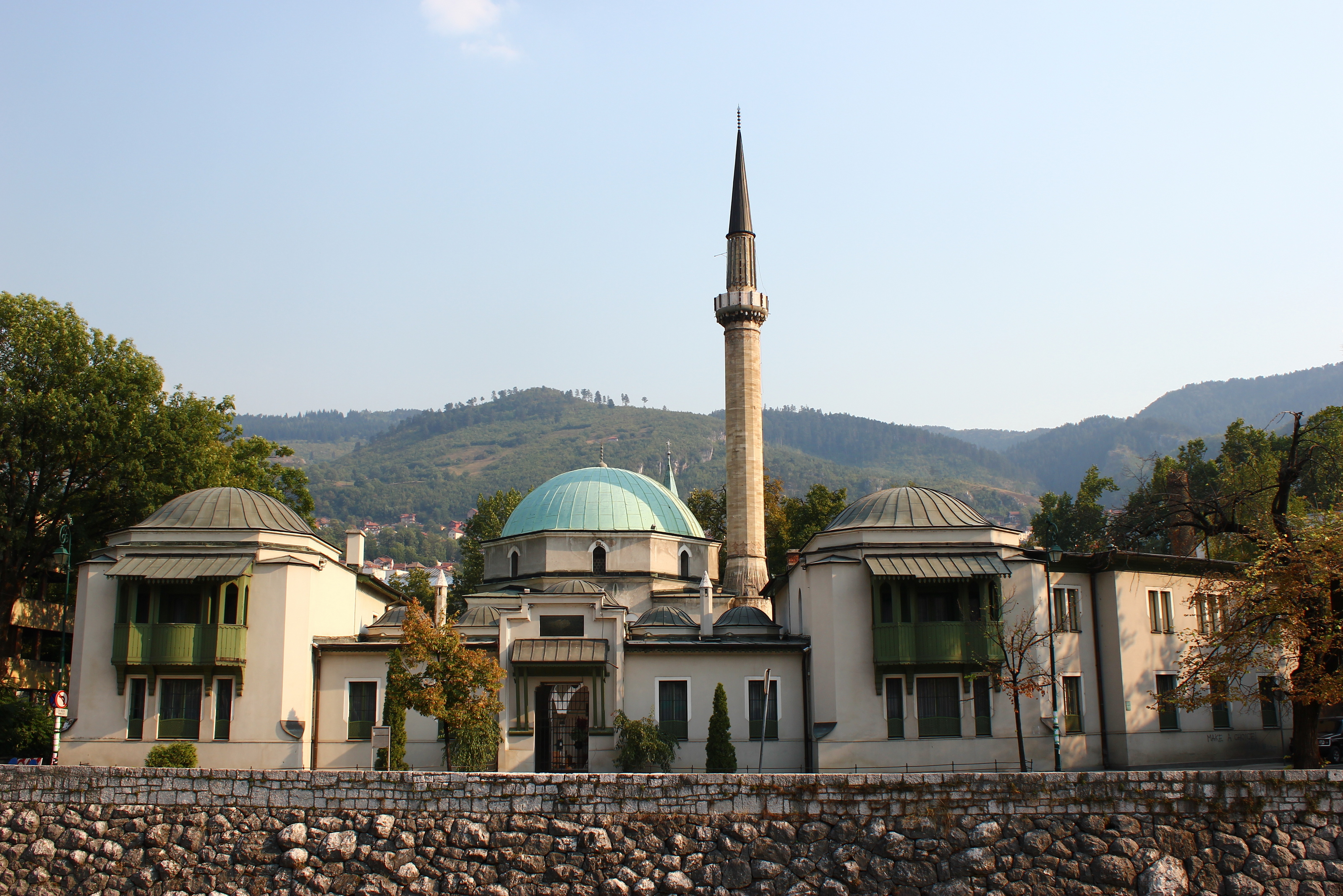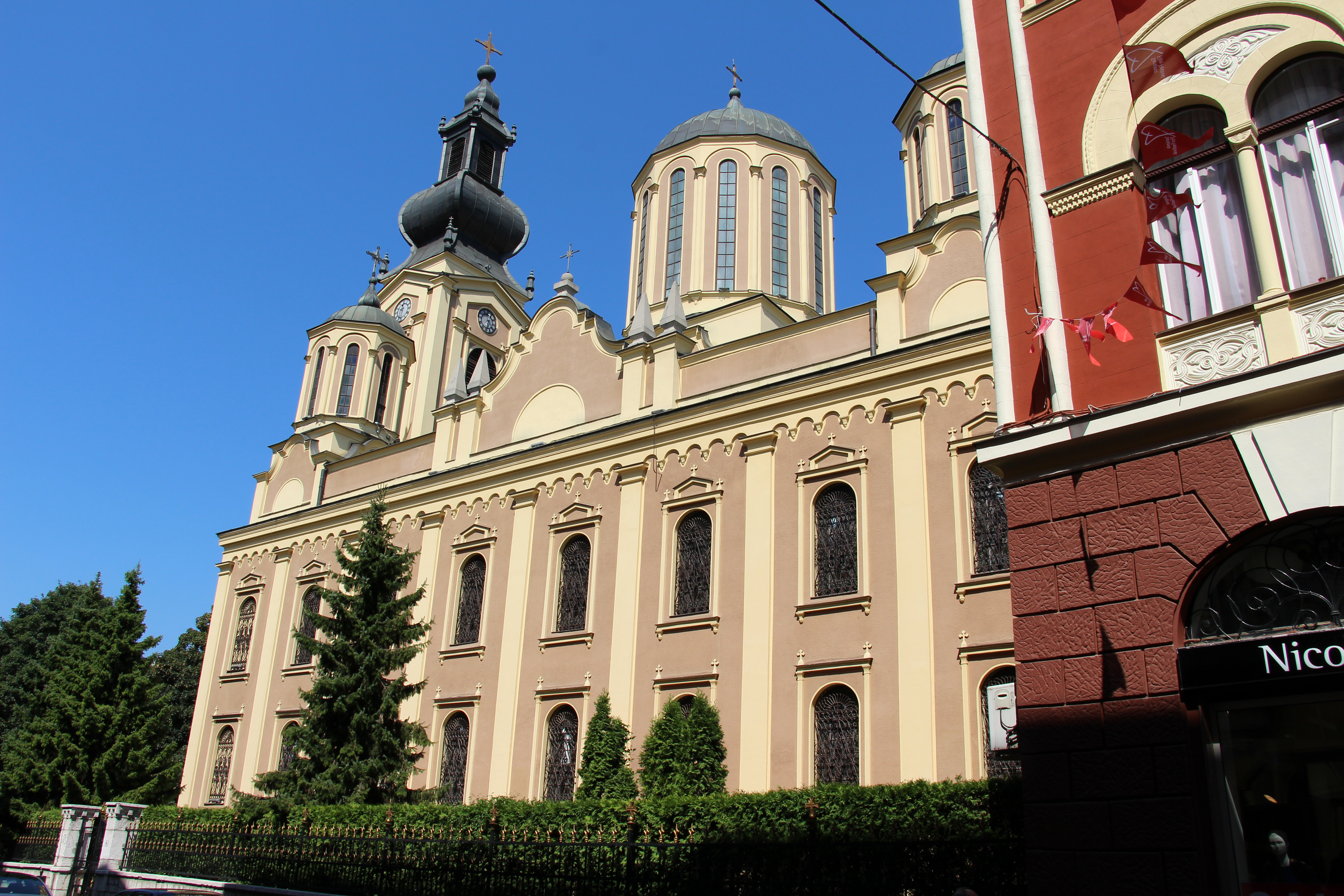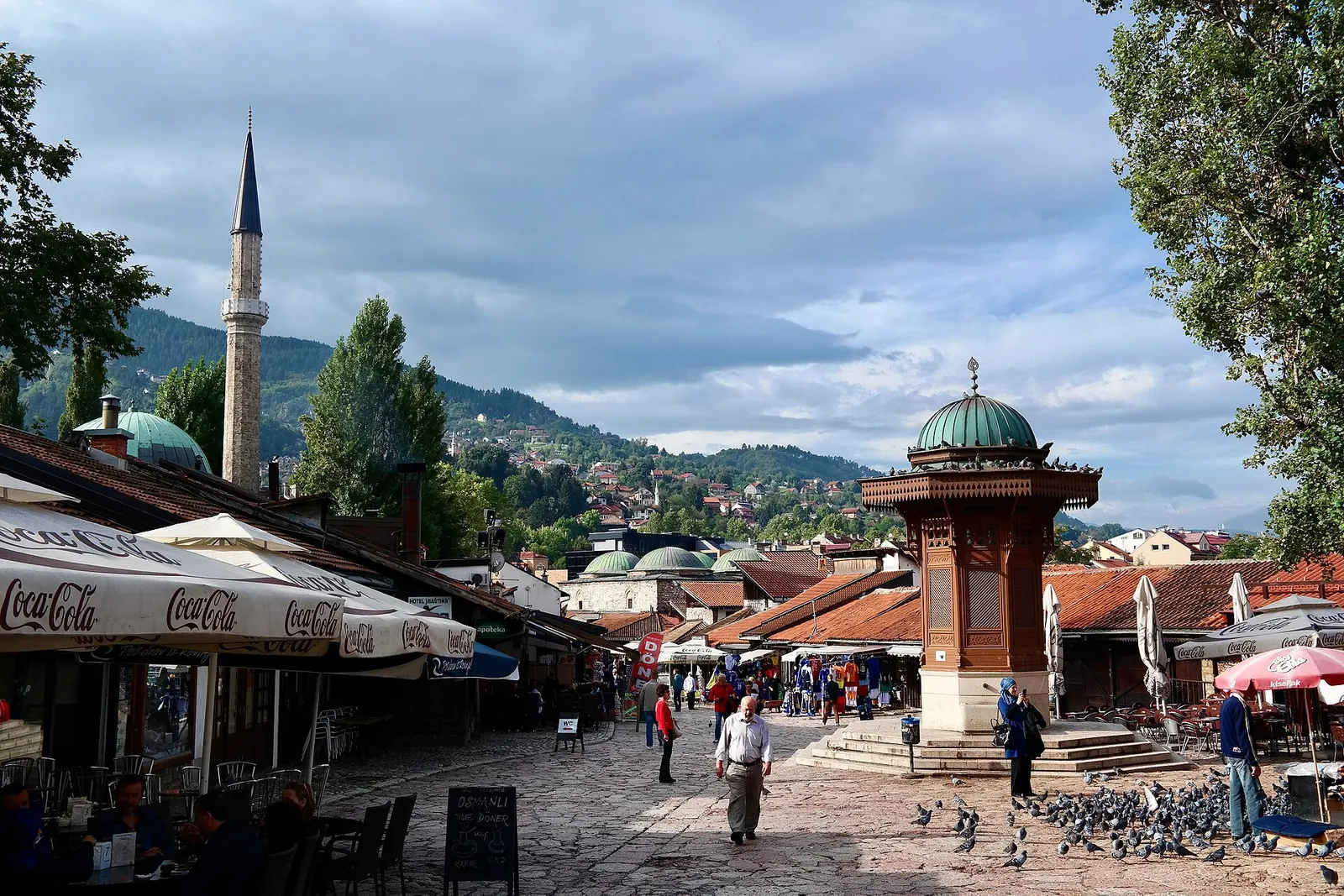
The bazaar dates back to the 15th century, when Isa-beg Isaković founded the Ottoman town, and it grew into one of the busiest trading centres in the Balkans. Gazi Husrev-beg, the great 16th-century benefactor of Sarajevo, endowed it with the Gazi Husrev-beg Mosque, a covered market and a hammam, and the Old Orthodox Church and the Old Synagogue stand within a few minutes’ walk, a reminder of the city’s many faiths.
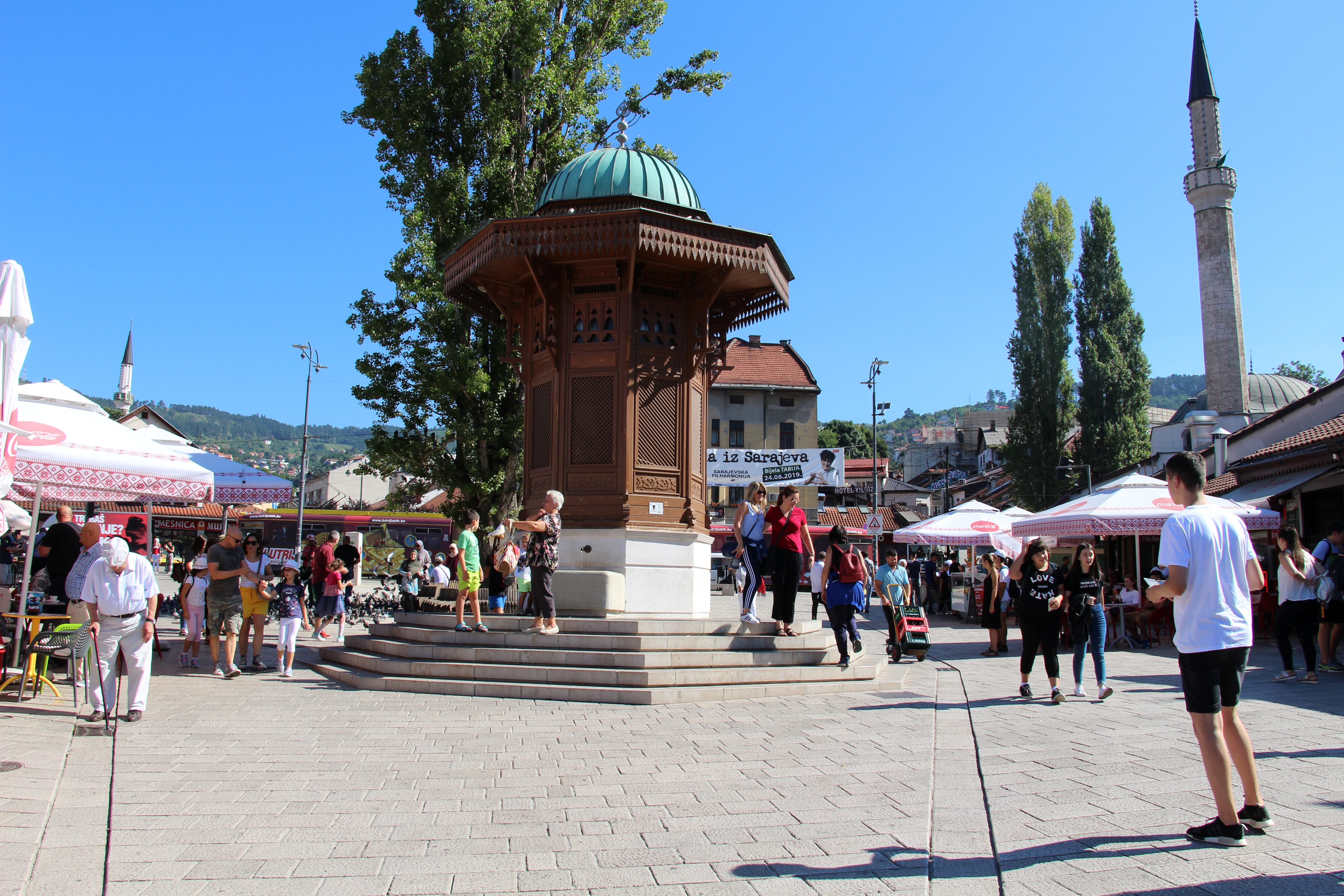
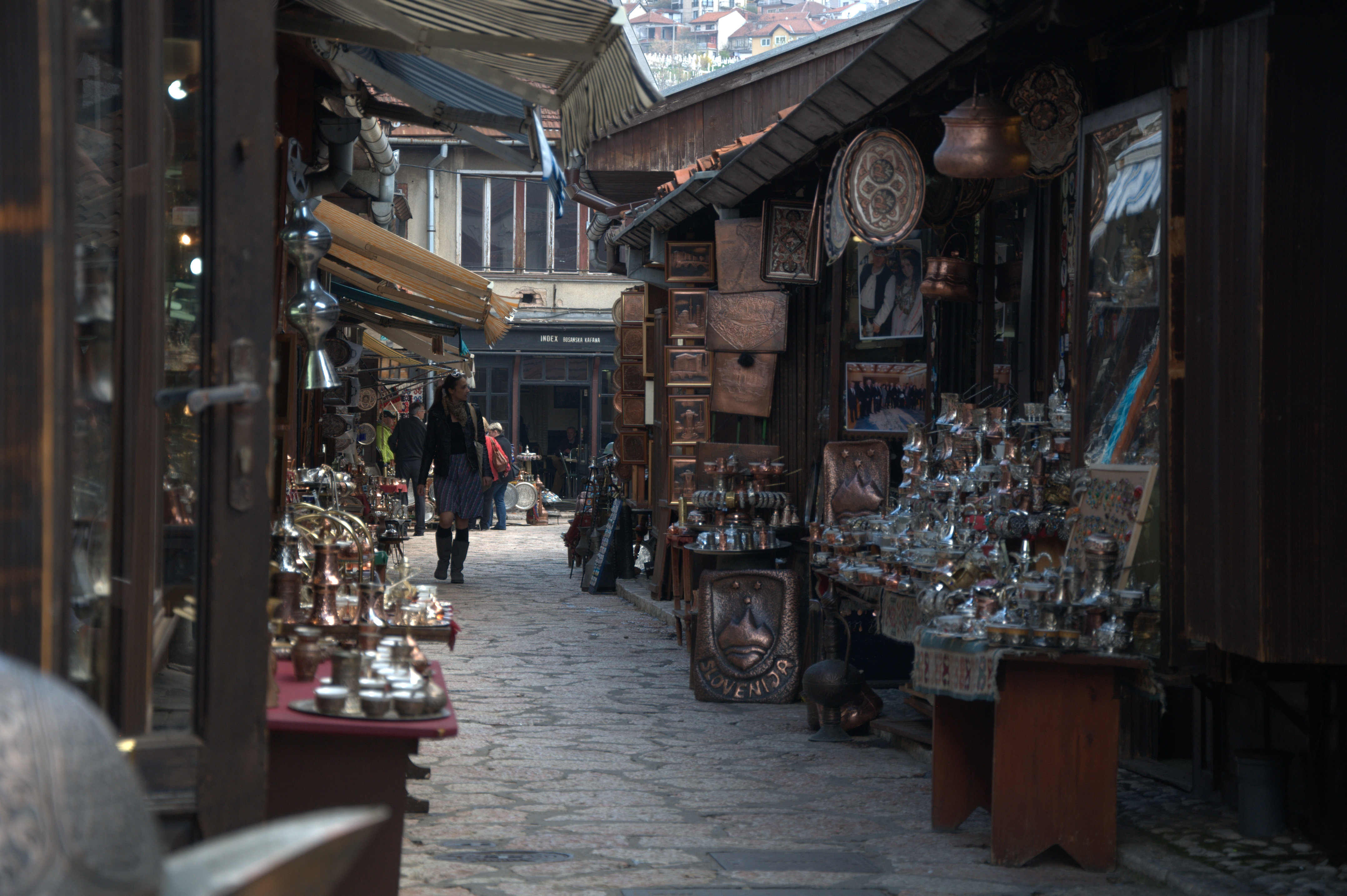
At the centre of the main square stands the Sebilj fountain, a wooden Ottoman-style kiosk rebuilt in 1891 after the 18th-century original burned down; local legend says that whoever drinks from it will return to Sarajevo. Around it, narrow lanes are lined with low wooden shops, and on the coppersmiths’ street craftsmen still hammer trays, coffee sets and lanterns by hand. Visitors can browse the workshops, sip Bosnian coffee and stop for ćevapi in one of the traditional grill houses.
Baščaršija is easily explored on foot and is lively from morning until late in the evening, making it the natural starting point for any visit to Sarajevo.