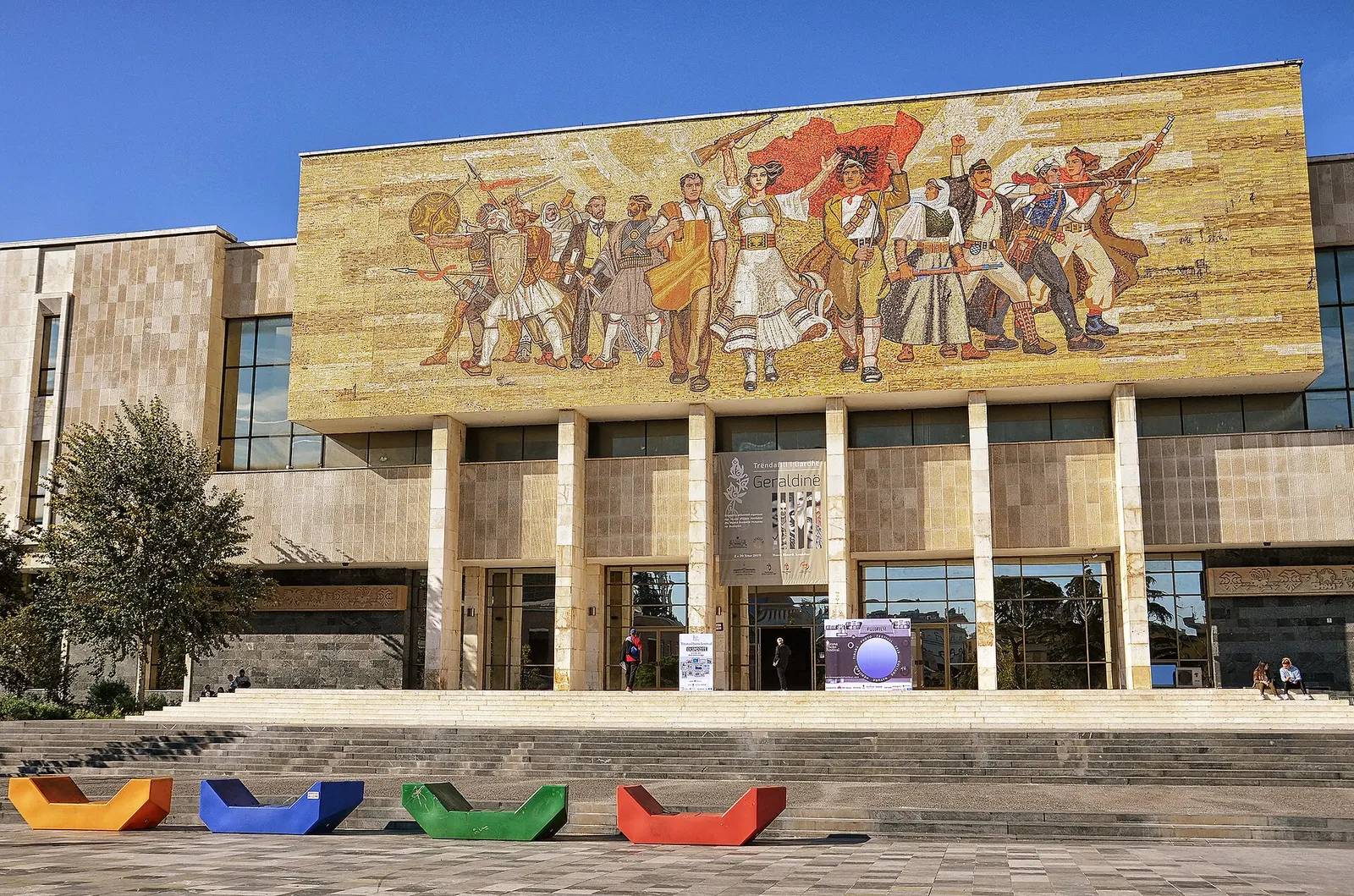
The building is best known for the monumental mosaic above its entrance, The Albanians, completed in 1980. Around 40 metres long and 11 metres high, it shows figures from different periods of Albanian history and is a striking example of socialist realist art, slightly altered after the fall of communism.
Inside, the collection of around 5,000 objects is arranged in thematic pavilions, among them Antiquity, the Middle Ages, the National Renaissance, Independence and the Iconography Pavilion, with post-Byzantine icons by painters such as Onufri. A pavilion devoted to the victims of communist persecution was added in 2012.
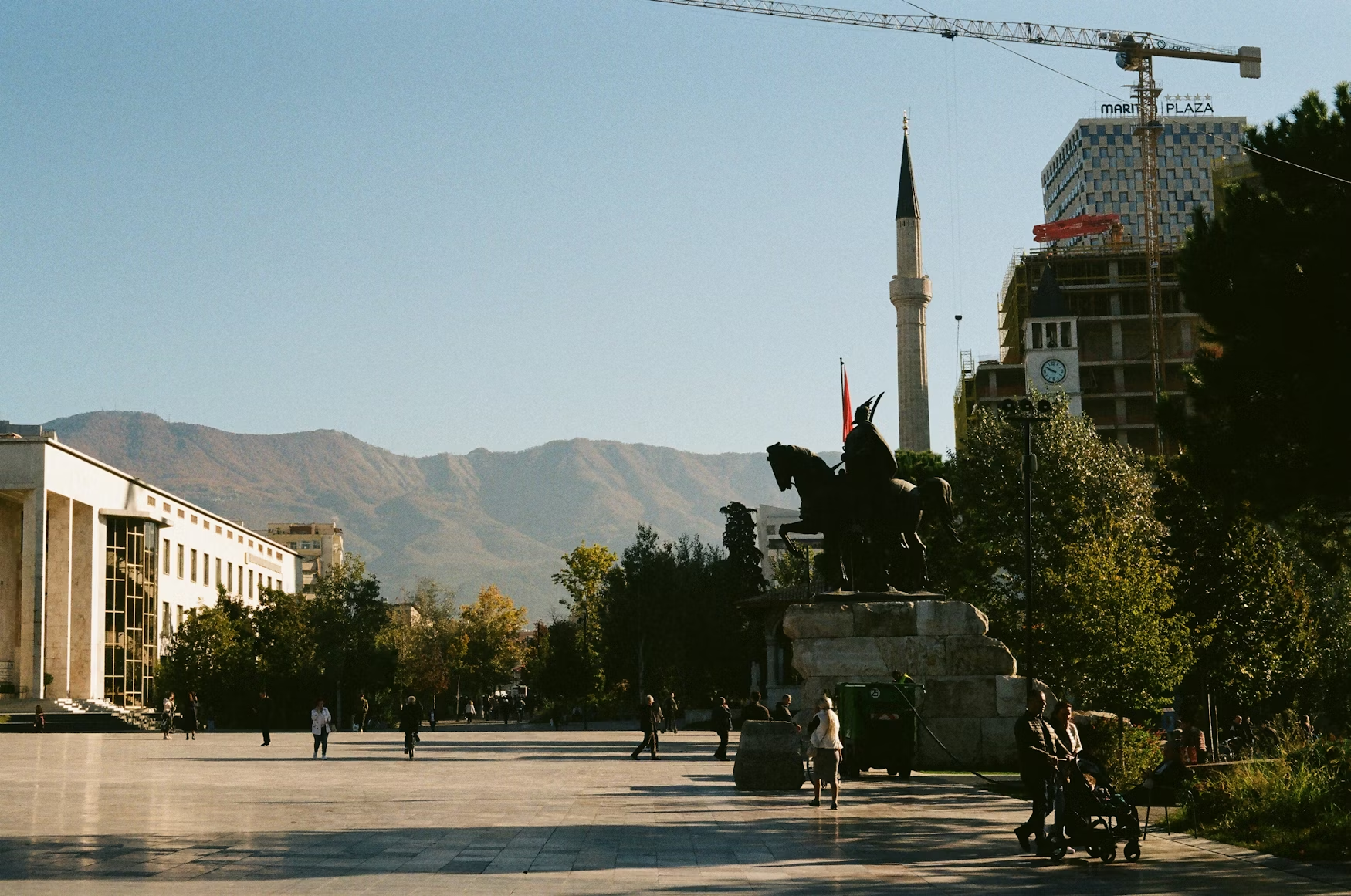
In 2024 the museum closed for a major renovation programme, expected to last several years, so travellers should check its status before planning a visit. The façade mosaic remains in full view from the square and is one of Tirana’s most photographed sights.
Whether you step inside or simply admire the mosaic, the National History Museum is a natural starting point for understanding Albania’s past.