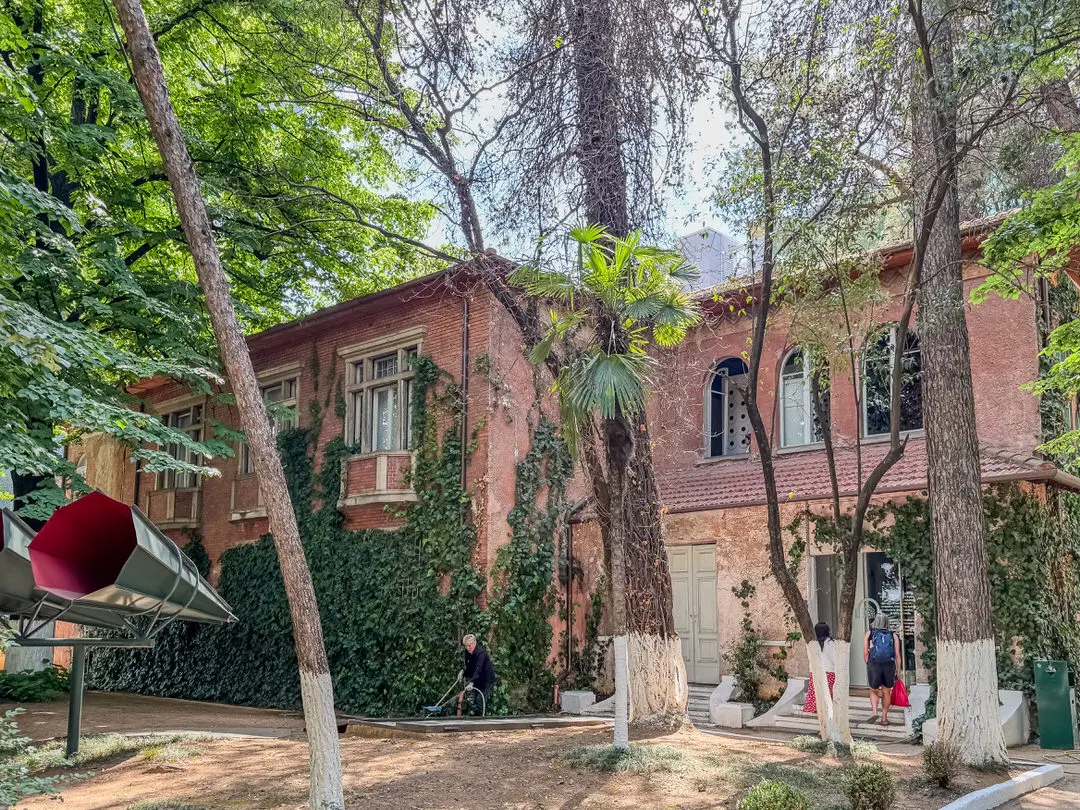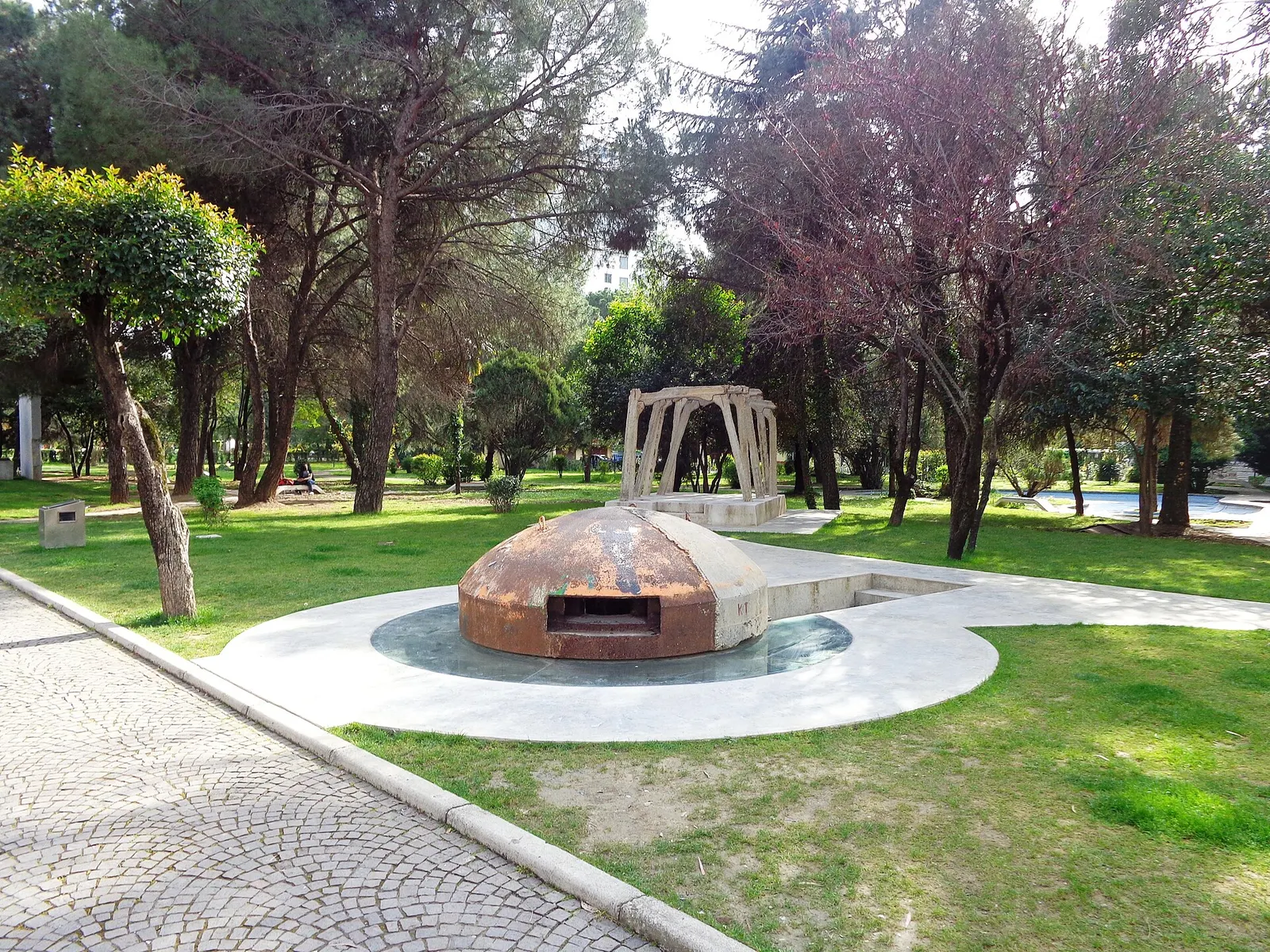
The memorial was created on the initiative of writer and former dissident Fatos Lubonja, who spent 17 years as a political prisoner at the Spaç labour camp, together with artist Ardian Isufi. Its name recalls the checkpoints that once guarded the Blloku, the closed quarter where the country’s communist leaders lived and which ordinary Albanians were not allowed to enter.
The installation brings together three symbolic elements. A concrete defensive bunker, one of the thousands built across the country, stands beside a brightly painted section of the Berlin Wall from Potsdamer Platz. Next to them are concrete supports from the mine at Spaç prison, where political prisoners were forced to work between 1968 and 1990. Together they speak of fear, isolation and the eventual fall of the Iron Curtain.
Postbllok takes only a few minutes to see, but it is a thought-provoking stop on any walk between the city centre and the cafés of Blloku.