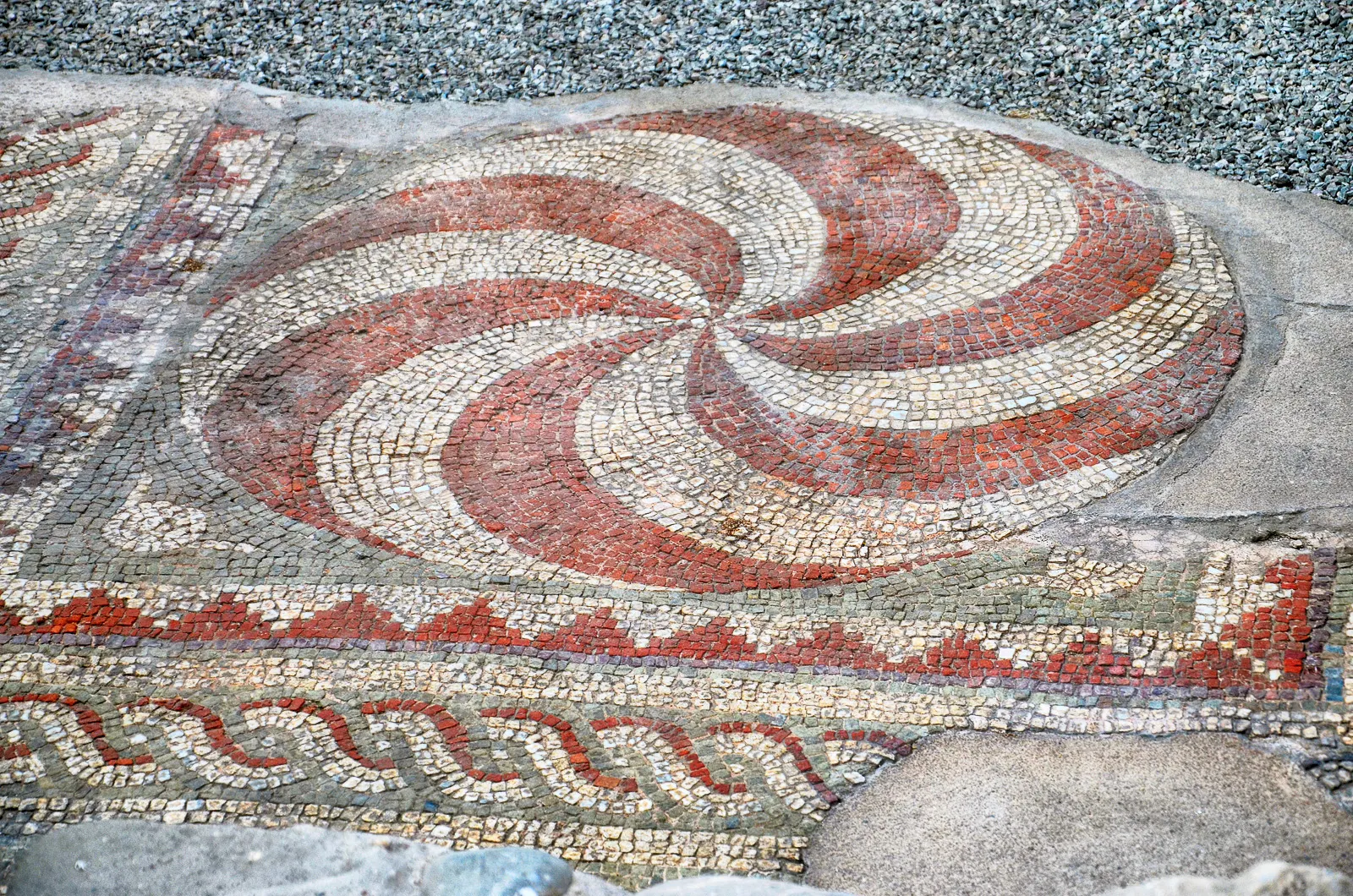
The ruins were discovered by chance in 1972, during the construction of apartment blocks, and were declared a cultural monument the following year. Archaeologists identified a rural settlement of the first centuries AD that by the 3rd century had become a Roman villa, whose main hall, ending in an apse, was paved with mosaics. The first excavators believed that an early Christian basilica later rose on the site in the 5th–6th centuries, though more recent digs, which uncovered vats for fermenting grape must, point instead to a working farm villa.
Today visitors can see the mosaic floors, decorated with geometric patterns, birds and fish, along with the outlines of walls and rooms; on-site plans help make sense of the layout. The site reopened to the public in 2010. A visit takes only a short time, but it is a fascinating counterpoint to Tirana’s modern skyline.
For anyone curious about the area’s Roman past, it is well worth the short detour.