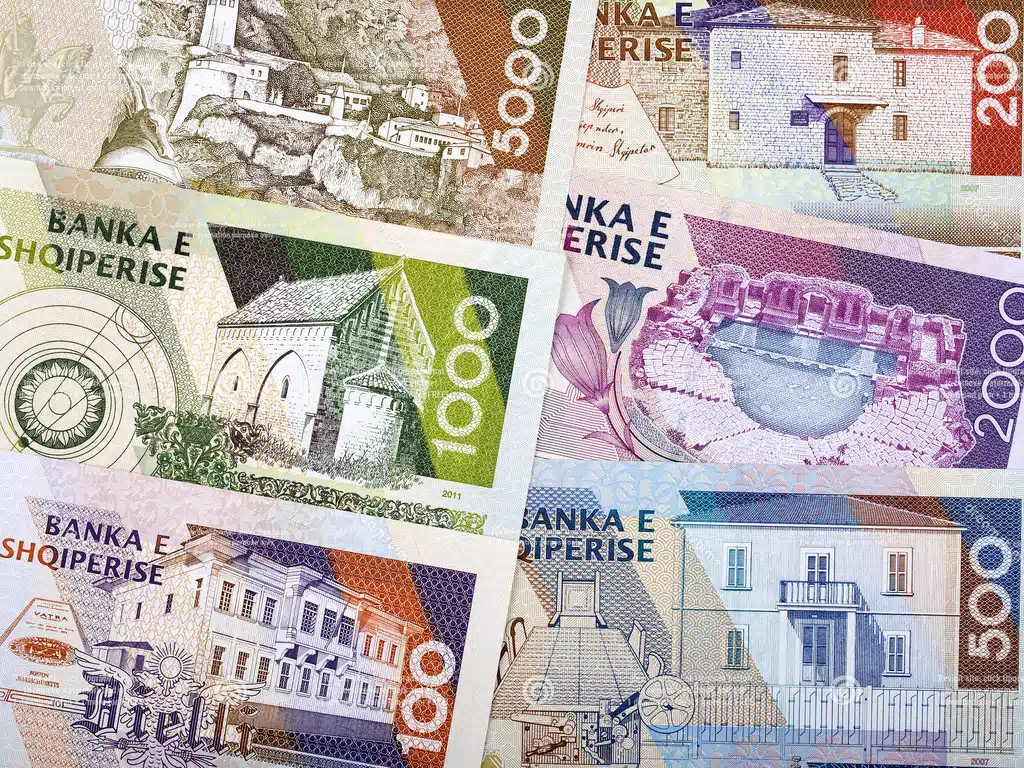
Albania’s currency is the lek (ALL), and paying in lek is almost always the simplest and cheapest option, even though euros are accepted in some hotels and tourist areas. ATMs are easy to find in Tirana and other towns, cards are widely accepted in hotels, supermarkets and larger restaurants, but you will still need cash for small cafés, markets, minibuses and rural guesthouses. Tipping is appreciated rather than compulsory, and rounding up or leaving around 10% in restaurants is common.
This guide covers the everyday money questions visitors ask most: lek versus euro, using ATMs, paying by card, cash habits and tipping. For the history and design of the currency itself, see our article on understanding the Albanian lek.
Lek or euro: which should you use?
The lek is the only official currency, and prices in shops, restaurants and transport are normally shown in lek. Some hotels, tour companies and seaside businesses quote prices in euros, and many will accept euro cash, but the exchange rate they apply is set by the business and you will usually receive your change in lek.
- Pay in lek for everyday purchases: food, coffee, taxis, buses, entrance tickets and markets.
- Euros can be handy as a back-up, or for accommodation and services already priced in euros.
- Avoid mixing currencies in a single payment, as it makes it hard to see what you are actually paying.
Exchange rates move, so check a current rate on a reliable source, such as the Bank of Albania or your banking app, rather than relying on old figures.
The “old lek” habit
The lek was revalued in the 1960s, and some Albanians, especially older people and market traders, still say prices in “old lek”, which adds a zero. If someone names a price that sounds ten times too high, they are probably using old lek. Written prices and receipts use the current lek, so when in doubt, ask to see the price or the receipt.
ATMs and withdrawal fees
ATMs (bankomat) are common in Tirana, Durrës, Shkodër, Berat, Vlorë, Sarandë and other towns, usually outside bank branches, shopping centres and at the airport. They are much scarcer in villages and mountain areas, so withdraw what you need before heading to places such as Theth, Valbona or remote parts of the south.
A few things to know:
- Local fees: many Albanian banks charge foreign cardholders a fee per withdrawal. The ATM normally shows the fee on screen before you confirm, so read it and cancel if you are not happy.
- Your own bank’s fees: your card issuer may add its own foreign transaction or cash withdrawal charges. Check these before you travel.
- Withdrawal limits: each bank sets its own maximum per withdrawal, so you may need more than one transaction for larger amounts.
- Decline conversion: if the ATM offers to charge you in your home currency, choose to be charged in lek. The machine’s own conversion rate is usually less favourable than your bank’s.
Use ATMs attached to bank branches during opening hours where possible, so that you can get help quickly if a card is retained.
Card acceptance
Card payments have grown quickly in Albania, and Visa and Mastercard are accepted in most hotels, supermarkets, shopping centres, larger restaurants, car rental desks and many shops in Tirana and the main resorts. Contactless payment is common where cards are accepted. American Express and other cards are accepted less often.
The same rule applies at card terminals as at ATMs: if you are asked whether to pay in your home currency or in lek, choose lek. It is also worth telling your bank that you are travelling, so that payments are not blocked.
When you need cash
Even in Tirana, cash remains part of daily life. Carry lek for:
- Small cafés, bakeries and byrek shops.
- City buses and intercity minibuses (furgons), which are usually paid in cash; read more in our guide to getting around Albania.
- Some taxis, unless you have confirmed in advance that card payment is possible.
- Markets, street vendors and small family shops.
- Guesthouses, restaurants and entrance fees in rural areas and smaller towns.
- Parking, beach sunbeds and public toilets.
Small notes and coins are useful, as small businesses may struggle to change large notes, especially early in the day.
Exchanging money
Exchange offices (look for the sign këmbim valutor) are found throughout Tirana and in every town, and they generally exchange euros, US dollars and pounds sterling. Rates and commissions vary between offices, so compare the displayed buy and sell rates and ask what you will receive before handing over your money. Banks also exchange currency, and airport exchange counters are convenient but not always the best value.
Only exchange money at official offices or banks, never with people offering rates on the street.
Tipping customs in Albania
Tipping is not compulsory in Albania, but it is customary and appreciated, especially in the tourism sector. Typical habits are:
- Restaurants: rounding up or leaving around 10% for good service is common. Check the bill first in case service has already been added.
- Cafés and bars: leaving small change or rounding up is normal.
- Taxis: rounding up the fare is a friendly gesture, but not expected.
- Hotels: a small tip for porters or housekeeping is appreciated.
- Guides and drivers: on tours, a tip at the end is customary if you were happy with the service; the amount is your choice.
Tipping in cash in lek is easiest, as card terminals do not always offer a tip option.
Budgeting and safety tips
- Bring two different cards in case one is blocked or retained.
- Keep some cash separate from your main wallet.
- Check that the amount on a card terminal is correct before you tap.
- Prices change, so treat any figures you find online as a guide only and check current prices locally.
For more practical advice, read all you need to know before you travel to Albania. If you book one of our tours with Albania Inbound, the confirmation sets out clearly what is included, so you know what to budget for meals and extras.
Frequently asked questions
Can I pay with euros in Albania?
Sometimes. Some hotels, tour operators and seaside businesses accept euros, but the lek is the official currency and the exchange rate is set by the business. Paying in lek is usually simpler and better value.
Are there ATMs in Albania?
Yes, ATMs are common in Tirana and other towns, including at the airport. Many local banks charge foreign cardholders a withdrawal fee, which is shown on screen before you confirm. ATMs are scarce in villages and mountain areas.
Are credit cards widely accepted in Albania?
Visa and Mastercard are accepted in most hotels, supermarkets, shopping centres and larger restaurants, especially in Tirana. Small cafés, markets, minibuses and rural guesthouses often accept only cash.
How much should I tip in Albania?
Tipping is optional but appreciated. Rounding up or leaving about 10% in restaurants is common, small change is fine in cafés, and tipping guides and drivers at the end of a tour is customary if you enjoyed it.
Should I choose to pay in my home currency or in lek?
Choose lek. When an ATM or card terminal offers to charge you in your home currency, the conversion rate it applies is usually less favourable than your own bank’s rate.
Why did someone quote me a price ten times higher?
They were probably using “old lek”, a pre-1965 way of counting that adds a zero. Written prices and receipts use current lek, so ask to see the price if you are unsure.