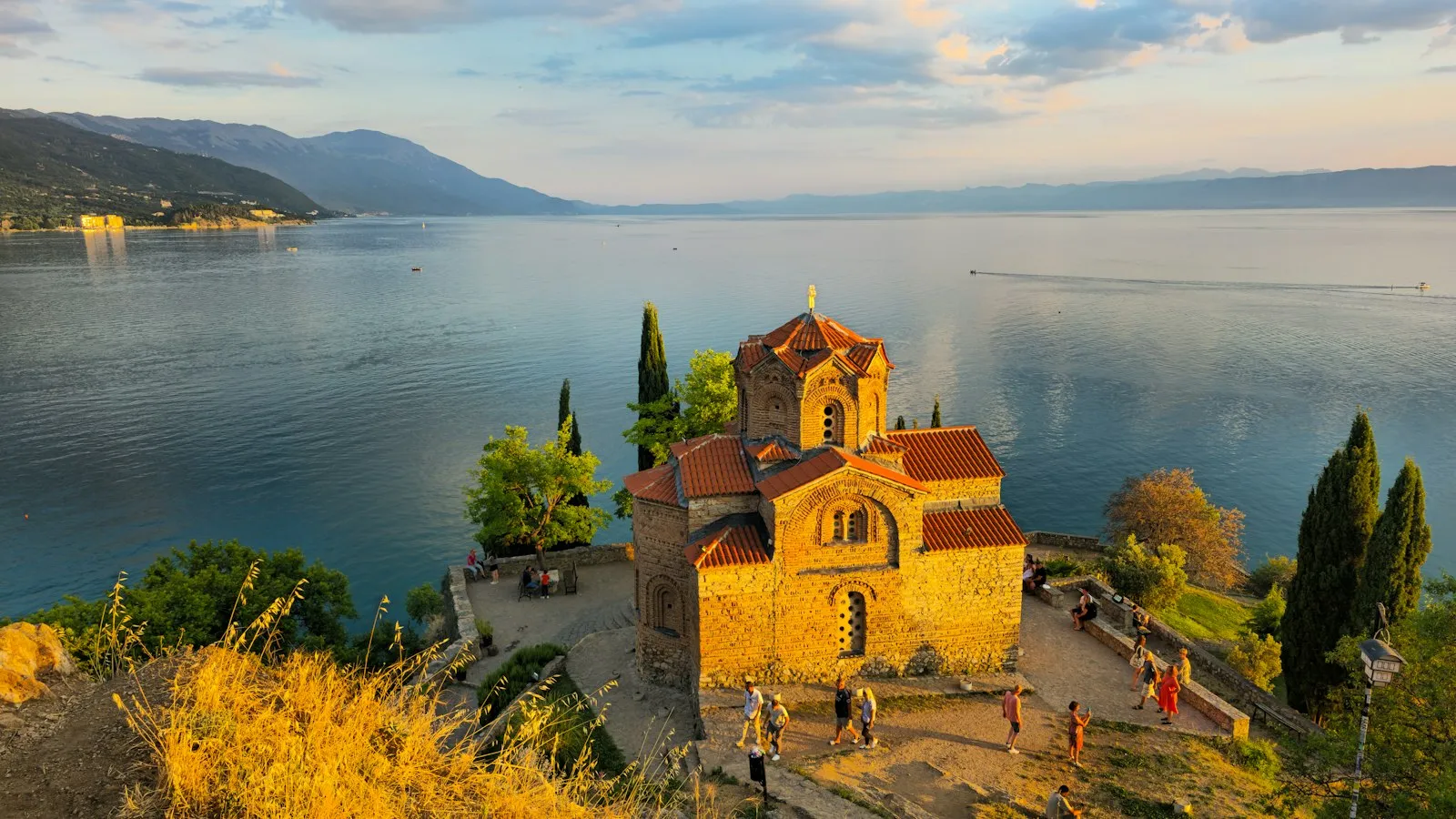
An Ohrid day trip from Tirana is very doable: the drive to Ohrid in North Macedonia takes around two and a half to three hours each way, leaving roughly five hours for sightseeing. In that time you can walk the old town, see the Church of St John at Kaneo and Tsar Samuel’s Fortress, and visit the lakeside Monastery of St Naum. Bring your passport (or ID card, if your nationality allows it), as you will cross an international border.
Ohrid sits on the north-eastern shore of Lake Ohrid, one of Europe’s oldest lakes, and the town and lake are protected together by UNESCO. Here is how to plan the day, what to prioritise and the best way to get there.
Is a day trip to Ohrid worth it?
If your time in Albania is limited, yes. Ohrid is one of the most rewarding places in the southern Balkans, with Byzantine churches, a hilltop fortress and a beautiful lakefront. A day trip gives you the highlights, while an overnight stay lets you see the lake at sunset and add slower extras like a boat trip or a swim.
The trade-off is a long day. Expect five to six hours in a vehicle in total, plus time at the border in both directions.
The route from Tirana
The main road heads east from Tirana to Elbasan, then follows the Shkumbin valley through Librazhd and Prrenjas to the Qafë Thanë border crossing in the hills above the western shore of the lake. From there it descends through Struga, where the Black Drin river leaves the lake, to Ohrid town.
Border formalities are usually straightforward, but queues build on summer weekends and holidays. North Macedonia is not in the EU, uses the Macedonian denar and has its own entry rules, so check what applies to your passport before you go. If you enjoy collecting stamps, see our guide to getting four passport stamps on an Albania trip.
What to see in Ohrid in one day
The old town
Start in Ohrid’s old town, a hillside of cobbled lanes, white-walled houses and small churches climbing up from the lake. Legend says the town once had 365 churches, one for every day of the year. The real number today is far smaller, but you will still pass a church around almost every corner.
The Church of St Sophia
One of the most important medieval monuments in North Macedonia, St Sophia preserves frescoes from the 11th to the 13th centuries, considered some of the finest Byzantine painting of their time. The church was used as a mosque during the Ottoman period, and its calm, lofty interior is a highlight of any visit.
The ancient theatre and Tsar Samuel’s Fortress
Higher up the hill, the ancient theatre dates from Hellenistic times and was later used by the Romans. Above it rises Tsar Samuel’s Fortress, named after the medieval ruler who governed from Ohrid around the turn of the 11th century. Its walls were heavily restored in 2003, and the views over the rooftops and the lake are superb.
Plaošnik
On a terrace below the fortress, Plaošnik is the site of the Church of Saints Clement and Panteleimon. It is closely associated with St Clement of Ohrid, a key figure in early Slavic literacy, and the remains of earlier churches surround the rebuilt one.
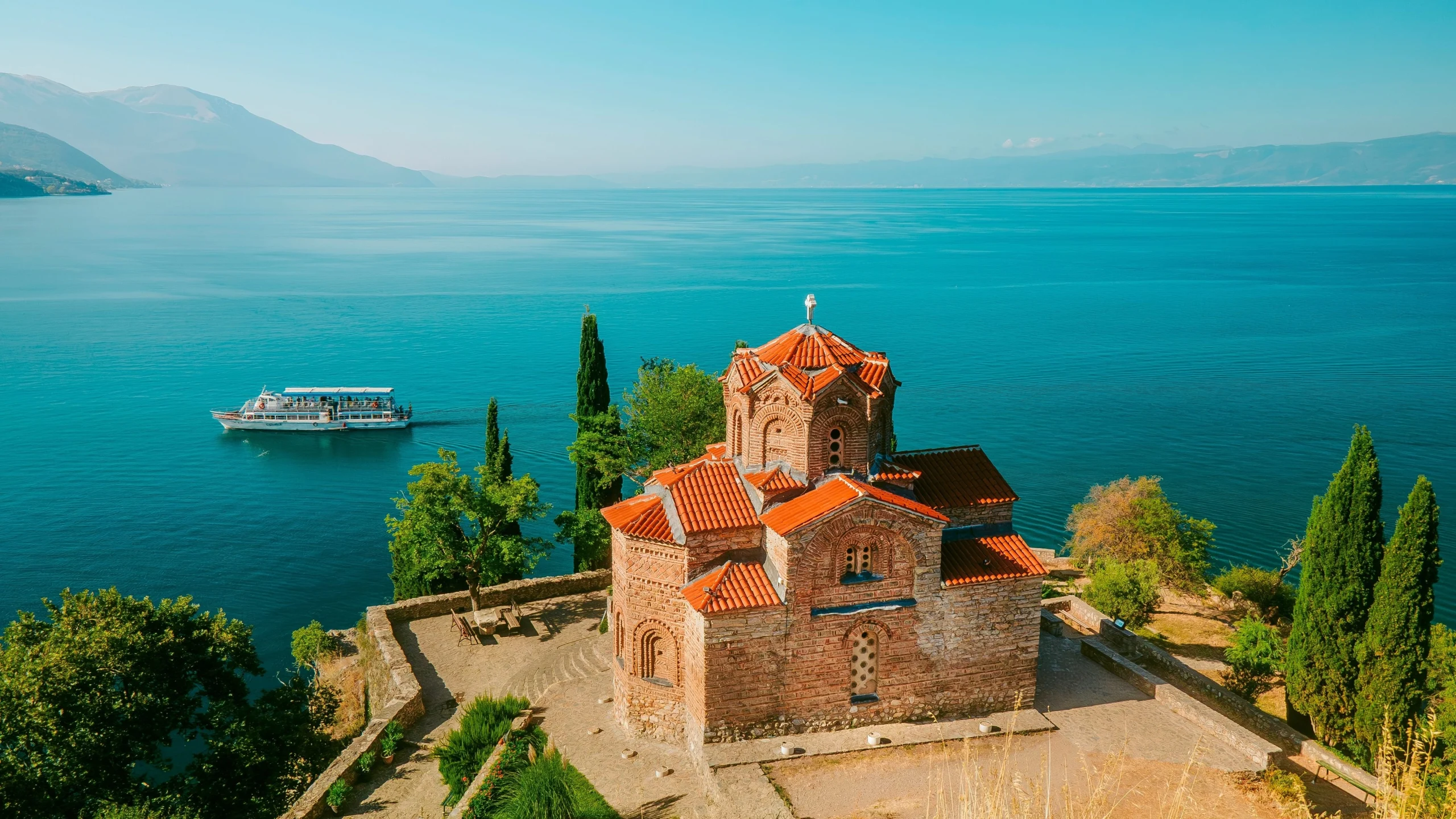
The Church of St John at Kaneo
Finish with Ohrid’s most famous view. The small Church of St John at Kaneo, most likely built in the 13th century, stands on a cliff above Kaneo beach with the lake stretching out behind it. Walk down through the lanes and save some time simply to sit and take it in.
Beyond the town: the Bay of Bones and St Naum
If you have transport, two sights to the south are worth the detour. Both are on the road towards the Albanian border:
- Bay of Bones – on the Gradište peninsula, around 15 kilometres south of town, this museum on the water reconstructs a Bronze Age and Iron Age settlement of houses built on wooden piles over the lake.
- Monastery of St Naum – about 29 kilometres south of Ohrid, near the Albanian border, the monastery was founded in 905 by St Naum himself. It sits beside crystal-clear springs that feed the lake, and short boat rides over the springs are a popular extra.
A realistic one-day plan
Our Ohrid and St Naum day tour follows a rhythm that also works well if you are travelling independently. Times are approximate and can change:
- 07:30 – depart from Tirana or Durrës.
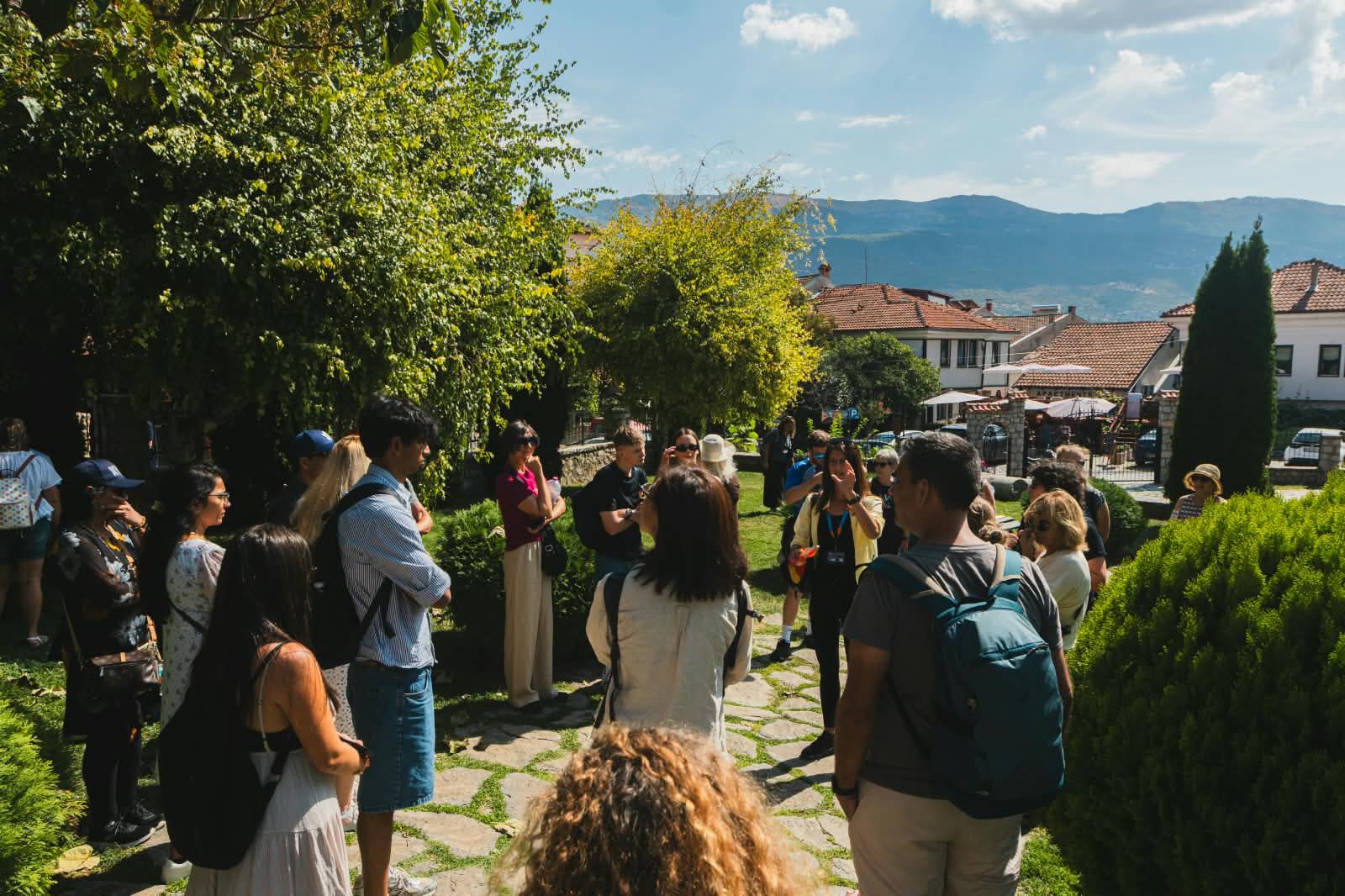
- Around 10:00 – arrive in Ohrid for about three and a half hours of guided sightseeing.
- Early afternoon – a short photo stop at the Bay of Bones.
- Mid-afternoon – about an hour of free time at St Naum Monastery and its springs.
- Late afternoon – a photo stop at Lin, on the Albanian shore, on the way home.
- Around 18:30 – back in Tirana or Durrës.
Self-drive, bus or guided tour?
- Self-drive gives you flexibility, but check that your rental agreement allows cross-border travel and that the insurance covers North Macedonia.
- Buses run between Tirana and North Macedonia, but schedules change and rarely suit a same-day return.
- A guided day tour handles the driving, the border and the timing, and is the easiest way to fit St Naum in too.
Tips for the day
- Carry your passport or valid ID card, and check the entry rules for your nationality in advance.
- Wear comfortable shoes: the old town’s lanes are steep and cobbled.
- Cover shoulders and knees when visiting churches and monasteries.
- Bring a card or a little local currency for coffee, snacks and small purchases.
- In July and August, carry water and seek shade at midday, as the old town gets very hot.
Frequently asked questions
How long is the drive from Tirana to Ohrid?
Allow around two and a half to three hours each way, depending on traffic, roadworks and the queue at the Qafë Thanë border crossing. Summer weekends and public holidays are the busiest times at the border. An early start means less traffic on the way out and more time in Ohrid, which is why our day tour leaves Tirana at around half past seven.
Do I need a passport for a day trip to Ohrid?
You need a valid passport, or a national ID card if your country’s citizens can enter North Macedonia with one, as EU and Schengen nationals can. Some nationalities also need a visa. Entry rules change from time to time, so check the official requirements for your passport before you travel, and keep your documents to hand for the return crossing too.
Is one day enough to see Ohrid?
One day is enough for the essentials: the old town, St Sophia, the fortress, Kaneo and St Naum. It will feel full, though, and you will only see the lake in daylight. If you can, stay a night or two to enjoy a lakeside evening, take a boat trip, swim in summer or explore the Albanian shore around Pogradec and the Drilon springs.
When is the best time to visit Ohrid?
Late spring and early autumn are ideal, with mild weather, clear views and fewer visitors. July and August are hot and busy, but they bring the Ohrid Summer Festival of music and theatre and the chance to swim in the lake. Winter is quiet and atmospheric, although some lakeside businesses may close or keep shorter hours, and the days are short for a long trip.
Can I combine Ohrid with the Albanian side of the lake?
Yes. Our Ohrid day tour includes a photo stop at Lin, a peninsula village on the Albanian shore known for its 6th-century church mosaics. With more time, cross back via the southern crossing near St Naum to Pogradec, Albania’s main lakeside town, and the Drilon springs at Tushemisht, which are partly fed by water flowing underground from Lake Prespa.
Want the easy version? Book our North Macedonia: Ohrid and St Naum day tour with pick-up in Tirana or Durrës, or browse our confirmed departures to join a group on a fixed date.