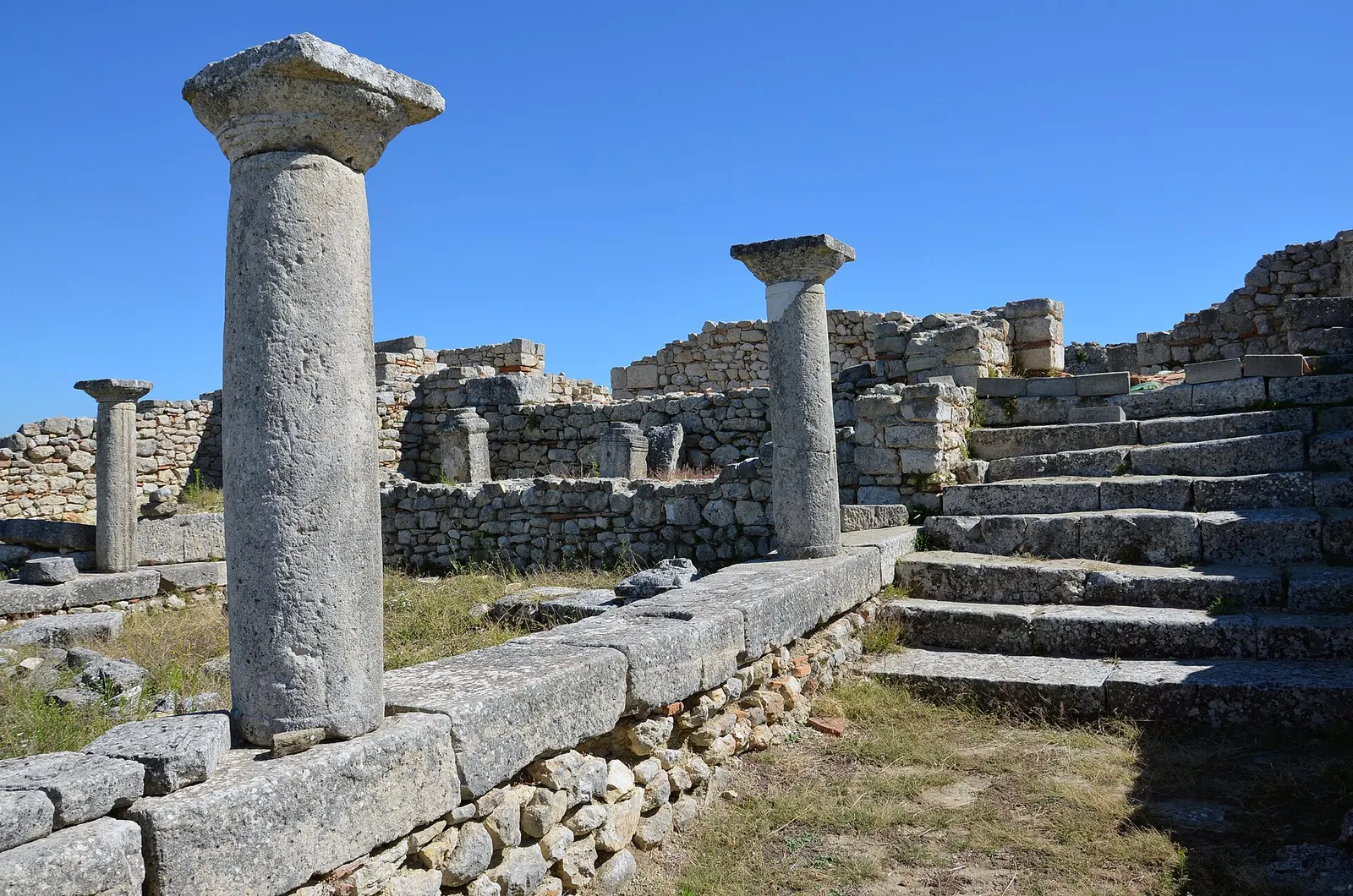
Byllis was the chief town of the Illyrian Bylliones. It was founded around 350 BC, when massive stone walls more than 2 km long were built around the hill, and in the Hellenistic period it gained a theatre, a stadium, an agora and stoas. After a long decline it became a Roman colony in the 1st century BC, and in late antiquity it was the seat of a bishop. Its walls were rebuilt under Emperor Justinian and carry inscriptions naming his engineer, Victorinus.
Highlights include the Hellenistic theatre, once able to seat some 7,500 spectators, and the remains of several early Christian basilicas. Their fine mosaic floors are usually kept under protective gravel, so do not expect to see them on a typical visit. Wear sturdy shoes, bring water and sun protection, and allow time to walk along the walls.
Come in the morning or late afternoon, when the light over the valley is at its best.