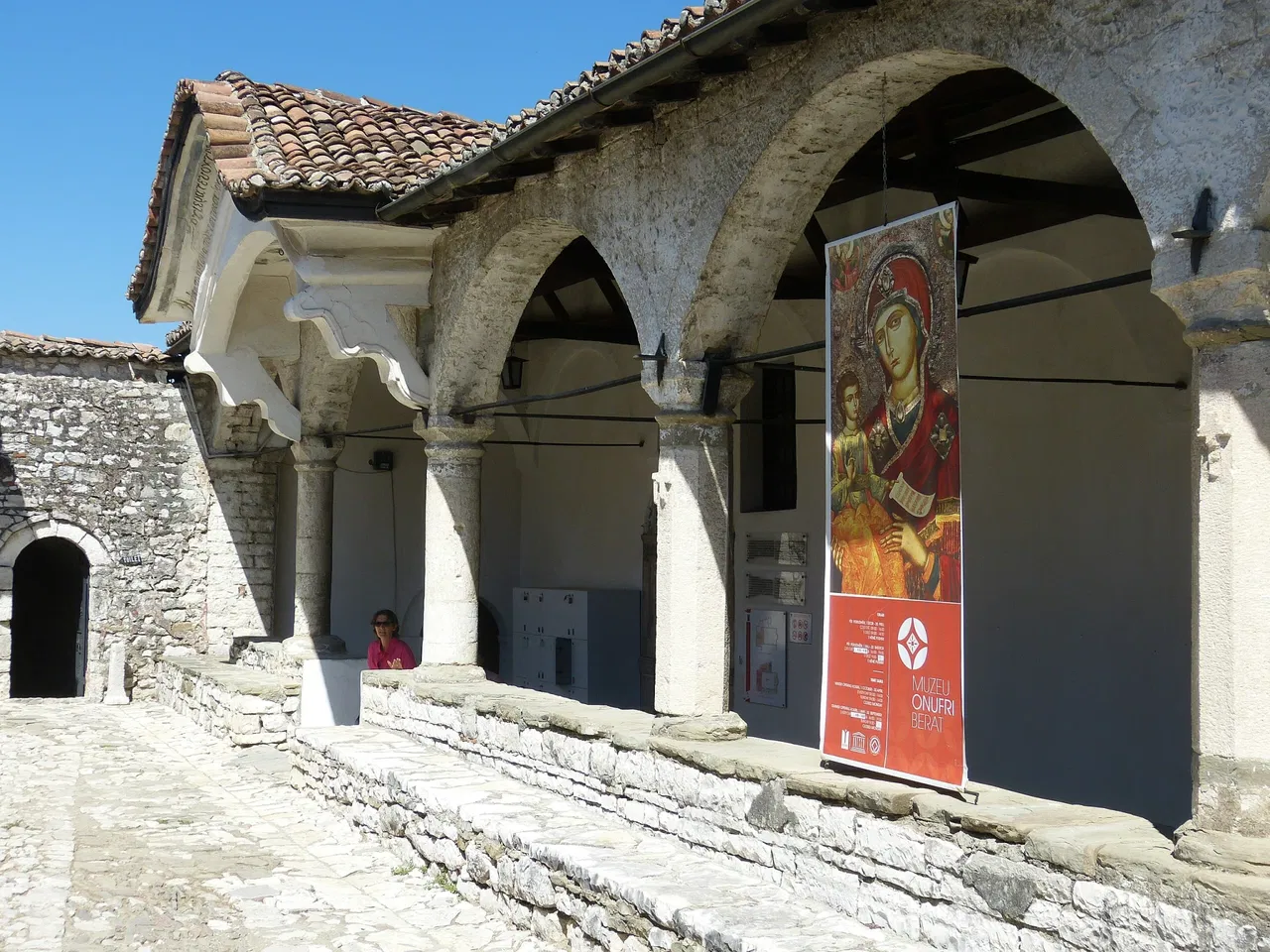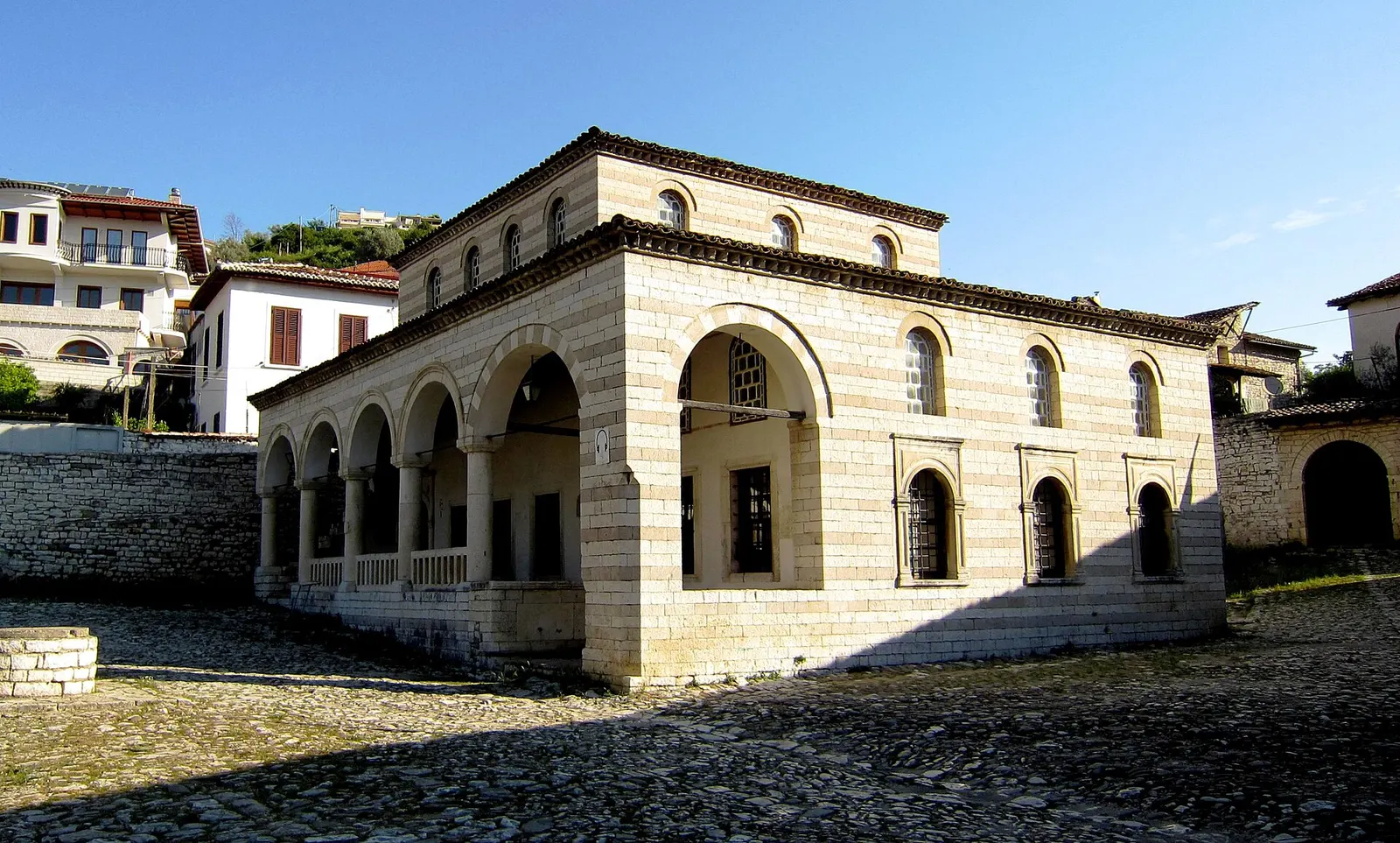
The present building was completed in 1782 for Ahmet Kurt Pasha, the first ruler of the semi-autonomous Pashalik of Berat, on a site with older origins. A room attached to the prayer hall once held the tombs of the pasha and his son, and the dervishes’ lodgings around the courtyard, rebuilt in the 19th century, have served as offices for the region’s cultural monuments. The tekke is a Cultural Monument and part of Berat’s UNESCO-listed historic centre.
The modest exterior gives little hint of the treasures within. A portico on stone columns leads into a square prayer hall with a gilded wooden ceiling painted in a Baroque-influenced style, a carved wooden gallery and a mihrab framed by stone stalactite decoration. The walls carry painted scenes of houses, mosques and landscapes, and small openings set into them were designed to improve the acoustics.
Access to the interior can vary, so check locally before you go; when its doors are open, this small building is one of Berat’s great surprises.