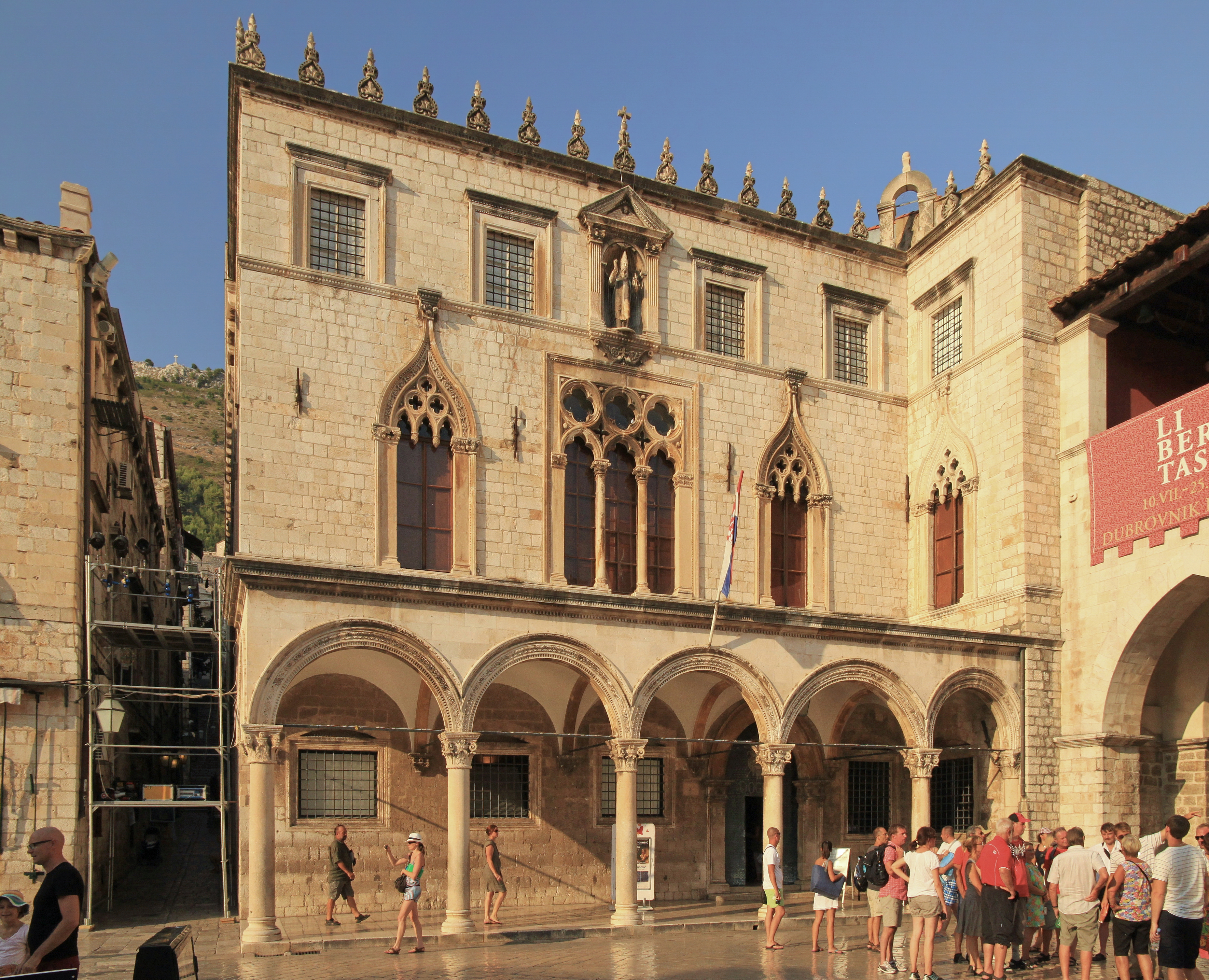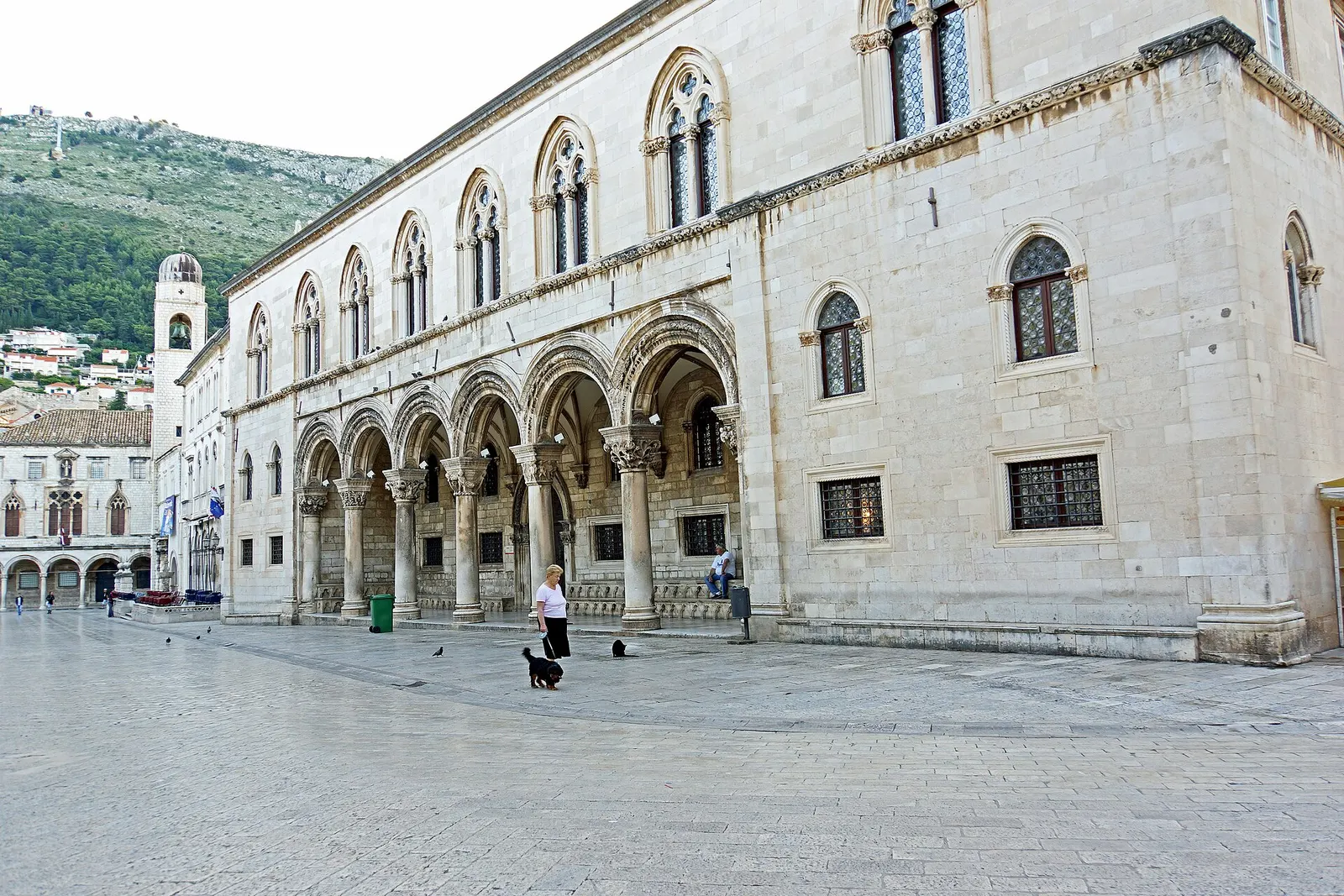
The palace combines Gothic and Renaissance styles with later Baroque touches. After a fire in 1435, it was rebuilt by Onofrio della Cava, the Neapolitan builder of the city’s aqueduct, and further reconstruction followed a gunpowder explosion in 1463. Earthquakes in 1520 and 1667 brought more damage, and the repairs after 1667 added Baroque elements, including the staircase in the atrium. Besides the rector’s apartments, the building held the Minor Council, the state administration, an armoury, a powder store and a prison. Each rector served for just one month, a rule meant to prevent any single noble from gaining too much power.
Visitors enter through an arcaded loggia with richly carved capitals into the elegant atrium, where a monument erected in 1638 honours Miho Pracat, a shipowner from Lopud who left his fortune to the Republic. Upstairs, restored rooms, portraits, coats of arms and coins evoke the life of the old state. The atrium also hosts concerts, notably during the Dubrovnik Summer Festival.
It is a perfect place to understand how this small, proud republic governed itself.