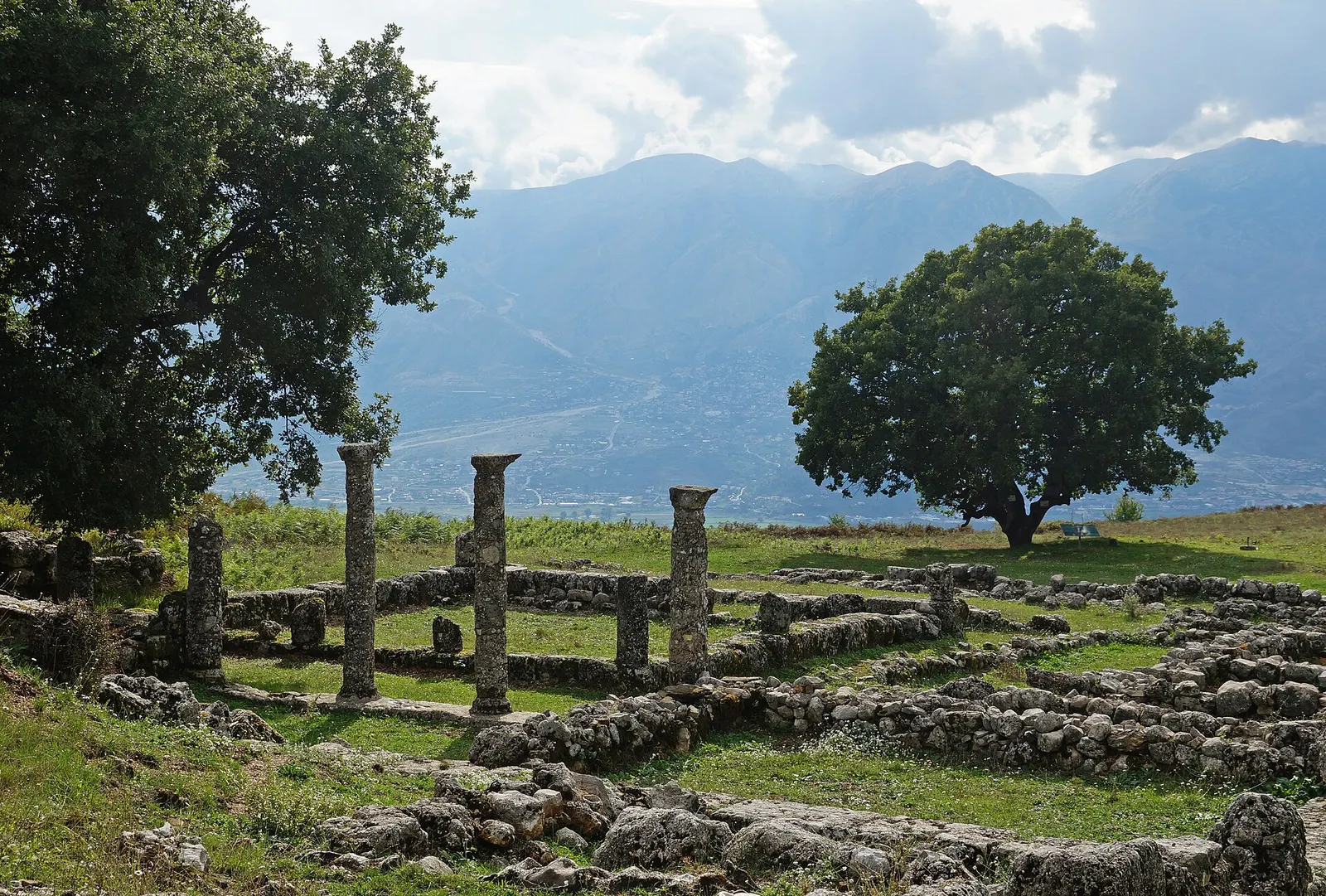
Antigonea was founded in the early 3rd century BC, most likely by King Pyrrhus of Epirus, and is thought to be named after his wife, Antigone. Its life was short: in 167 BC, after Rome’s victory over Macedon, the Roman commander Aemilius Paullus ordered it burned, and the city was never rebuilt. Albanian archaeologists identified and excavated the site from the 1970s, and finds included bronze objects now displayed in Tirana.
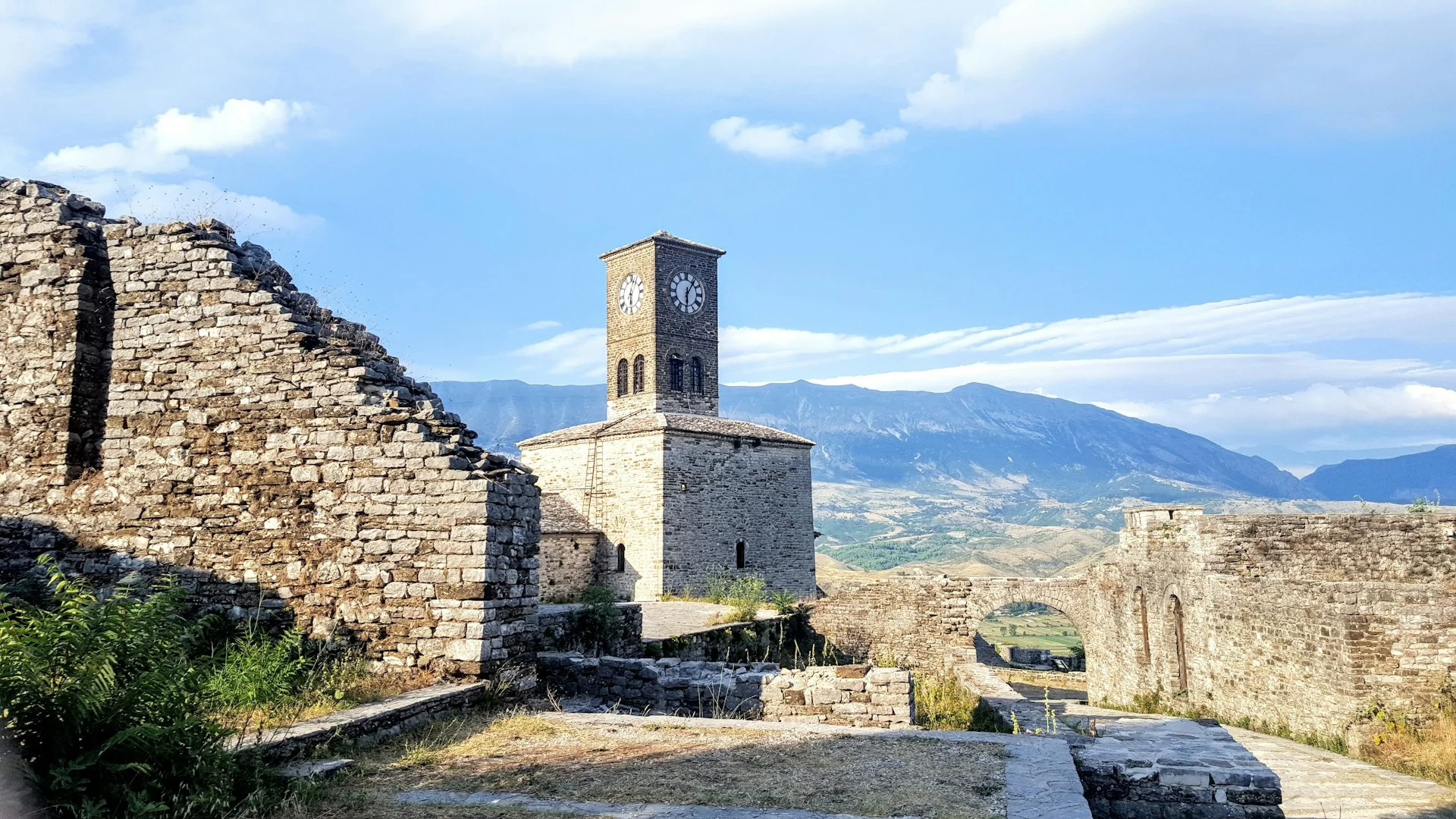
Today visitors walk among the foundations of houses, streets and public buildings, following the line of the ancient city walls, the most impressive feature of the site. The ruins of an early Christian church with mosaic fragments add a later layer of history. The setting, among oak woods and open meadows with sweeping views of the Drino valley, is as rewarding as the archaeology.
Quiet and rarely crowded, Antigonea is a perfect half-day trip from Gjirokastër for history and nature lovers alike.