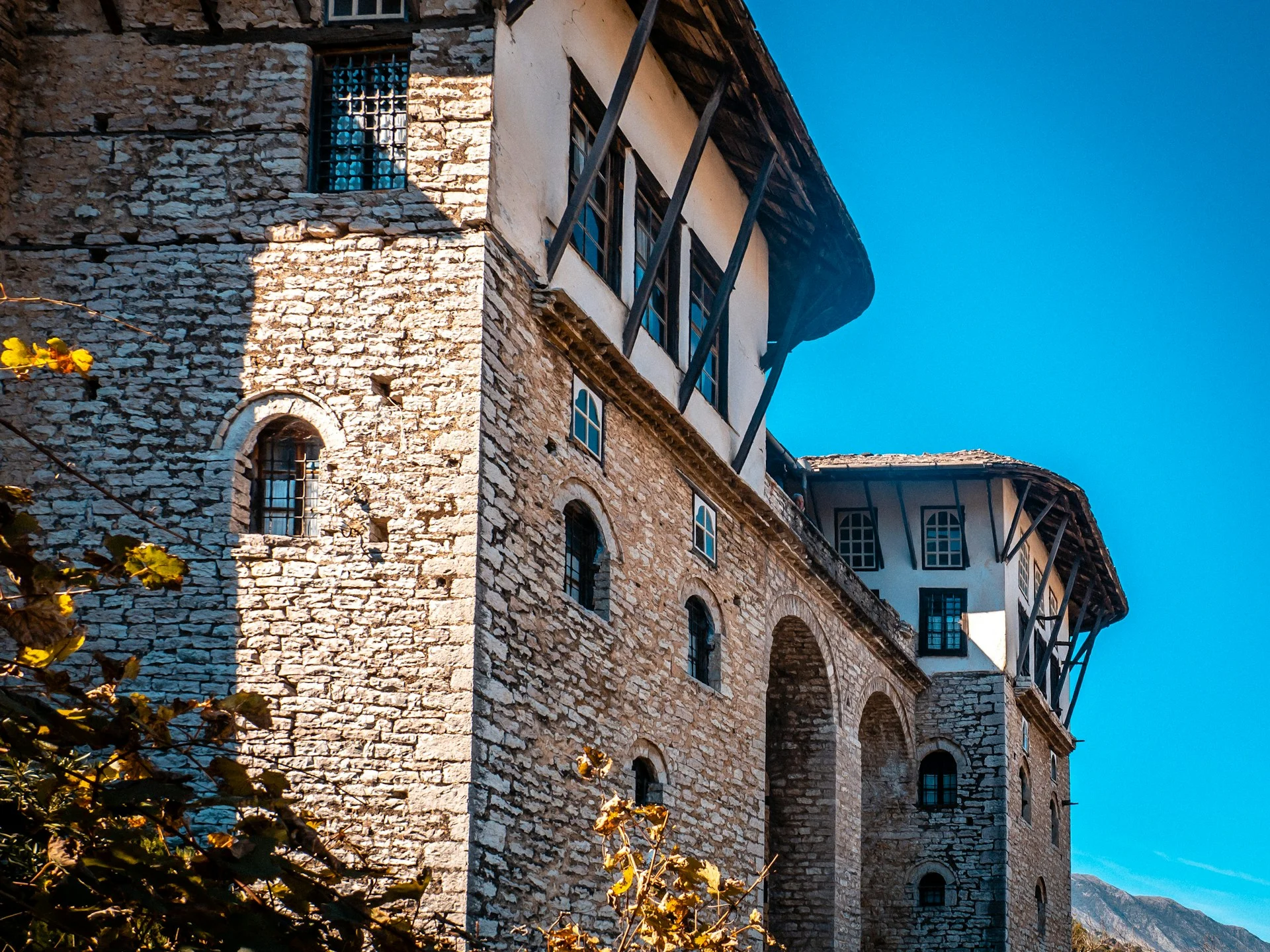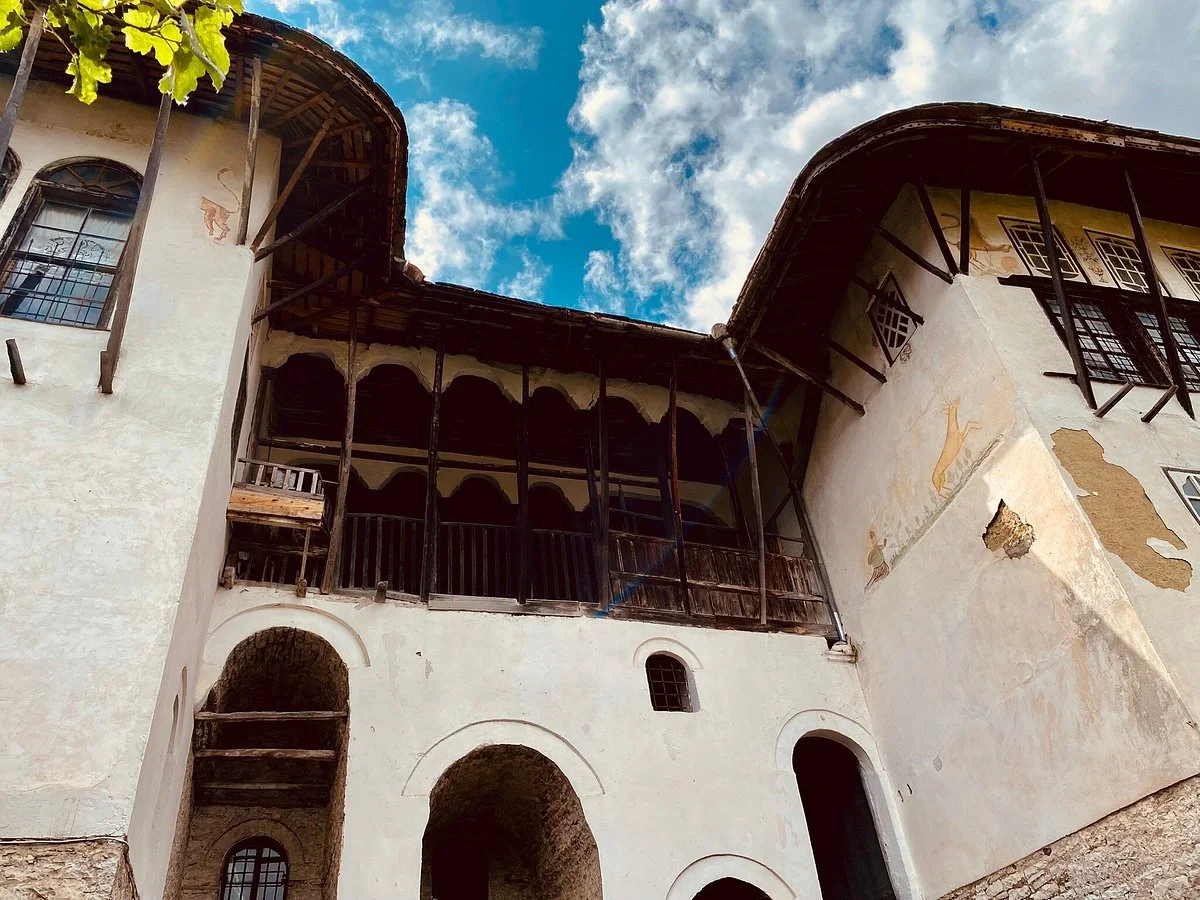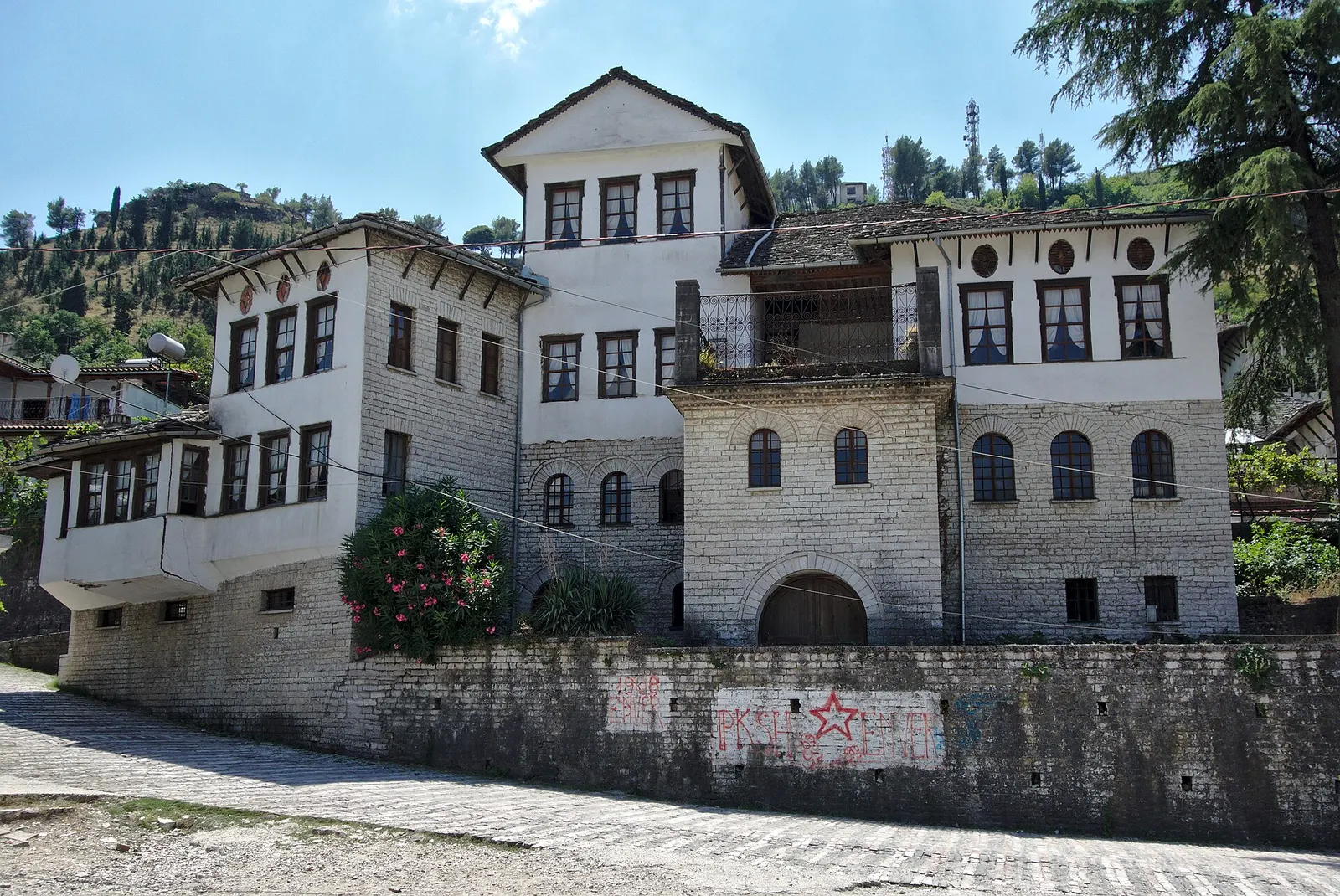
The museum stands on the site of the family home of Enver Hoxha, Albania’s communist leader, who was born in Gjirokastër in 1908. The original house was destroyed by fire, and the present building was constructed in 1966 as a model of a traditional Gjirokastër house rather than a copy of Hoxha’s home. Until 1991 it served as an anti-fascist museum; after the fall of communism, the collection of the town’s ethnographic museum was moved here, and references to the dictator were removed.
All four floors are open to visitors, with rooms furnished as they would have been used by a wealthy 19th-century family of merchants or officials. You will see household items, folk costumes and other artefacts of local daily life, displayed within the thick stone walls, wooden interiors and characteristic architecture of a Gjirokastër tower house.
It is an ideal introduction to the traditions of the Stone City and a fitting companion to the town’s other historic houses.