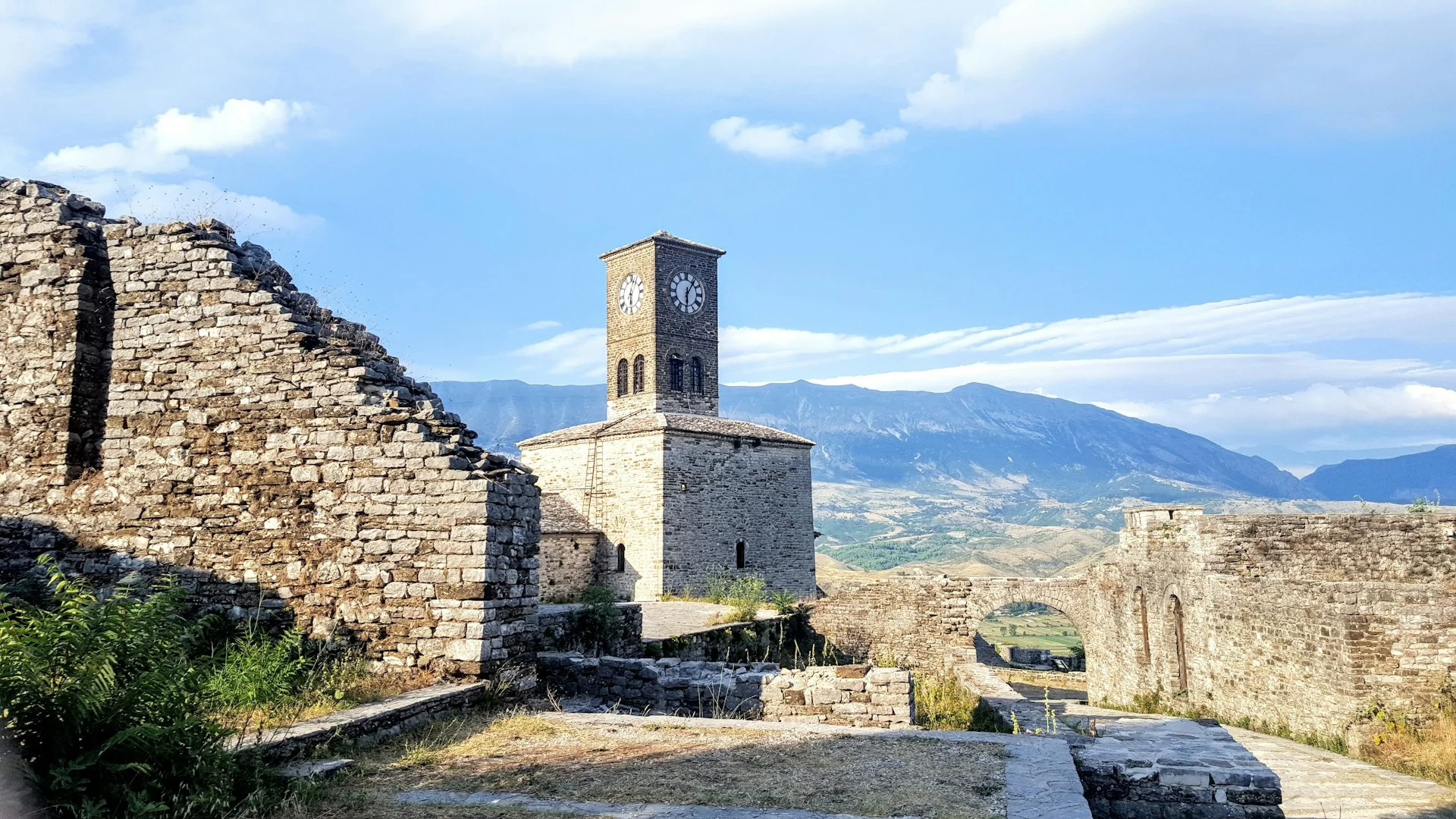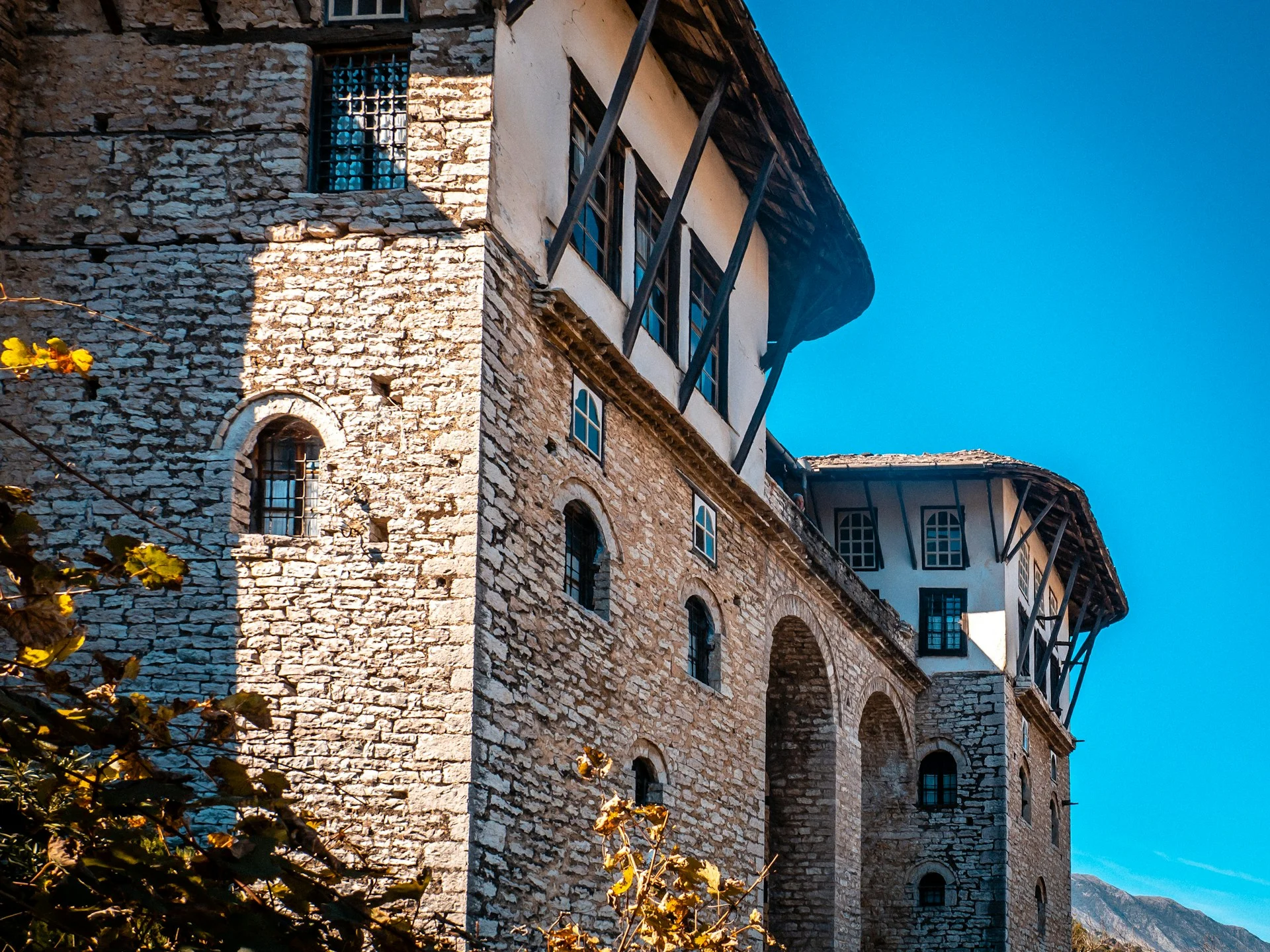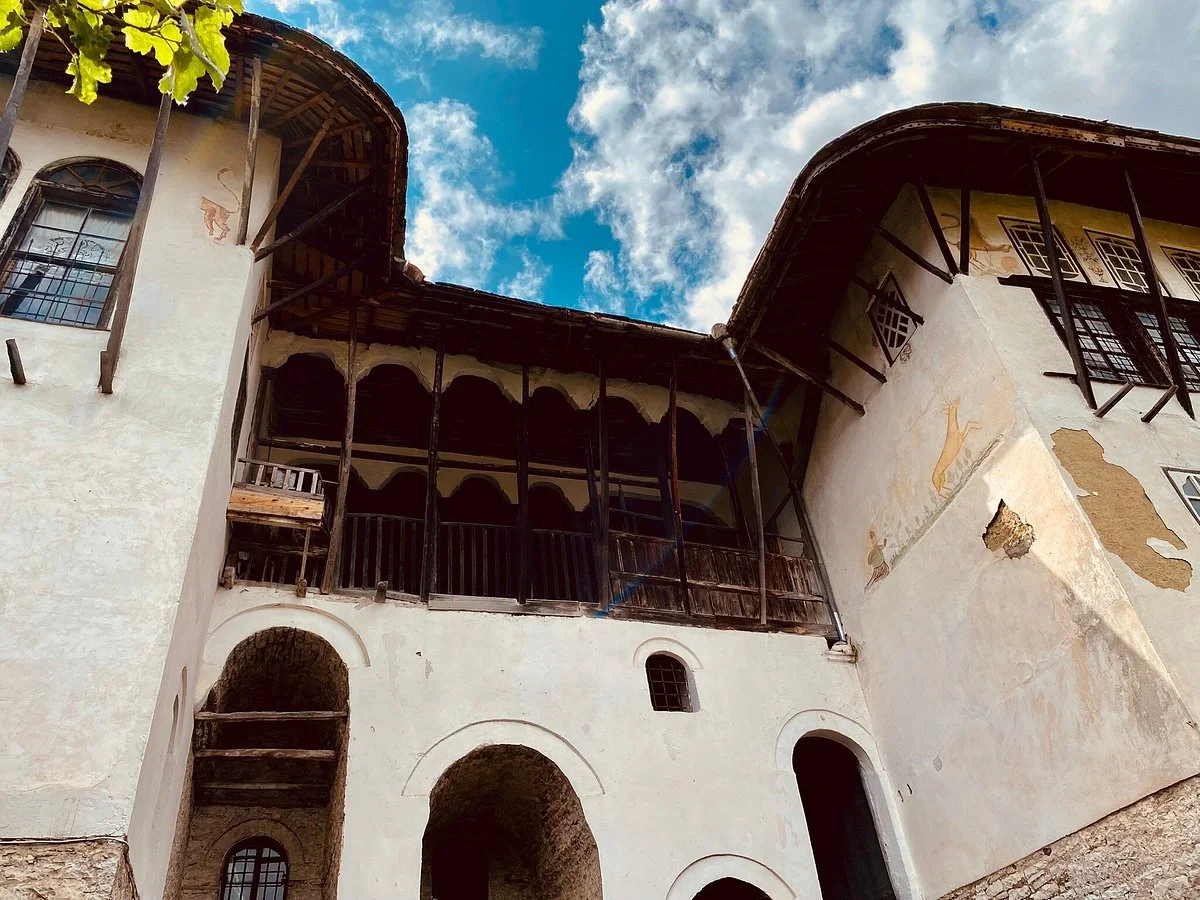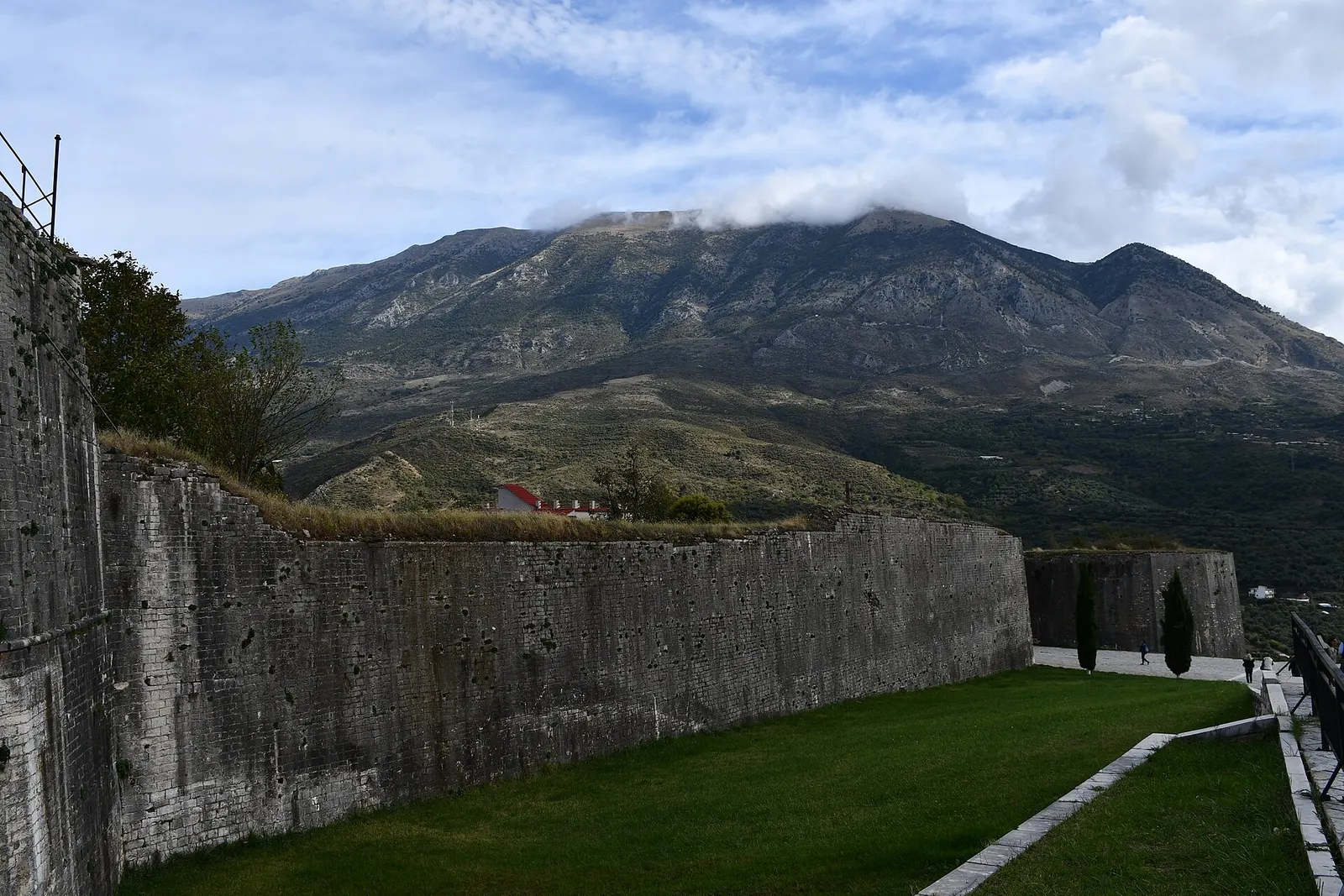
A Byzantine fort probably first occupied the site, followed by a small Ottoman castle. Ali Pasha, who took control of the town in 1789, rebuilt it on a grand scale in the early 19th century; a Greek inscription on the Vizier Gate bears the date 1819, though the works were never completed. In October 1809 the young Lord Byron visited Ali Pasha at his palace here, an encounter he later evoked in Childe Harold’s Pilgrimage.
Today the castle encloses a quiet residential neighbourhood. Sections of fortification walls up to around ten metres high survive, along with three polygonal towers and the remains of the gates, though Ali Pasha’s palace has long since disappeared. A plaque on the walls commemorates Byron’s visit, and a monument to Ali Pasha stands near the main entrance. The walls look out over the Vjosa valley, and the castle is free to wander.
Tepelenë makes a fitting stop on journeys between Gjirokastër, Përmet and the coast.