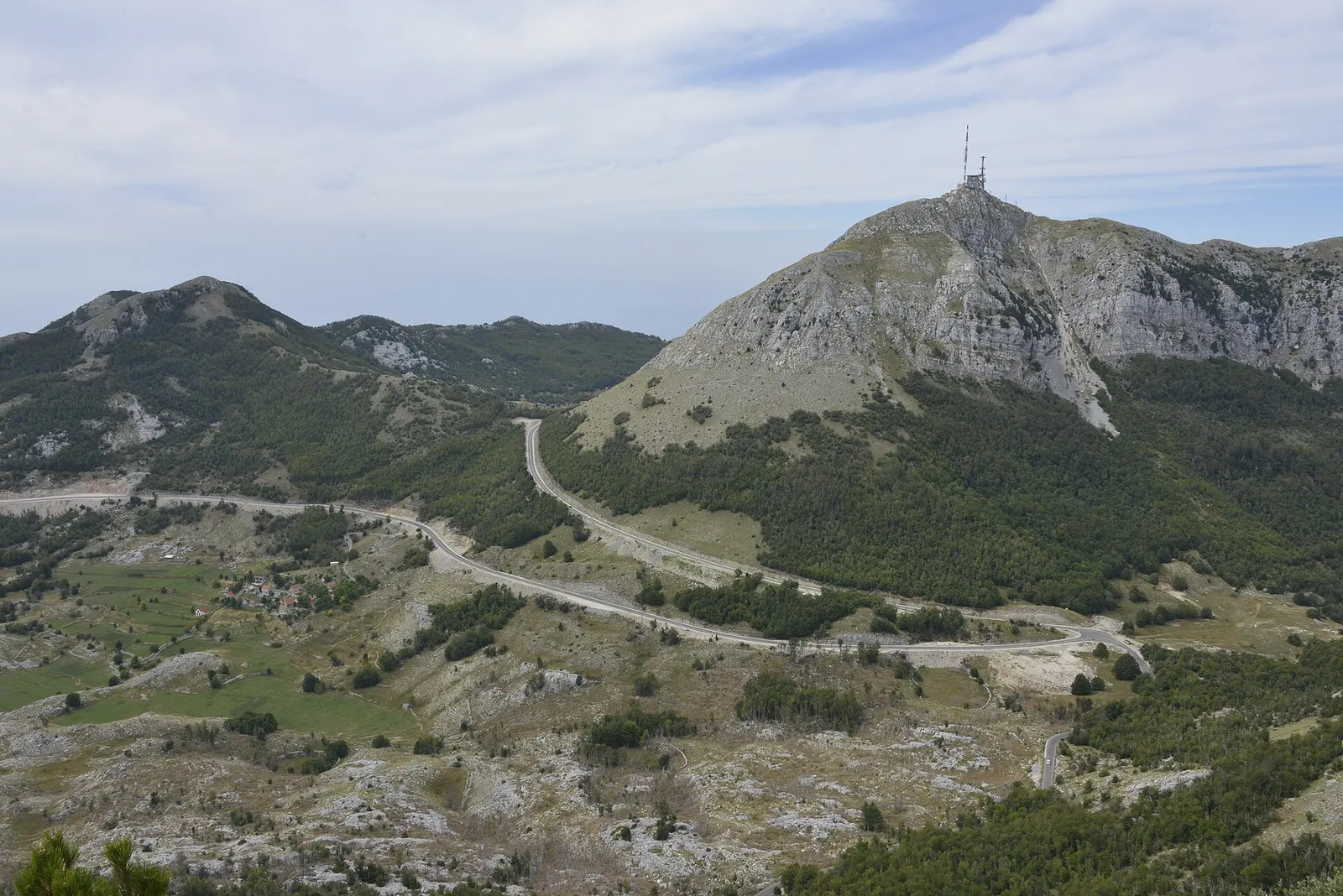
On the summit of Jezerski vrh, at 1,657 metres, stands the Njegoš Mausoleum, the resting place of Petar II Petrović-Njegoš, Montenegro’s 19th-century prince-bishop and greatest poet, who chose the peak as his burial place. Designed by the Croatian sculptor Ivan Meštrović, it was inaugurated in 1974, replacing the chapel Njegoš himself had built. Inside, a granite statue of Njegoš sits beneath a golden mosaic vault, guarded at the entrance by two caryatids in Montenegrin dress.
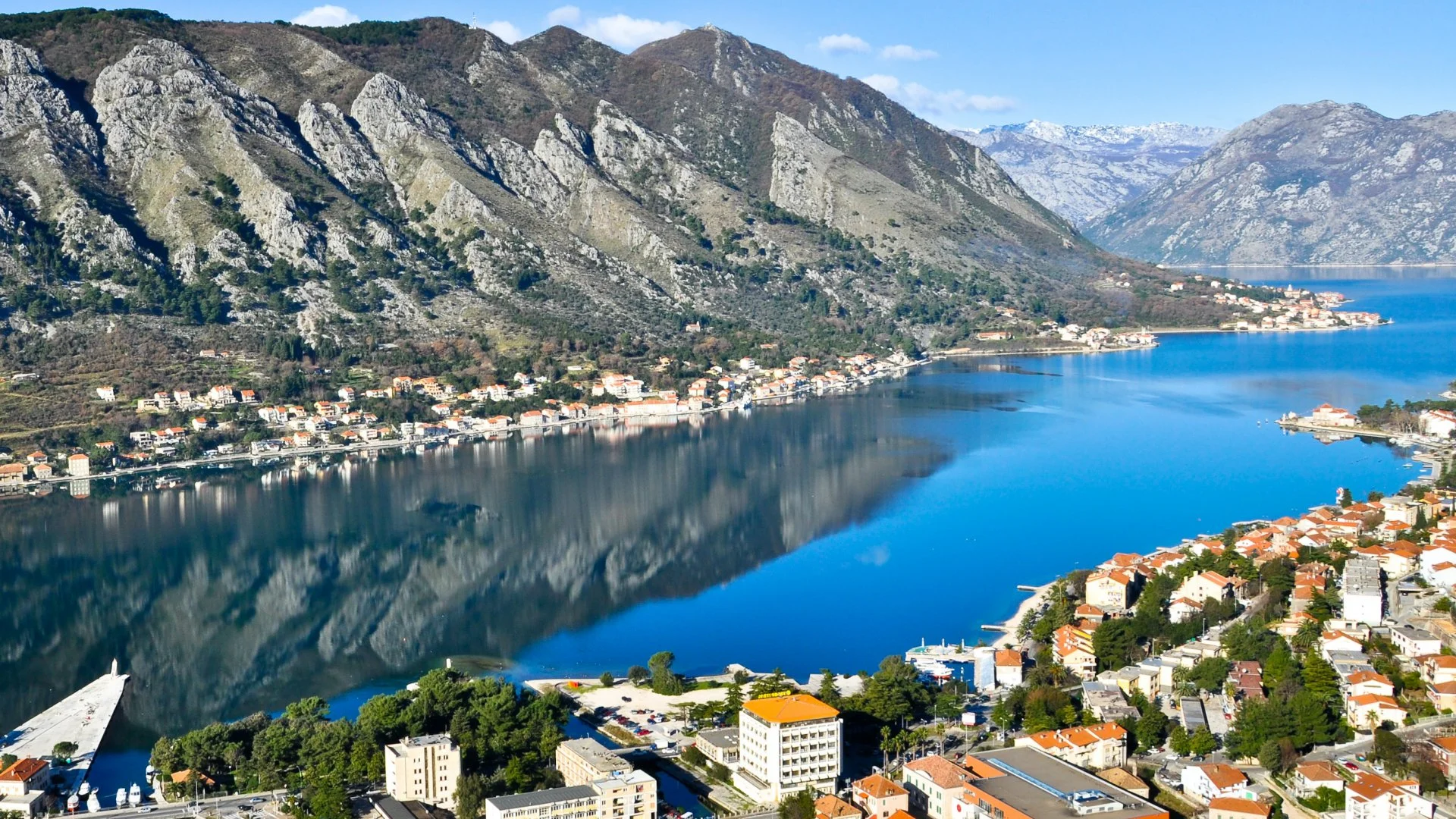
Visitors climb 461 steps, partly through a tunnel in the rock, to reach the mausoleum. Behind it, a circular viewpoint opens onto a breathtaking panorama of rugged peaks, the Bay of Kotor and the Adriatic beyond. Many travellers arrive via the famous Kotor serpentine road, a series of hairpin bends climbing high above the bay, stopping in the village of Njeguši, known for its smoked ham and cheese.
Go early on a clear day for the best views, and bring a layer, as the summit is noticeably cooler than the coast.