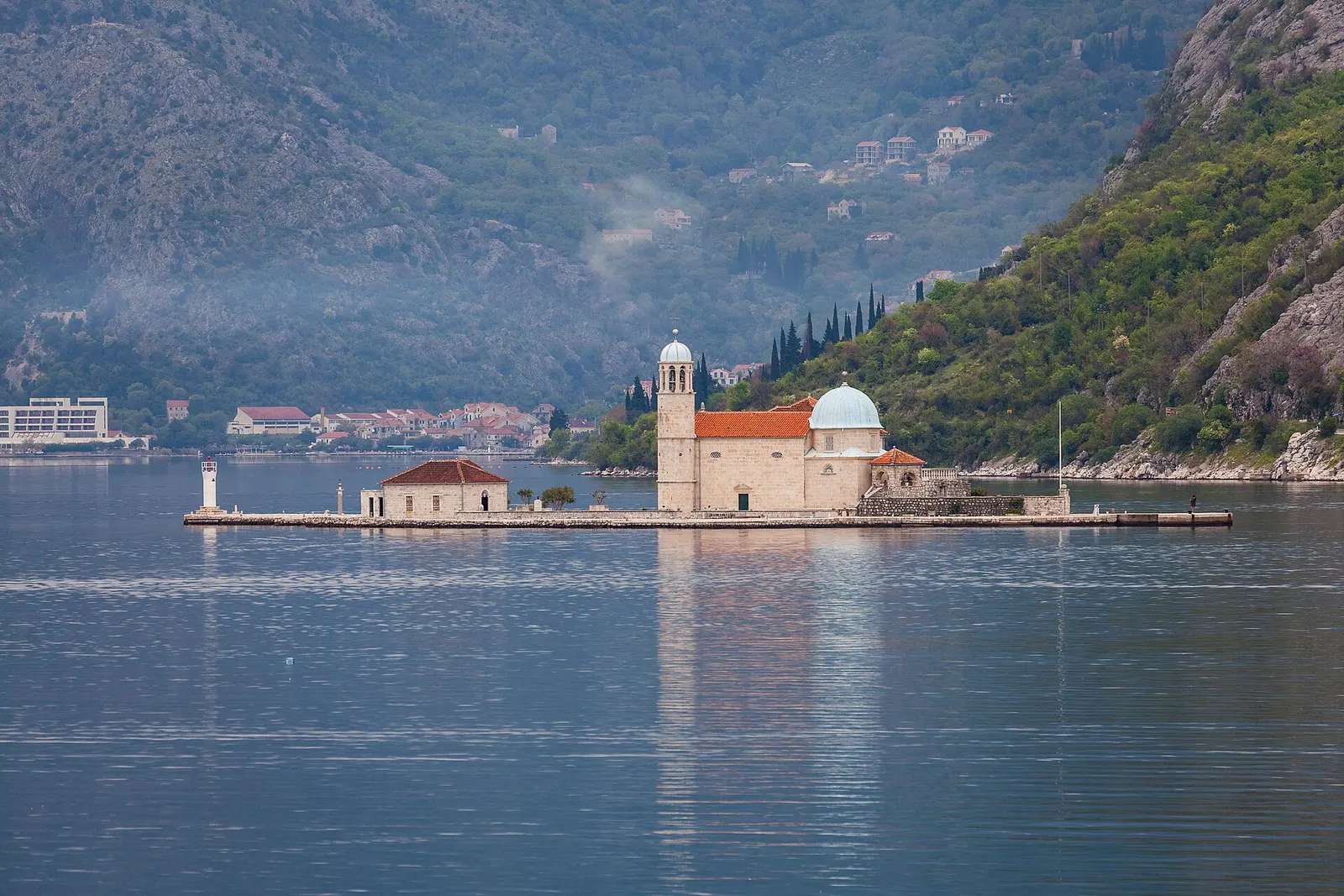
Unusually, the islet is man-made. According to legend, local seamen found an icon of the Madonna and Child on a rock in the sea on 22 July 1452, and from then on laid a stone in the bay after each successful voyage. Over time, rocks and sunken old ships built up the island. The tradition lives on in the fašinada, when every year at sunset on 22 July locals row out in decorated boats to throw stones into the water.
The Catholic church, renovated in 1722, houses a small museum with 68 paintings by the Baroque artist Tripo Kokolja of Perast, silver votive tablets left by sailors and a famous embroidered tapestry, worked for 25 years by Jacinta Kunić-Mijović while she waited for her husband to return, using her own hair among the threads.
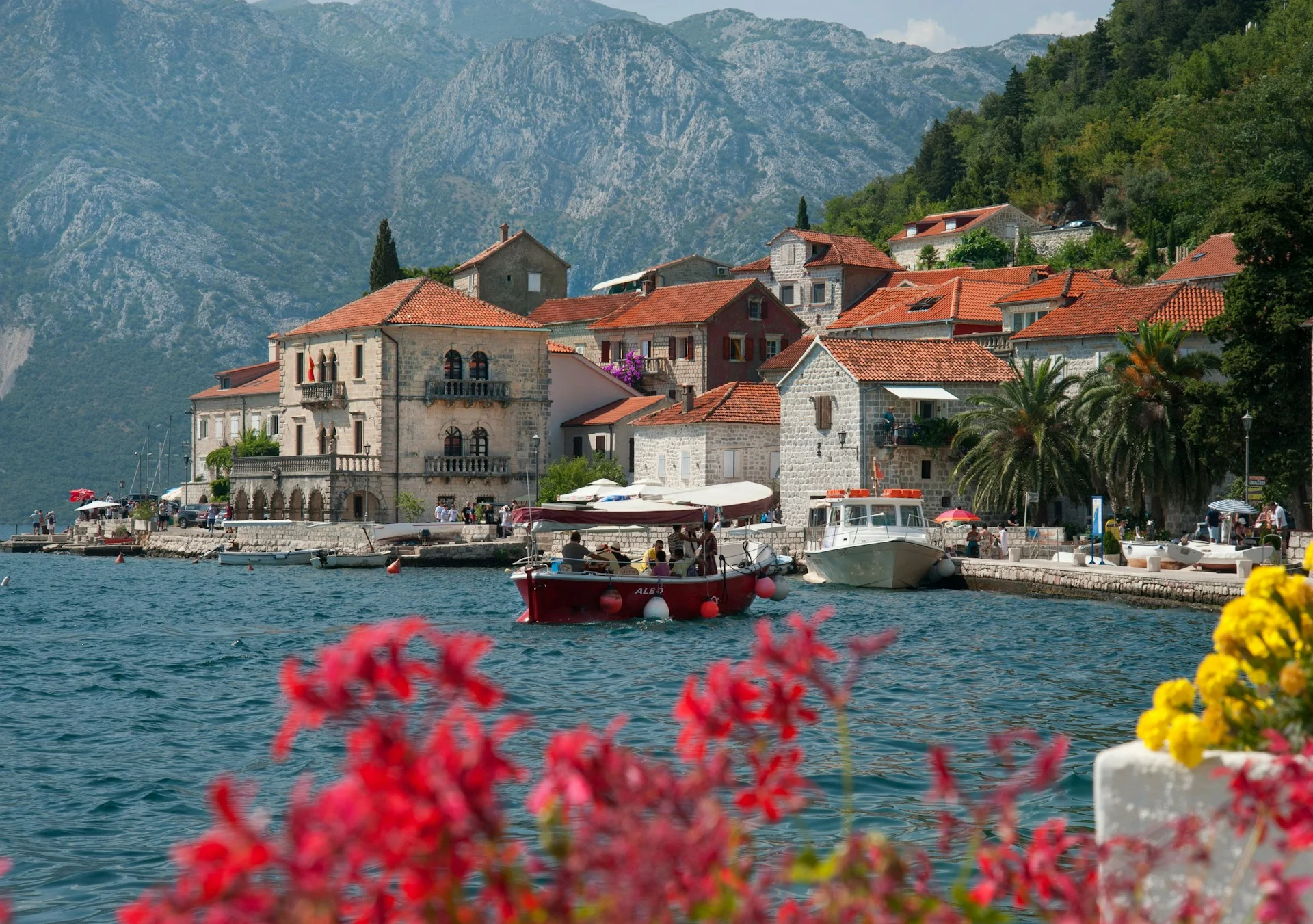
Small boats make the short crossing from Perast throughout the day, making the islet an easy and memorable stop on any trip around the bay.