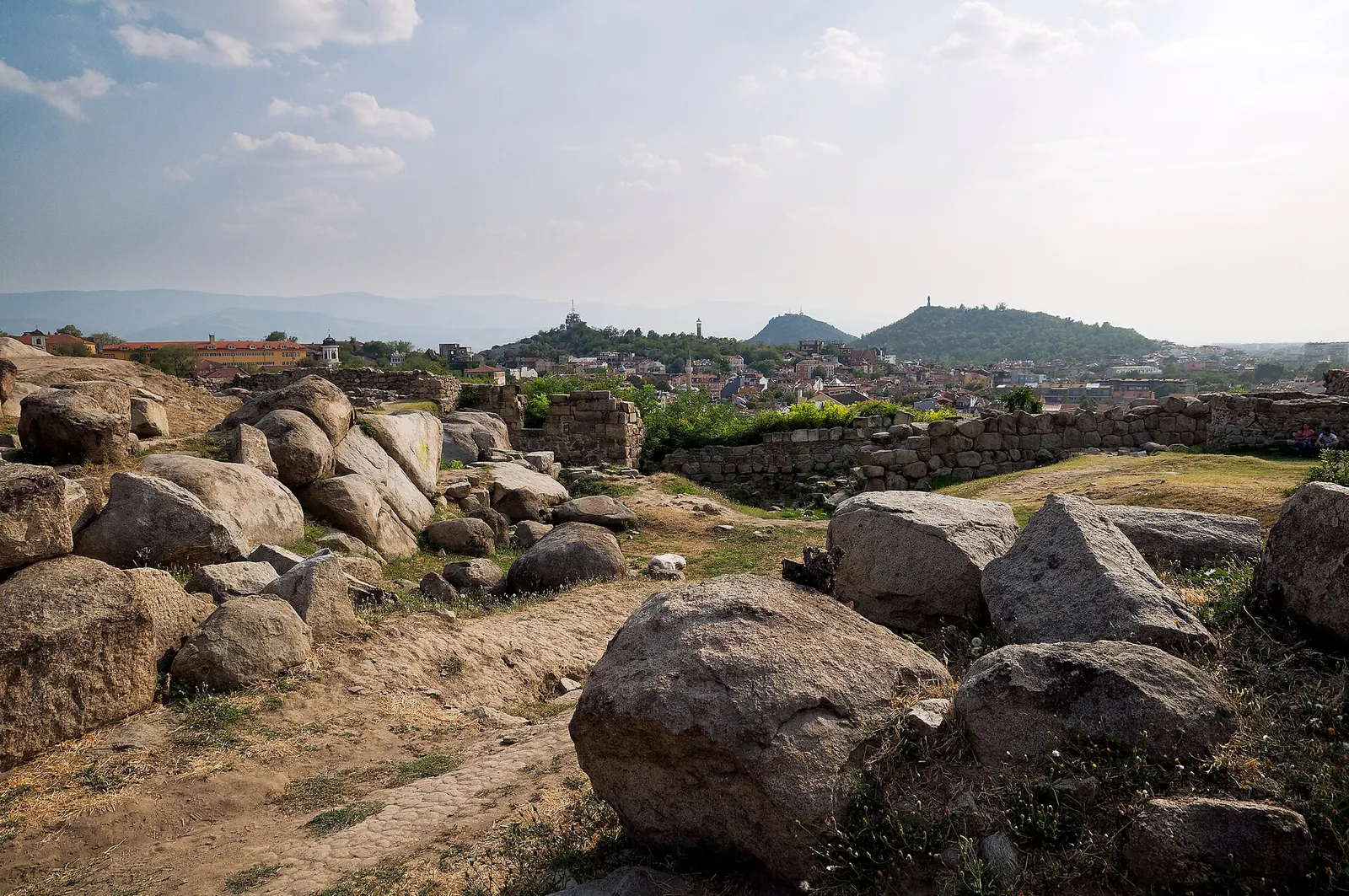
Traces of settlement here date back to around 4000 BC. Later a Thracian town grew up on the hill, and in 342 BC Philip II of Macedon captured it and renamed it Philippopolis. As the city grew, Nebet Tepe became the citadel of its acropolis, and its walls remained part of the defences until the 14th century. The name comes from Turkish words meaning ‘guard hill’, recalling the garrison once stationed here.
Visitors can walk among the remains of walls and towers, including the oldest section, built in the 4th century BC from large syenite blocks fitted together without mortar. Look out for the Justinian-era postern, a 6th-century tunnel with steps cut through the rock beneath the northern wall, and a large stone-and-brick water reservoir. After restoration, the archaeological complex reopened in March 2025 under the care of Plovdiv’s Regional Archaeological Museum.
Come in the late afternoon, when the light over Plovdiv turns golden.