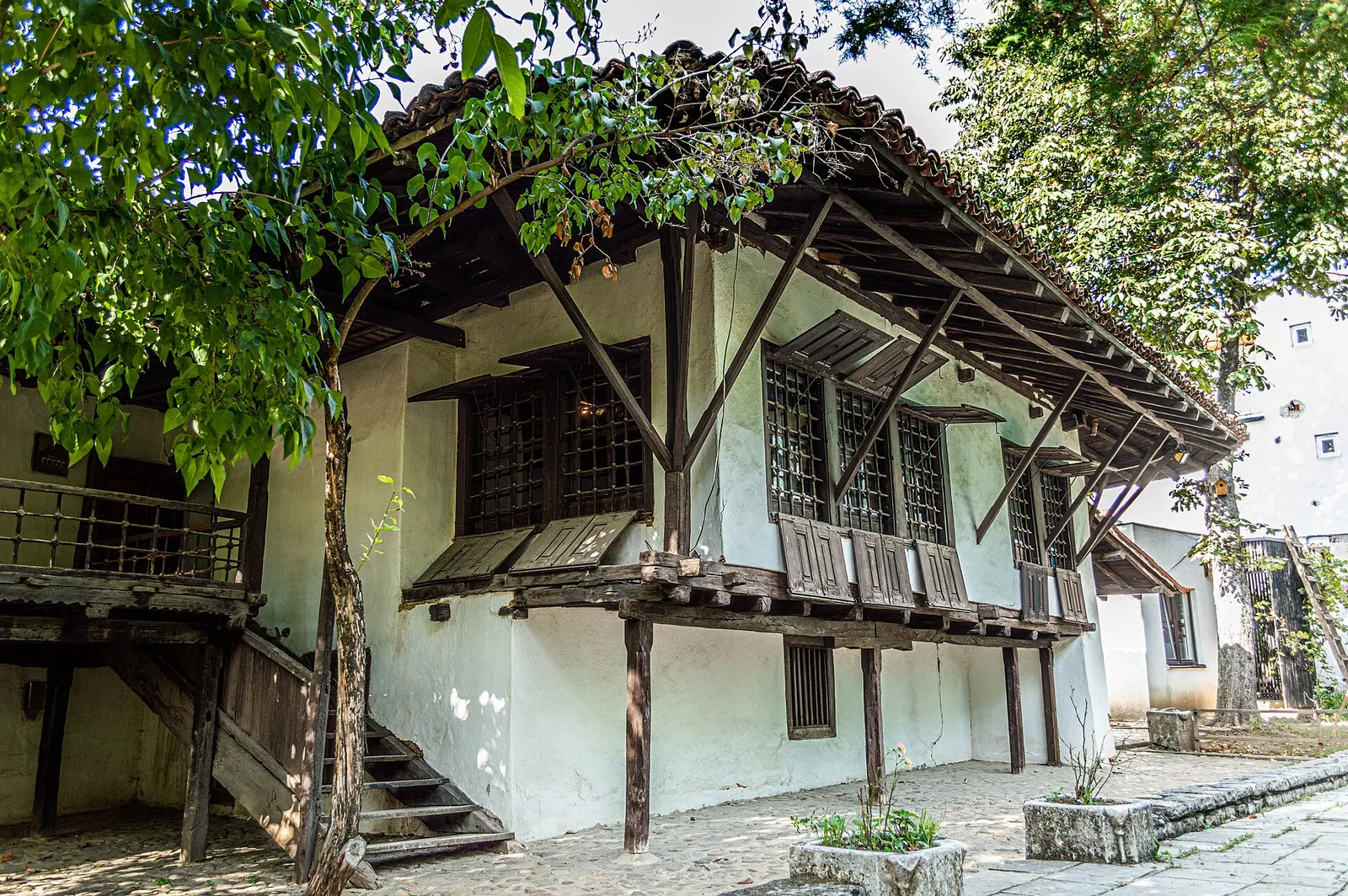
The complex was once the home of a prosperous local family, and its houses date from the 18th and 19th centuries. After the family left in the 1950s, the property was used as a natural history museum. Today it is run by the Kosovo Museum and displays its ethnological collection.
A visit lets you compare two very different homes. The older, more modest house has storerooms and a kitchen area below and a guest room, or oda, above, finished with fine woodwork. The later house is brighter and more spacious, typical of the town’s 19th-century architecture, and the complex even includes a small family bath. The exhibition follows the cycle of life, from birth to death, through traditional costumes, musical instruments, carpets, locally made weapons and everyday objects from Ottoman-period Kosovo.
Quiet and atmospheric, the museum offers a vivid glimpse of domestic life in old Pristina.