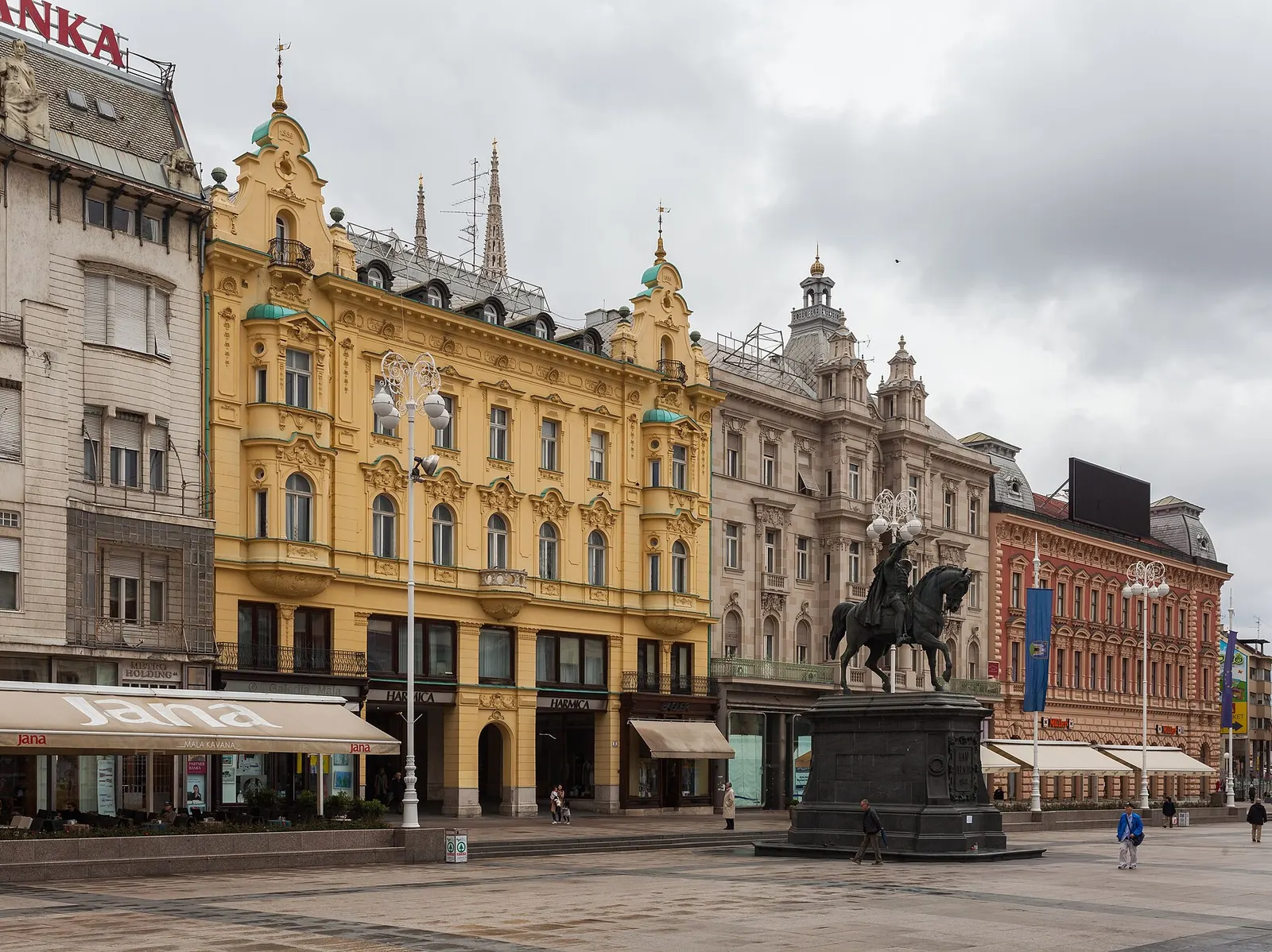
The square has been a marketplace since 1641, when it was known as Harmica, after a tax levied on goods sold here. In 1848 it was named after Ban Josip Jelačić, the Croatian viceroy and national hero, and in 1866 his equestrian statue by the Austrian sculptor Anton Dominik Fernkorn was unveiled. After the Second World War the communist authorities renamed it Republic Square and removed the monument; in 1990 both the name and the statue returned, with the ban now facing south rather than north.
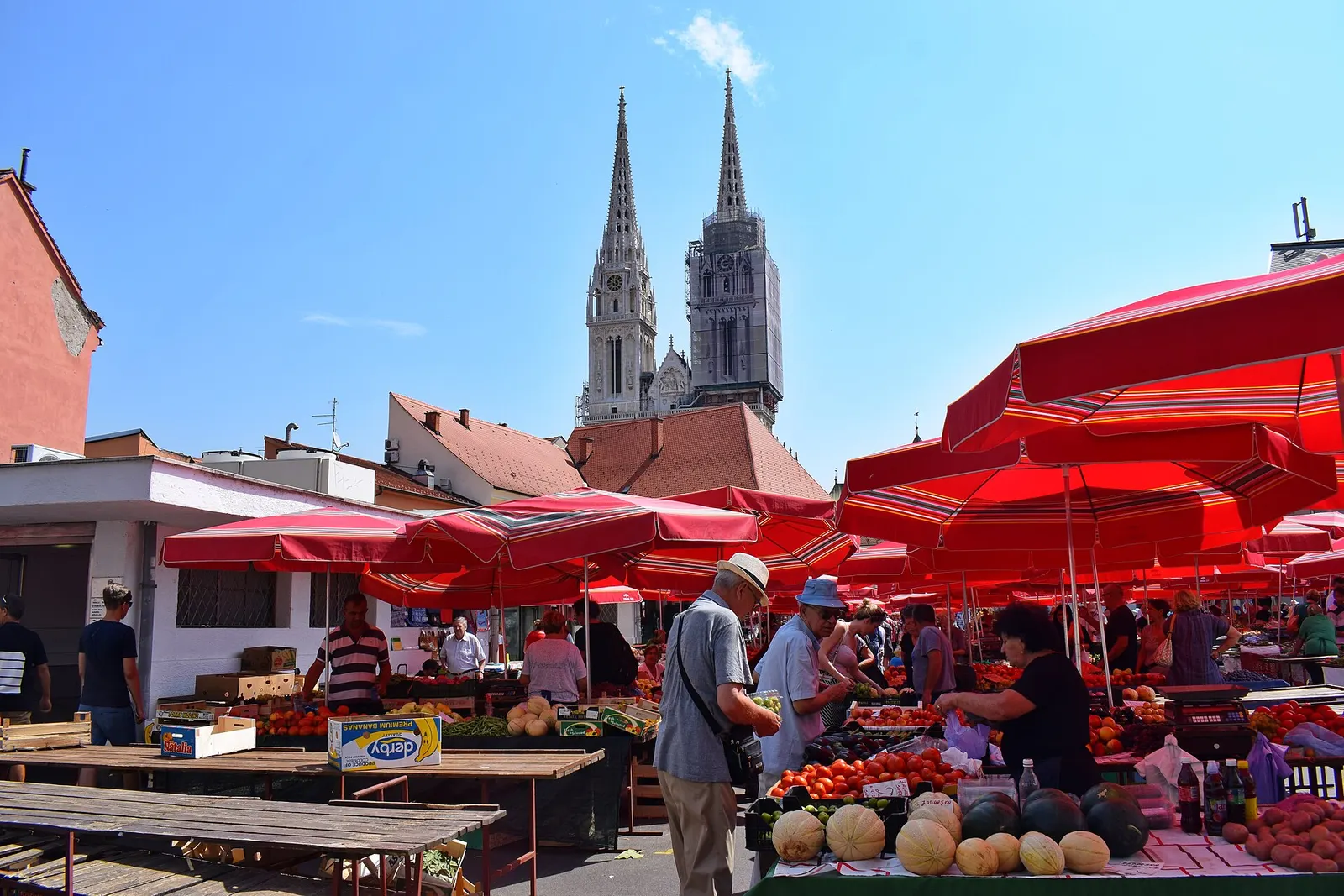
On the eastern side, the Manduševac fountain sits over the spring linked to the legend of Zagreb’s name: a weary commander is said to have asked a girl called Manda to scoop (zagrabiti) water for him. Locals arrange to meet “under the clock” or “under the tail” of Jelačić’s horse, and from here it is a short stroll up to Dolac Market, the cathedral and the Upper Town. During Advent the square glows with festive lights and decorations.
Whether you are starting a walking tour or people-watching over coffee, this is where Zagreb begins.