
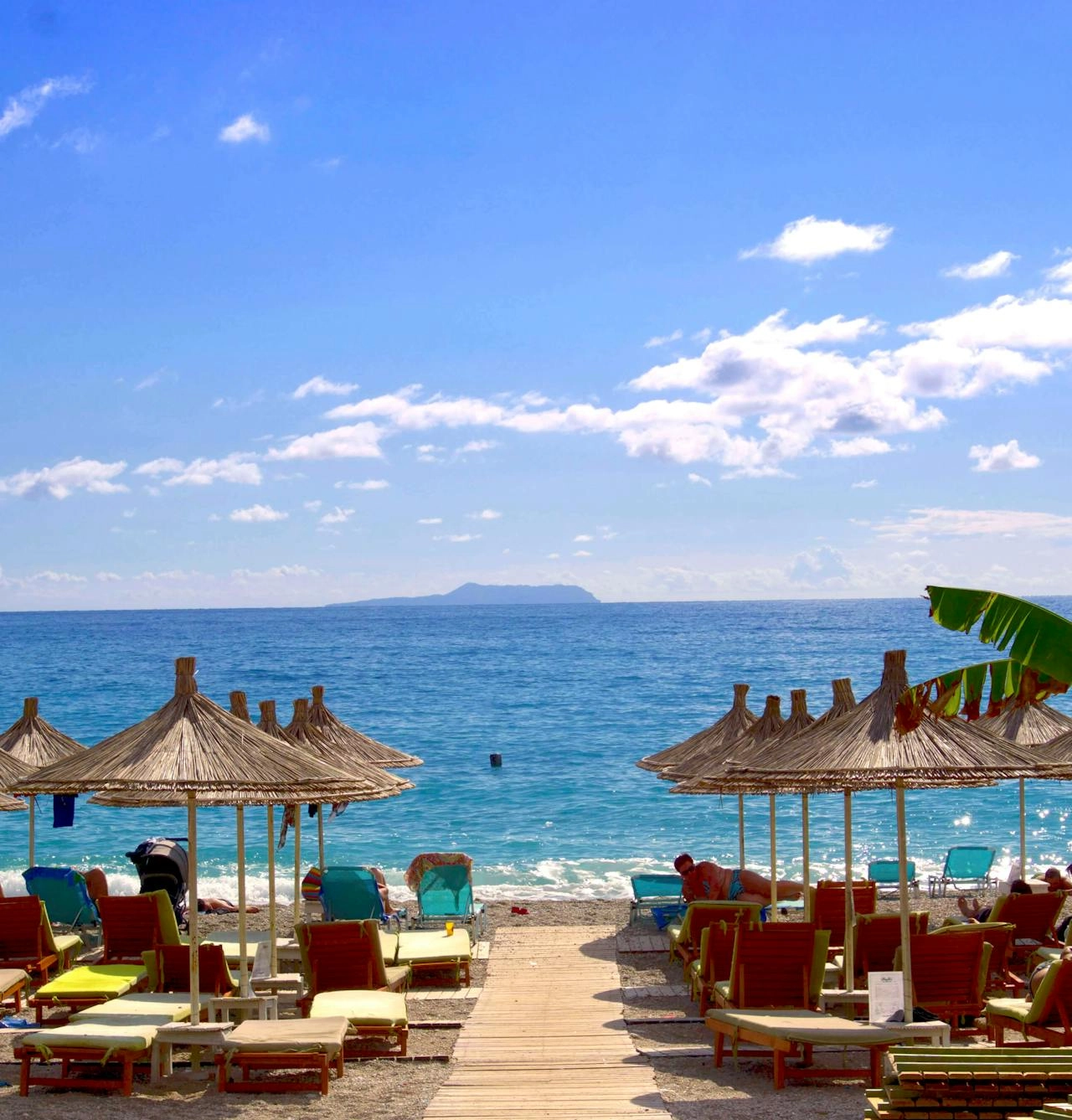
Dhërmi Beach, Albania: A Practical Travel Guide
The first sensation in Dhërmi isn’t just the sound of waves, but the distinct scent of wild oregano mixing with salt air. While travelers often look to the Amalfi Coast for dramatic scenery, this segment of the Ionian Coast offers similar rugged cliffs without the overwhelming crowds.
Geographically, Dhërmi functions as a dual destination: a historic stone village perched high above and a pristine stretch of Dhërmi Beach below where the water rivals a swimming pool’s clarity. With recent infrastructure improvements, this “jewel of the Albanian Riviera” is now a manageable 3.5-hour drive from Tirana, offering an accessible escape where the Ceraunian Mountains dive directly into the sea.
The Tale of Two Dhërmis: Historic Hillside vs. Coastal Paradise
While the coastline draws crowds, the area’s soul lies uphill in the historic Dhërmi village. Perched high above the sea, this settlement feels closer to a Tuscan hamlet, defined by stone houses with heavy slate roofs. Exploring these cobblestone alleyways offers a quiet retreat and sunsets that rival anything found in Santorini.
As the day cools, locals engage in Xhiro—a traditional evening walk. Families parade slowly to greet neighbors, creating a social atmosphere that is distinct from the beach clubs below. Joining this flow is one of the best ways to experience the culture beyond the sun loungers.
Deciding where to stay depends on your preference for morning swims or evening history. The two zones are separated by a steep 10-minute drive, so walking between them is impractical. Most travelers choose the waterfront for convenience, but reaching this isolated coast requires navigating more than just a local hill.
Navigating the Llogara Pass: The Gateway to the Ionian
Getting to the Riviera is an adventure in itself. Most travelers wondering how to get to Dhërmi should prepare for a 3.5-hour journey that culminates in the spectacular Llogara Pass. This mountain road climbs over 1,000 meters above sea level within Llogara National Park, acting as the dramatic dividing line between the Adriatic and Ionian coasts. The ascent through pine forests feels alpine, but as you crest the summit, the view suddenly opens up to reveal the vast, turquoise Mediterranean stretching to the horizon.
While budget travelers often rely on the Furgon—a ubiquitous Albanian minibus that runs on fixed routes—having your own wheels is superior here. Renting a car is highly recommended because the best coves and villages are spread out along the coastline. Without a vehicle, you are effectively tethered to a single beach, missing the freedom to explore hidden spots like Gjipe or Jale at your own pace.
Navigating the switchbacks requires focus, but the infrastructure is modern and well-paved. To ensure a safe descent down to the water, keep these local driving tips in mind:
- Use engine braking (low gears) rather than riding your brakes on the steep, winding descent.
- Watch for herds of goats or sheep, which frequently claim the right of way around blind corners.
- Pull over at the designated “Panorama” viewpoint near the summit for the iconic photo of the road zigzagging toward the sea.
Once you have conquered the mountain, the next challenge is choosing exactly where to drop your bags: Dhërmi vs. Drymades.
Dhërmi vs. Drymades: Which Beach Fits Your Vibe?
Upon reaching the coastline, Dhërmi Beach immediately presents itself as the bustling center of the region. This stretch is famous for smooth white pebbles which keep the water crystal clear but can be tough on bare feet, making aquatic shoes a smart investment. Just around the rocky headland lies Drymades, a slightly more relaxed alternative where the shoreline transitions into a finer mix of sand and gravel. While the main beach offers iconic views of the village above, Drymades feels wider and often captures the best sunsets in the bay.
Your choice of location largely depends on the atmosphere you seek. Dhërmi is the epicenter of social life, hosting some of the region’s top-rated beach clubs where DJs spin deep house music against a backdrop of clinking cocktail glasses. Conversely, swimming at Drymades tends to be a calmer experience suited for families or couples wanting to escape the high-energy bass. Here, the vibe shifts from day parties to bohemian relaxation, offering plenty of space to rent a wooden sunbed without feeling crowded.
Both beaches provide excellent amenities, meaning you are never far from fresh seafood pasta or a cold espresso. However, if the manicured rows of umbrellas feel too developed for your taste, you might need to leave the paved roads entirely. For those willing to trade convenience for isolation, the true wilderness awaits just a short boat ride away at the legendary Gjipe Canyon.
The Secret Coves: Reaching Gjipe Beach and the Pirate’s Cave
While Dhërmi provides convenience, true adventure seekers look south toward the dramatic Gjipe Canyon. Enclosed by towering red cliffs, this protected area feels worlds apart from the resort towns. Most visitors arrive by water taxi, but hiking the 30-minute trail from the monastery parking lot offers stunning coastal views before you reach the hidden coves near Gjipe. Since the path is rocky and fully exposed to the midday sun, ensure you pack the right supplies:
- Sturdy footwear (sneakers or boots, not flip-flops)
- At least 1.5 liters of water per person
- Cash (Lek) for the solitary eco-camp bar
If hiking isn’t on your agenda, the coastline north of the village offers treasures accessible only by sea. Exploring the Pirate’s Cave by boat brings you into a natural limestone cathedral where the water glows an eerie, electric blue. For a full-day excursion, boat tours to Grama Bay reveal a historic cove where ancient sailors carved inscriptions into the rock walls while waiting out storms.
These isolated bays offer a rugged authenticity that defines the region’s history. Yet, some travelers prefer soft sand over wild cliffs. To help you choose the right base, the next step is comparing the stone elegance of Dhërmi against the island paradise of Ksamil.
Dhërmi vs. Ksamil: Deciding Between the Riviera’s Heavyweights
Choosing between Dhërmi and Ksamil for summer holidays often comes down to your preferred landscape. Ksamil is famous for its shallow, sandy bays that mimic the Caribbean, making it incredibly popular for families and social media enthusiasts. In contrast, Dhërmi offers a more dramatic atmosphere with deep Ionian blue water and smooth white pebble shores that keep visibility crystal clear. While Ksamil feels like a bustling resort purpose-built for tourism, the Riviera’s northern gem retains a connection to its history, with the old stone village watching over the modern beach clubs below.
Financial planning is also a key factor, as travelers often ask if Dhërmi is expensive compared to its southern neighbor. Generally, the area markets itself as a premium destination with “boutique” pricing, particularly in July and August, whereas Ksamil offers a wider range of budget options despite the heavier crowds. However, the price premium here buys you personal space and a closer look at local culture rather than just dense rows of sunbeds. Once you have settled on your ideal beach base, the next logical step is exploring the region’s culinary soul.
Savoring the Coast: Seafood, Honey, and Himarë Traditions
Dining along this stretch of the Riviera offers a lighter departure from the meat-heavy reputation of the Balkans. Because Dhërmi sits directly across the sea from Puglia, the cuisine is a Mediterranean fusion where the day’s catch dictates the menu rather than a set list of ingredients. Authentic tavernas rely on “zero-kilometer” sourcing—not as a marketing trend, but as a historical necessity—resulting in sharper tomatoes and robust olive oil born from the rocky soil.
To ensure you experience true traditional Mediterranean food in the Himarë region, look past generic tourist menus for these local staples:
- Byrek with wild herbs: Savory pastry filled with seasonal mountain greens.
- Grilled octopus: Served simply with lemon and premium olive oil.
- Southern honey: Infused with thyme from the Llogara mountains.
- Local citrus: Grown in the nearby terraced valleys.
The best time of year to visit the Ionian Coast for cuisine is September, offering fresh harvests before you tackle the practical logistics of your journey.
Your Dhërmi Action Plan: Timing, Budget, and Essential Tips
You are now equipped to navigate the Riviera not just as a tourist, but as a savvy traveler. To maximize your experience without over-planning, consider this effortless three-day flow:
- Day 1: Wander the Old Village cobblestones, then descend to Dhërmi Beach for a sunset seafood dinner.
- Day 2: Rent a boat to explore the hidden Gjipe Canyon and secluded coves accessible only by water.
- Day 3: Relax at the trendy Drymades section before diving into the nightlife in nearby Vlorë.
Ensure you pack sturdy swim shoes for the pebble terrain and carry Albanian Lek for local vendors. By targeting the shoulder months—June or September—you secure exceptional value for money. You aren’t just booking a getaway; you are experiencing the Mediterranean’s last true secret.