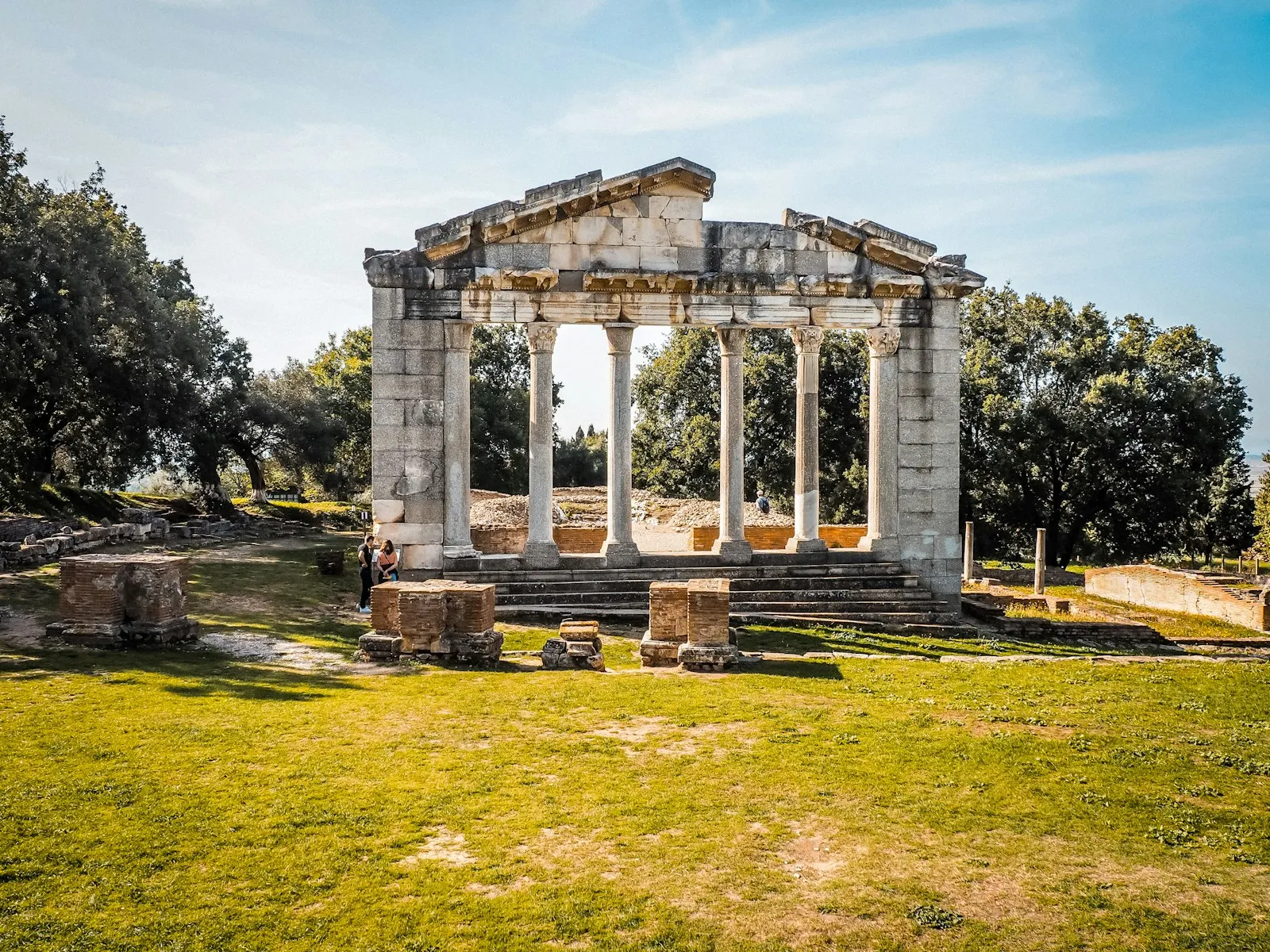
Apollonia is one of Albania’s most important archaeological sites: a Greek colony founded around 600 BC by settlers from Corinth and Corfu that grew into a prosperous Roman city. Its ruins crown a breezy hill near the village of Pojan, about 12 km west of Fier, and most visitors need two to three hours to explore them.
Less famous than Butrint, Apollonia Archaeological Park is wonderfully peaceful. Columns rise among trees, a medieval monastery houses the site museum and the views stretch across the coastal plain. It is also easy to combine with Berat, Ardenica Monastery or the ruins of Byllis on a day trip from Tirana.
A short history of Apollonia
According to ancient tradition, colonists from Corinth, joined by settlers from Corcyra (Corfu), founded the city around 600 BC; some accounts give 588 BC. It was first named after its founder, Gylax, before taking the name of the god Apollo. The city stood near the river Aoös – today’s Vjosa – which linked it to the sea and helped it thrive as a trading port.
Apollonia came under Roman control from 229 BC and became known as a place of learning. The young Octavian – the future Emperor Augustus – was studying here in 44 BC when news arrived of Julius Caesar’s assassination, and Cicero praised Apollonia as “magna urbs et gravis”, a great and important city.
Decline came from nature rather than conquest. In the 3rd century AD an earthquake shifted the course of the river, the harbour silted up and the surrounding land turned to marsh, and by late antiquity the city had been largely abandoned. Excavations began in the early 20th century, with French and later Albanian teams uncovering much of what you see today, and the site was declared an archaeological park in 2003.
What to see at Apollonia
The Monument of the Agonothetes
The site’s signature image is the reconstructed colonnaded façade of the Monument of the Agonothetes, often called the bouleuterion or council house. Built in the 2nd century AD, it was paid for by a wealthy citizen in honour of his brother, and its inscription records that gladiator games marked its dedication. The agonothetes were the officials who organised public games and festivals.
The odeon and the civic centre
Facing the monument is the small odeon, a semicircular theatre used for meetings and performances. Around it lie the remains of the Roman civic centre, including a library, a monumental fountain known as a nymphaeum and the foundations of temples, which together give a good sense of the city’s public heart.
The theatre and the walls
Elsewhere on the hill are the remains of a large theatre and stretches of the city walls. Wander to the edges of the site for views over the plain towards the sea, and look out for fragments of columns and carved stone scattered among the trees.
The Monastery of St Mary and the museum
On the hilltop stands the medieval Monastery of St Mary, a Byzantine church and monastery said to have been built partly with stone from the ancient city. Its buildings house the archaeological museum, whose collection includes sculpture, inscriptions, pottery and coins from Apollonia. The museum reopened in 2011 after a long closure, and opening arrangements can still change, so check locally before you go.
How to get to Apollonia
Apollonia lies close to the main road south from Tirana. By car, allow around 1.5–2 hours from Tirana, roughly an hour from Berat and about an hour from Vlorë; the final approach leaves Fier for the village of Pojan. That makes it an easy half-day trip from Vlorë or the northern Riviera, and a natural break on the long drive between Tirana and Gjirokastër or Sarandë.
Without a car, take a bus to Fier and continue by taxi, agreeing the fare in advance. The simplest option is a guided trip: our Berat City and Apollonia Park Day Tour leaves Tirana or Durrës in the morning, stops at Belsh Lake, explores Berat and finishes with a guided visit to Apollonia before returning in the evening.
Combine Apollonia with nearby sights
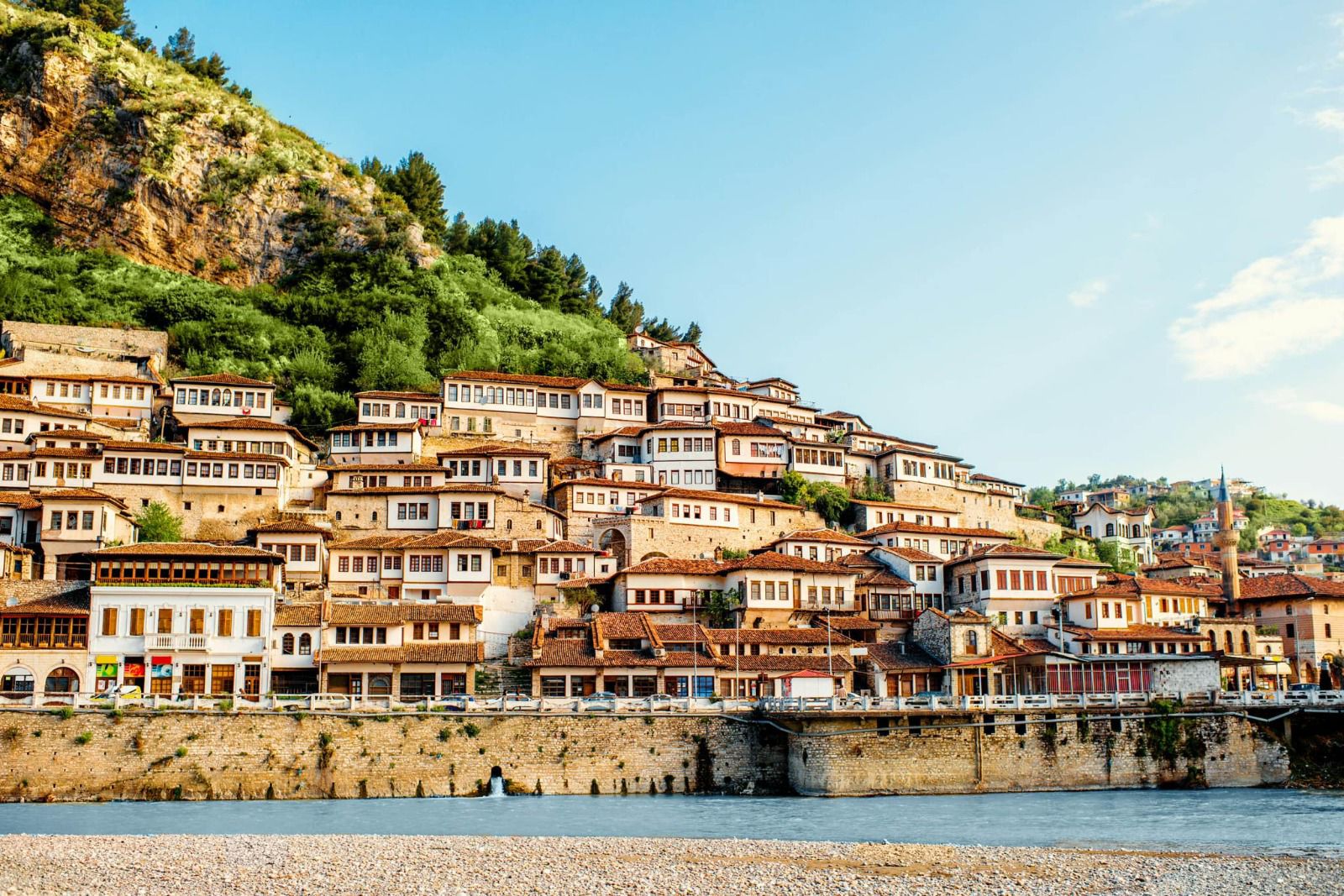
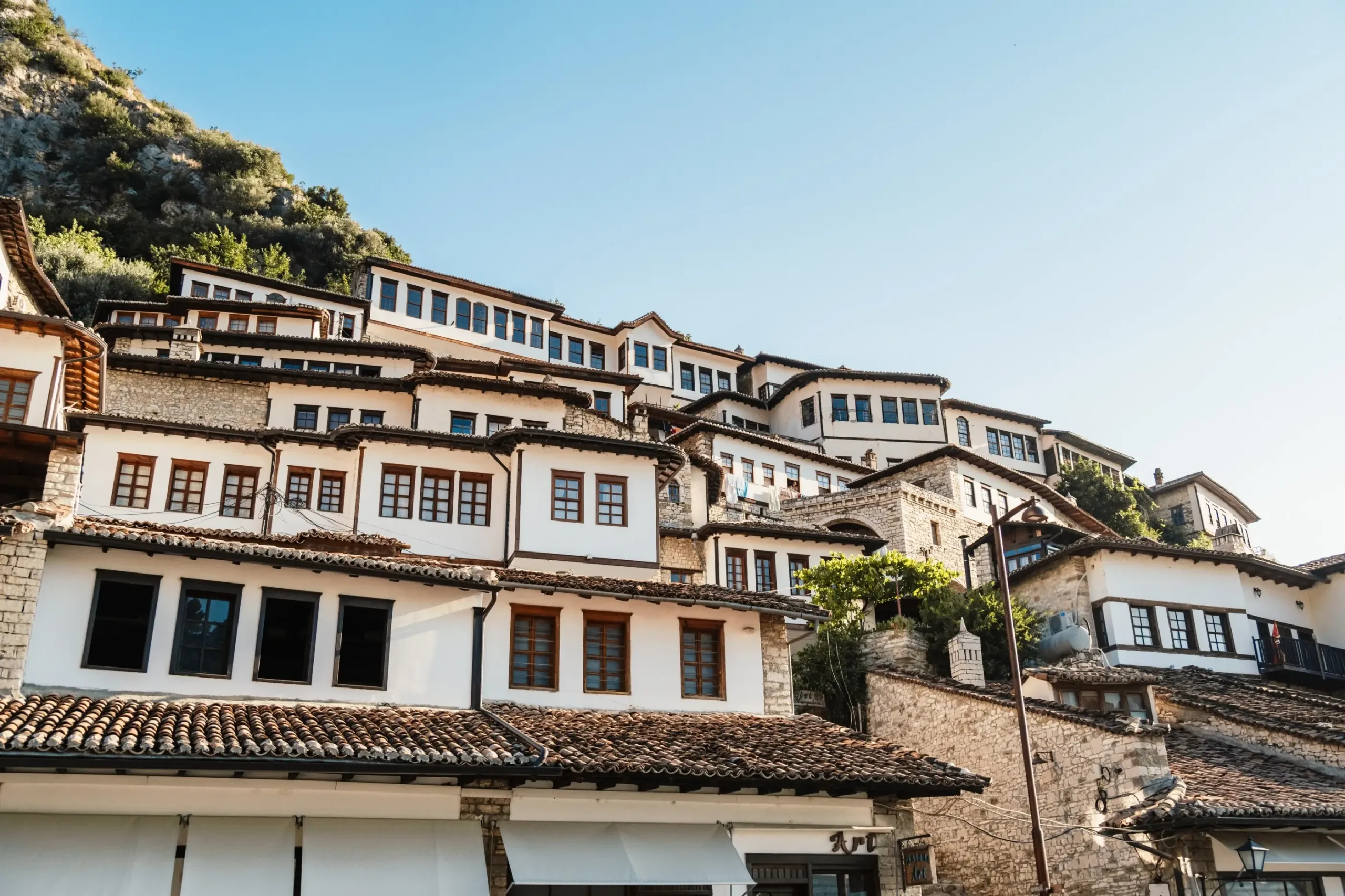
- Berat: the UNESCO-listed “town of a thousand windows” is about an hour away and pairs naturally with Apollonia – read our guide to the charm of Berat.
- Ardenica Monastery: on the road between Lushnjë and Fier, Ardenica Monastery dates back to the late 13th century and is where Skanderbeg married Donika Arianiti in 1451. Its church has 18th-century frescoes by the Zografi brothers.
- Byllis: a hilltop city founded around the mid-4th century BC by the Illyrian Bylliones, with a Hellenistic theatre, early Christian basilicas with mosaic floors and superb views over the Vjosa valley. Its 4th-century BC walls, more than 2 km long, still ring much of the hilltop.
- Karavasta Lagoon: Albania’s largest lagoon, on the coast north of Fier, is home to Dalmatian pelicans – see Karavasta Lagoon.
Tips for visiting Apollonia
- Allow enough time: two to three hours covers the ruins and the museum at a relaxed pace.
- Go early or late: shade is limited, so summer middays can be very hot. Spring and autumn are ideal, and spring brings wildflowers.
- Wear good shoes: paths are uneven, grassy and sloping in places.
- Bring water and a hat, especially in summer.
- Check the practicalities: opening hours and ticket prices change, and some areas may be closed for conservation work.
- Consider a guide: many monuments are only partly excavated, and a good guide brings the layout of the ancient city to life.
Frequently asked questions
When was Apollonia founded?
Apollonia was founded around 600 BC by Greek colonists from Corinth, joined by settlers from Corcyra, the island now known as Corfu; some sources give the date as 588 BC. It later became an important Roman city, where the young Octavian, the future Emperor Augustus, was studying in 44 BC when Julius Caesar was assassinated.
How long do you need to visit Apollonia?
Most visitors spend two to three hours at Apollonia, which is enough to see the Monument of the Agonothetes, the odeon, the theatre area, the walls and the monastery. Allow extra time if the museum is open or if you enjoy photography. On a day trip it combines comfortably with Berat or Ardenica Monastery.
Is there a museum at Apollonia?
Yes. The archaeological museum is housed in the medieval Monastery of St Mary within the site, and its collection includes sculpture, inscriptions, pottery and coins found during excavations. It reopened in 2011 after a long closure. Opening arrangements can change, so check locally before your visit if seeing the museum is a priority.
Can you visit Apollonia and Berat in one day?
Yes. The two are roughly an hour apart by road, and both can be reached from Tirana in around two hours, so a combined day trip is very popular. Plan on two to three hours in Berat and around one and a half hours in Apollonia. A guided tour removes the driving and keeps the timings easy.
How do I get to Apollonia without a car?
Buses run from Tirana and other cities to Fier, and from there it is a short taxi ride of about 12 km to the site near Pojan. Agree the fare before you set off and arrange your return in advance, as taxis are not always waiting at the ruins. Alternatively, join a guided day tour that includes transport.
See Apollonia with a guide
Ready to walk in Octavian’s footsteps? Join our Berat City and Apollonia Park Day Tour from Tirana or Durrës, or see Apollonia as part of our All of Albania in 8 Days tour, which visits the site on the way south to Gjirokastër.