The best places for birdwatching in Albania are Karavasta Lagoon, home to a breeding colony of Dalmatian pelicans, Narta Lagoon near Vlorë, known for its flocks of greater flamingos, Lake Shkodër in the north and the wetlands of Butrint in the south. Spring and autumn migration and the winter months are the richest times to visit.
Albania lies on the Adriatic flyway, one of the routes migrating birds follow between Europe and Africa, and its low coastline is lined with lagoons, salt marshes, river deltas and reed beds. Several of these wetlands are protected as sites of international importance under the Ramsar Convention, and most are within a few hours’ drive of Tirana.
Why Albania is good for birdwatching
Albania packs a remarkable range of wetland habitats into a small country: brackish lagoons, the vast freshwater Lake Shkodër, the Prespa lakes, river deltas and coastal marshes. Herons, egrets, waders, gulls, terns, ducks and grebes are widespread, while raptors hunt over the hills behind the coast.
Conservation work is making a difference too. In 2020 the Albanian Ornithological Society recorded 85 breeding pairs of Dalmatian pelicans at Karavasta, the highest number in 40 years, after nesting sites were restored and the colony was guarded. For more of the country’s protected landscapes, see our guide to Albania’s national parks.
Karavasta Lagoon: the pelican colony
Karavasta, on the coast near Divjakë between Durrës and Fier, is the largest lagoon in Albania and the heart of Divjakë-Karavasta National Park. Cut off from the sea by a long sand spit and backed by pine forest, the lagoon is a Ramsar-listed wetland, and more than 200 bird species have been recorded in the park.
Its star is the Dalmatian pelican, one of the largest flying birds in the world, which nests on small islands in the lagoon. Breeding begins in winter and chicks fledge in spring, and pelicans can often be seen fishing across the lagoon outside the nesting season too. Watch from the shore and viewpoints, keep well away from the islands, and never take a boat towards the colony.
The pine woods and beach at Divjakë are pleasant for a picnic and a look for woodland birds, and the monastery of Ardenica and the ancient city of Apollonia are both within easy reach.
Narta Lagoon and Zvërnec: flamingos near Vlorë
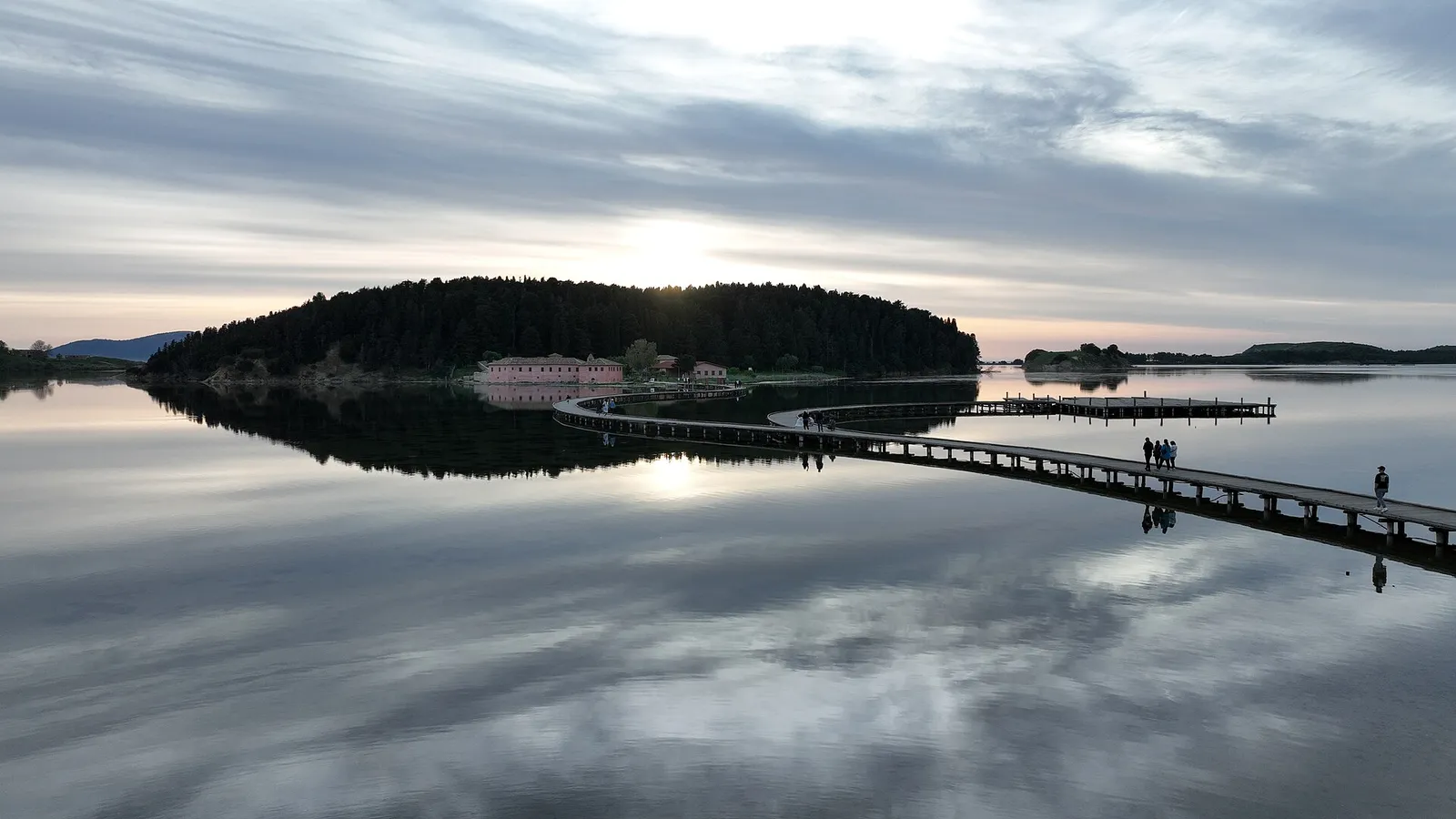
Just north of Vlorë, Narta Lagoon is a shallow, salty lagoon formed by sediment from the Vjosa, which in 2023 became Europe’s first wild river national park. Greater flamingos gather here in hundreds and sometimes thousands, especially outside the summer months, along with waders on the salt pans and large numbers of wintering waterbirds.
The easiest access is at Zvërnec, where a wooden footbridge leads to a pine-covered island and the medieval Zvërnec Monastery. Early morning, with flamingos feeding in the soft light and the Karaburun peninsula across the bay, is the time to be there.
Lake Shkodër and the north
Lake Shkodër, shared with Montenegro, is the largest lake in the Balkans, and its Albanian side is a protected nature reserve and Ramsar site. In winter its open water holds thousands of waterbirds, dominated by diving species such as pygmy cormorants, pochards, tufted ducks and great crested grebes, while herons and egrets work the reedy margins. Dalmatian pelicans breed on the Montenegrin side and can be seen across the lake.
The lakeside road from Shkodër to Shiroka and Zogaj offers easy views. Nearby, the Buna River delta at Velipojë and the Kune-Vain lagoons near Lezhë are both recognised as important bird areas and are well worth adding for waders and other wetland species.
Butrint and the south
In the far south, Butrint National Park combines one of Albania’s greatest archaeological sites with a Ramsar-listed lagoon, reed beds, salt marshes and the Vivari Channel. More than 240 bird species have been recorded here, from little egrets and marsh harriers to waders on the coastal marshes and wintering grebes, cormorants and pochards.
Birding here pairs easily with a beach stay in Ksamil or Saranda, and early mornings around the channel and marshes are the quietest. Inland, the Prespa lakes in the southeast host both great white and Dalmatian pelicans in summer, and the Vjosa valley is home to the endangered Egyptian vulture.
When to go
- Spring (March–May): migration brings waders, terns, herons and raptors along the coast, and the Karavasta pelicans are raising their chicks.
- Summer (June–August): hot, with fewer waterbirds and plenty of mosquitoes around the lagoons, so go at dawn and dusk.
- Autumn (September–November): the return migration, with good variety and comfortable temperatures.
- Winter (December–February): a great season for flamingos at Narta and for big rafts of ducks, grebes and cormorants on the lagoons and Lake Shkodër.
Responsible birding and practical tips
- Keep your distance from nesting and roosting birds; pelicans may abandon their nests if disturbed.
- Never fly drones near colonies or flocks, and avoid boat trips that approach nesting islands.
- Stay on tracks and paths, especially on dunes and salt marsh, and take your litter home.
- Avoid call playback, particularly in the breeding season.
- Use local guides, guesthouses and restaurants, so that protected wetlands bring income to the communities around them.
- Log your sightings on eBird to help build a picture of Albania’s birdlife.
Pack binoculars, a telescope if you have one, insect repellent, sun protection and waterproof footwear. Some lagoon tracks turn muddy after rain and are easier with a 4x4, and village cafés may only take cash.
Frequently asked questions
Where can I see pelicans in Albania?
The best-known site is Karavasta Lagoon in Divjakë-Karavasta National Park, where Dalmatian pelicans nest on small islands and fish across the lagoon. Watch from the shore rather than by boat. Pelicans also visit Lake Shkodër, where they breed on the Montenegrin side, and the Prespa lakes in the southeast, which host both Dalmatian and great white pelicans in summer.
When is the best time to see flamingos at Narta?
Greater flamingos can be found at Narta Lagoon for much of the year, but numbers are usually highest outside summer, during migration and through the winter. Calm, clear mornings from late autumn to early spring give the best views, with soft light on the water and few people around. Numbers vary from year to year, so ask locally where the flocks are feeding.
Do I need a guide for birdwatching in Albania?
Not necessarily: Zvërnec, the shore at Divjakë and the lakeside road near Shkodër are easy to explore independently. A local birding guide is worthwhile if you want particular species, need to reach lagoon tracks best tackled by 4x4 or want up-to-date advice on where walking is permitted in protected areas, as access rules can change.
Is Albania good for birdwatching in winter?
Yes, winter is one of the best seasons. The lagoons and Lake Shkodër fill with wintering ducks, grebes, cormorants and gulls, and flamingos are often present in good numbers at Narta. Days are shorter and can be wet, especially in the north, but the coast is mild and the sites are quiet. Pack waterproofs, a warm layer and a flask of something hot.
What should I bring for birdwatching in Albania?
Binoculars are essential, and a telescope makes a real difference on the wide lagoons at Karavasta, Narta and Lake Shkodër. Add a field guide or app for European birds, insect repellent for the warmer months, sun protection, waterproof footwear for muddy tracks and plenty of water. Cash is useful in rural areas, where small cafés and guesthouses may not accept cards.
Would you like to build a trip around Albania’s wetlands? Request a private tour and tell us which lagoons and lakes you would like to include, or combine Lake Shkodër with history on our Shkodër day tour, which includes a traditional lunch by the lake.
Cover photo: Agonsta24 · CC BY-SA 4.0 · Wikimedia Commons