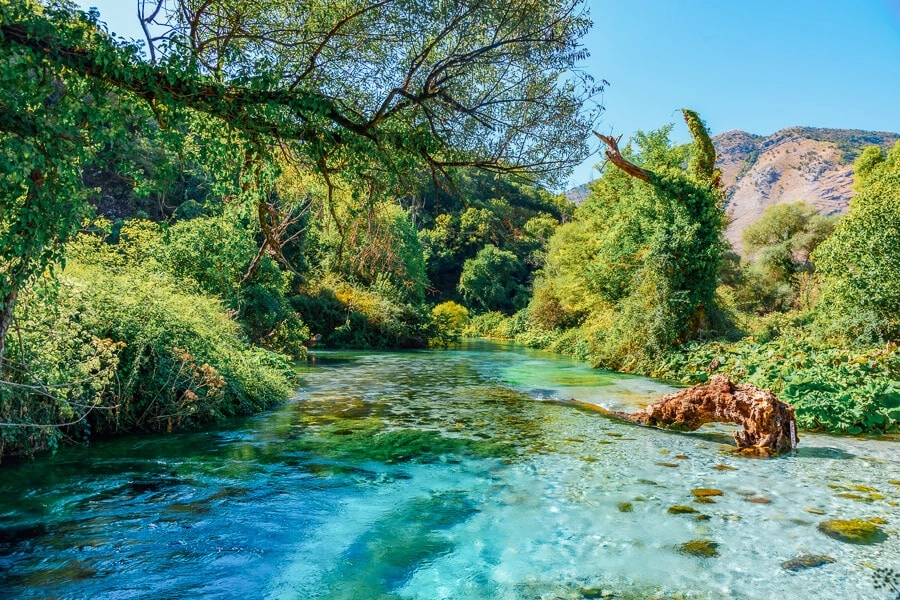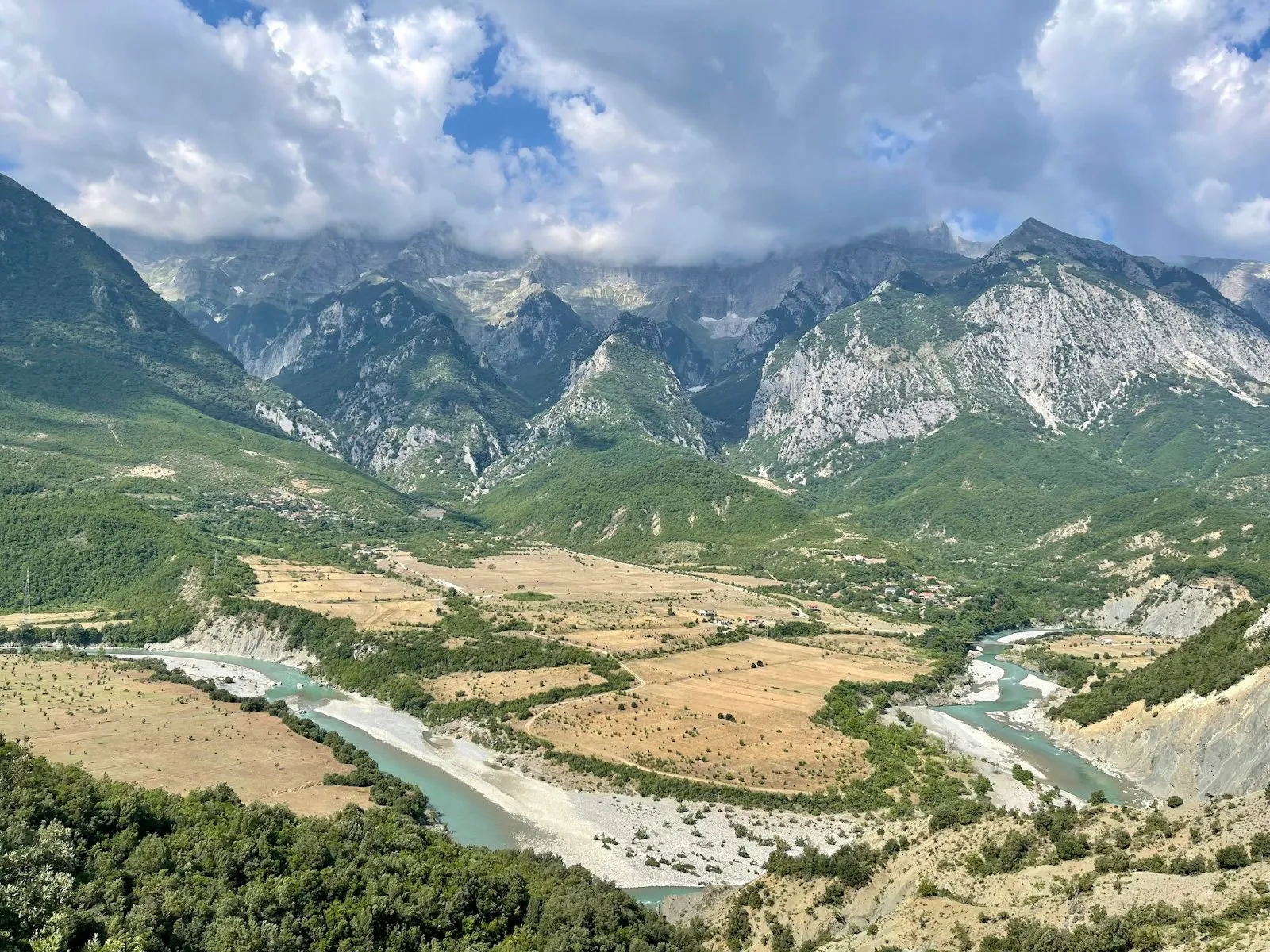
The Benja hot springs are a group of warm, mineral-rich thermal pools beside the Lengarica river, about 13 km from Përmet in southern Albania, where an Ottoman-era stone bridge arches over the water at the mouth of the Langarica canyon. Combine a soak with a walk up the canyon, a rafting trip on the Vjosa, protected since 2023 as Europe’s first wild river national park, and a night in Përmet, the riverside town known as the city of roses.
This guide covers the springs, the town and the river, with tips on when to go and how to fit the valley into a trip through the south.
Përmet, the city of roses
Përmet sits in the Vjosa valley between the Trebeshinë and Dhëmbel mountains, a small, green town with an easy-going pace. Its landmark is the City Stone (Guri i Qytetit), a huge rock beside the river right in the centre; steps lead to the top, where there are traces of an old fortification and wide views over the valley.
The town is famous for its food and drink, above all gliko, whole fruits such as cherries, plums and grapes preserved in syrup, as well as jams, compotes, local wine and raki. Roses are part of local life too, with rose water and other rose products made in the area. In the evening, join the locals for the xhiro, the stroll along the town’s pedestrian boulevards.
The Benja thermal baths
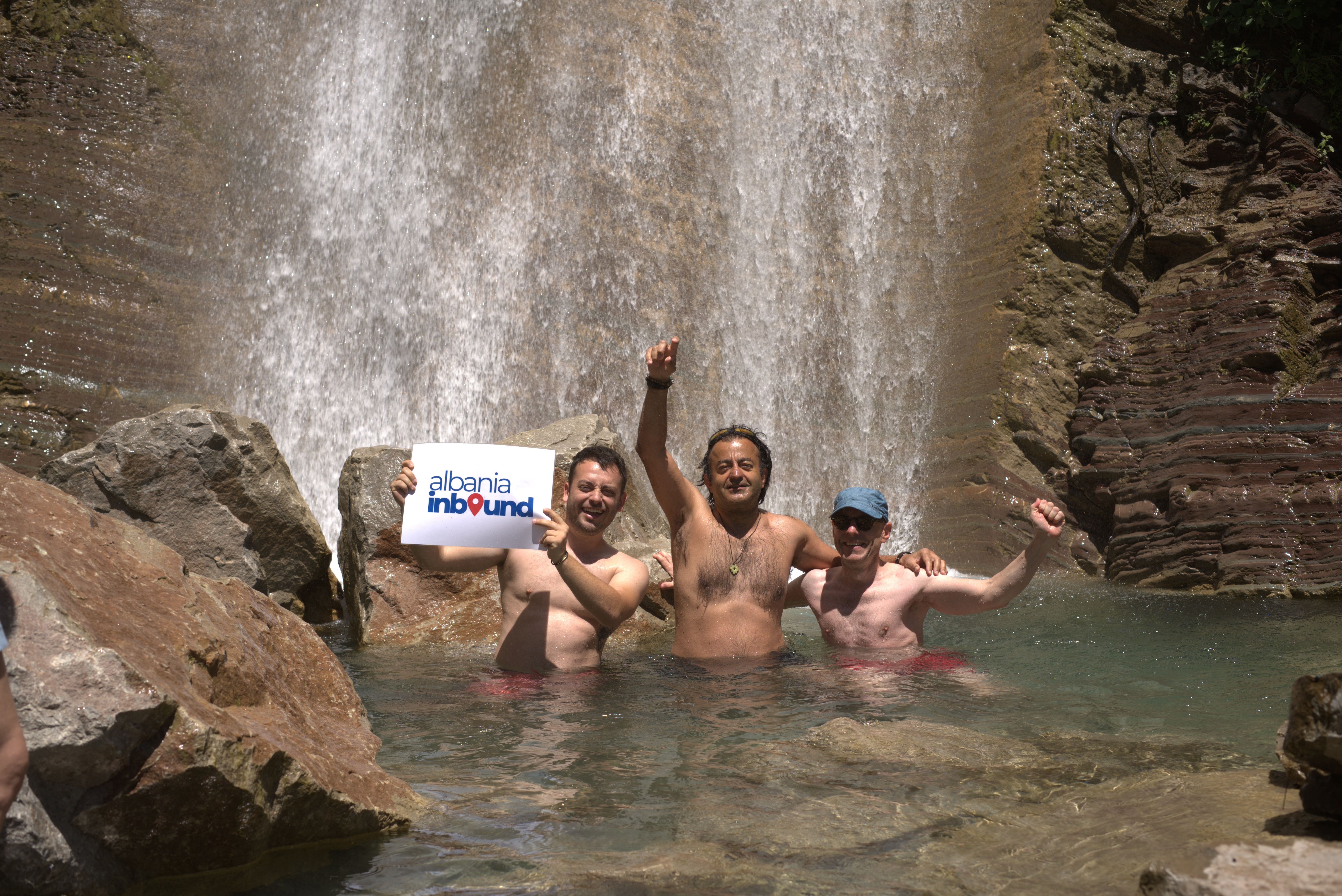
The Benja thermal baths lie near the village of Bënjë, where sulphurous springs feed a series of natural pools of different sizes beside the river. The water is pleasantly warm rather than hot, and the pools are open to the sky, framed by the river and the mountains. Locals have long credited particular pools with easing rheumatism, skin complaints and aching muscles, which is a matter of tradition rather than medical evidence.
At the entrance to the canyon, the slender stone arch of the Kadiut bridge (Ura e Kadiut), dating from the Ottoman period, makes the classic photograph of the area.
- Bring swimwear, a towel and sandals with grip, as the rocks can be slippery.
- Go early in the morning or later in the afternoon in summer, when the pools are quieter.
- Expect a sulphur smell, which is perfectly normal; rinse off afterwards.
- Take your rubbish home with you and leave the pools as you found them.
Walking the Langarica canyon
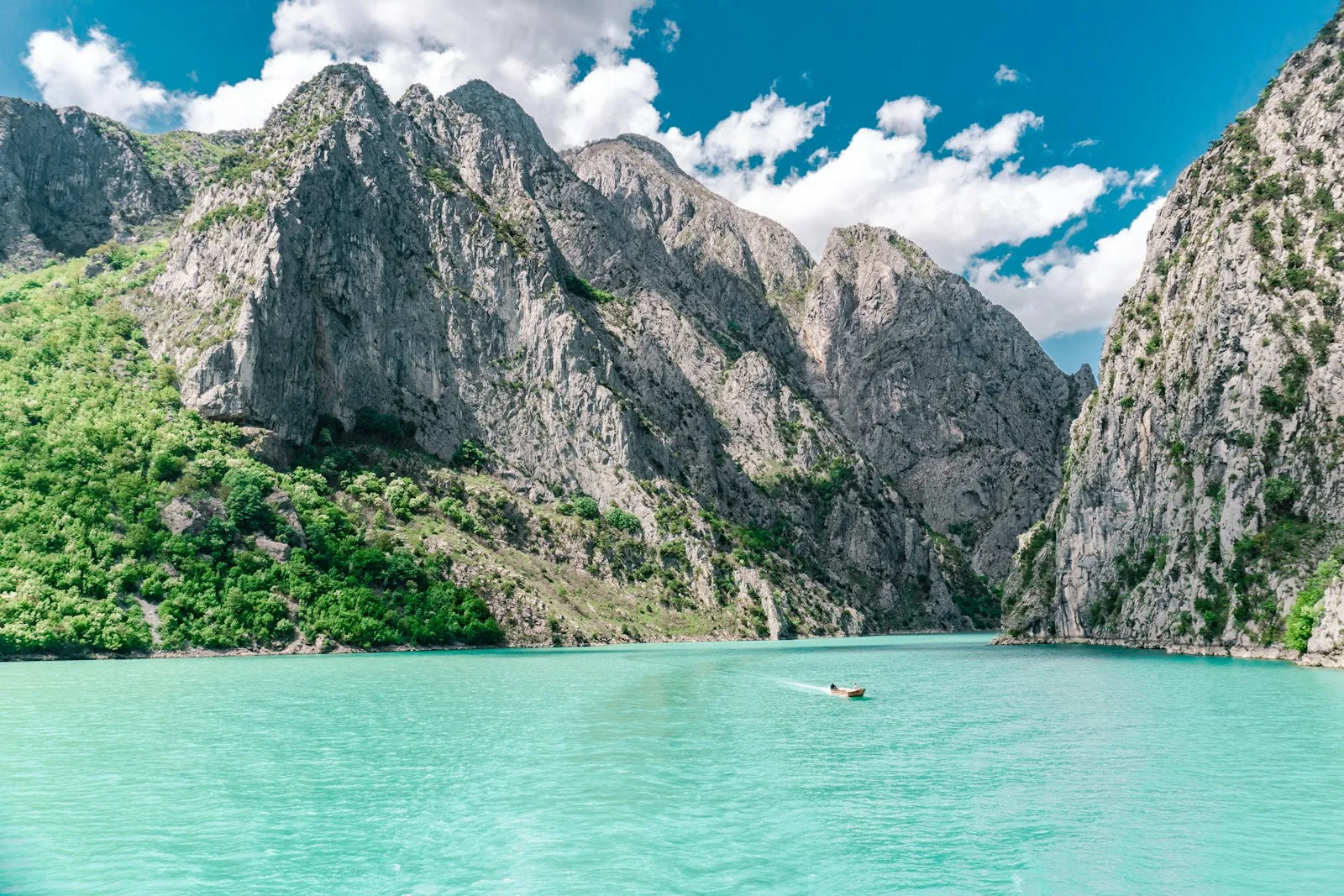
From the bridge, a path follows the river upstream into the Langarica canyon (also spelled Lengarica), a gorge of high limestone walls about 5 km long. The route involves wading across the river several times, so wear shoes that can get wet and avoid it after heavy rain, when the water rises quickly. Kayaking trips also explore the canyon, which many consider one of the most scenic in Albania.
The Vjosa Wild River National Park
The Vjosa rises in Greece’s Pindus mountains, where it is called the Aoös, and flows for around 270 km to the Adriatic near Vlorë, about 190 km of it in Albania. Braided with gravel banks, islands and gorges, it is one of the last large free-flowing rivers in Europe, and after a long campaign against planned dams it was declared Europe’s first wild river national park on 15 March 2023.
The park protects the river and its main tributaries, home to more than 1,100 species, including otters and the endangered Egyptian vulture. In 2025 UNESCO also recognised the valley as a biosphere reserve. Downstream of Përmet the river squeezes through the dramatic Këlcyrë gorge, one of the most scenic stretches of the valley. Our article on Albania’s rivers puts the Vjosa in context.
Rafting and other things to do
Rafting is the most popular way to experience the river. Trips from Përmet typically spend around two to three hours on the water, on rapids generally rated class II–III that suit beginners with a guide. The river is highest and liveliest in spring and gentler in summer, and reputable operators supply helmets, life jackets and paddles, plus wetsuits when the water is cold.
The valley also has plenty to offer on dry land:
- The Church of St Mary at Leusë, just above town, is a post-Byzantine church with a richly painted interior and a carved wooden iconostasis; ask locally about access to the church at Leusë.
- Kosinë, a village a few kilometres away, has a Byzantine church of the Virgin Mary.
- Frashër, a mountain village in the municipality of Përmet, was home to the Frashëri brothers, leading figures of the Albanian national awakening, and their family house is a protected monument.
- Hiking, birdwatching and wild swimming in calm stretches of the river round out the options.
When to go and how to get there
Late spring and early autumn are ideal: the valley is green, the river is lively and the weather is warm without the heat of midsummer. July and August are the busiest months at the baths, but the pools can be enjoyed all year, even on a crisp winter day.
Përmet lies in southern Albania, around an hour by road from Gjirokastër through the Këlcyrë gorge, and a long drive from Tirana. Buses run from Tirana and Gjirokastër, but services are limited, so a car, a driver or an organised tour makes it far easier to combine the town with Benja, the canyon and a rafting trip. Staying a night in a local guesthouse lets you reach the baths early, before the day-trippers arrive.
Frequently asked questions
How hot is the water at the Benja hot springs?
Benja’s water is warm rather than hot, more like a warm bath that has cooled a little than a hot tub, and the temperature varies from pool to pool. That makes it pleasant to soak in for a long time, even in summer, while in cooler months the contrast with the fresh mountain air is part of the appeal.
How far are the Benja thermal baths from Përmet?
The baths are about 13 km from the centre of Përmet, a short drive along a minor road. Taxis can be arranged in town, and many visitors come on an organised tour that combines the springs with rafting on the Vjosa. The warmest pool is said to lie a few hundred metres into the canyon, beyond the bridge.
When was the Vjosa declared a national park?
The Vjosa Wild River National Park was declared on 15 March 2023 at a ceremony in Tepelenë, making it the first wild river national park in Europe. It protects the free-flowing Vjosa and its main tributaries from dams and other damaging development. In 2025 UNESCO also designated the Vjosa valley as a biosphere reserve.
Can you raft the Vjosa without experience?
Yes. Standard guided trips near Përmet are designed for beginners and run on class II–III rapids, with a safety briefing before you set off and experienced guides on the water. You should be reasonably fit and comfortable in water, and being able to swim is strongly recommended. Ask about minimum ages if you are travelling with children.
How long should I spend in Përmet?
One full day covers the highlights: a morning on the Vjosa, an afternoon soak at Benja and an evening stroll in town. Two nights give you time to walk the Langarica canyon, visit the churches of Leusë and Kosinë or drive up to Frashër, and to enjoy the local gliko, wine and raki at a slower pace.
Experience the valley with us: All of Albania in 8 Days includes a day rafting the Vjosa with a stop at the thermal baths, ending in Përmet, and the Full Albanian Experience: A 10-Day Tour combines Vjosa rafting and the Benja thermal baths with Gjirokastër, the Albanian Alps and the Riviera.