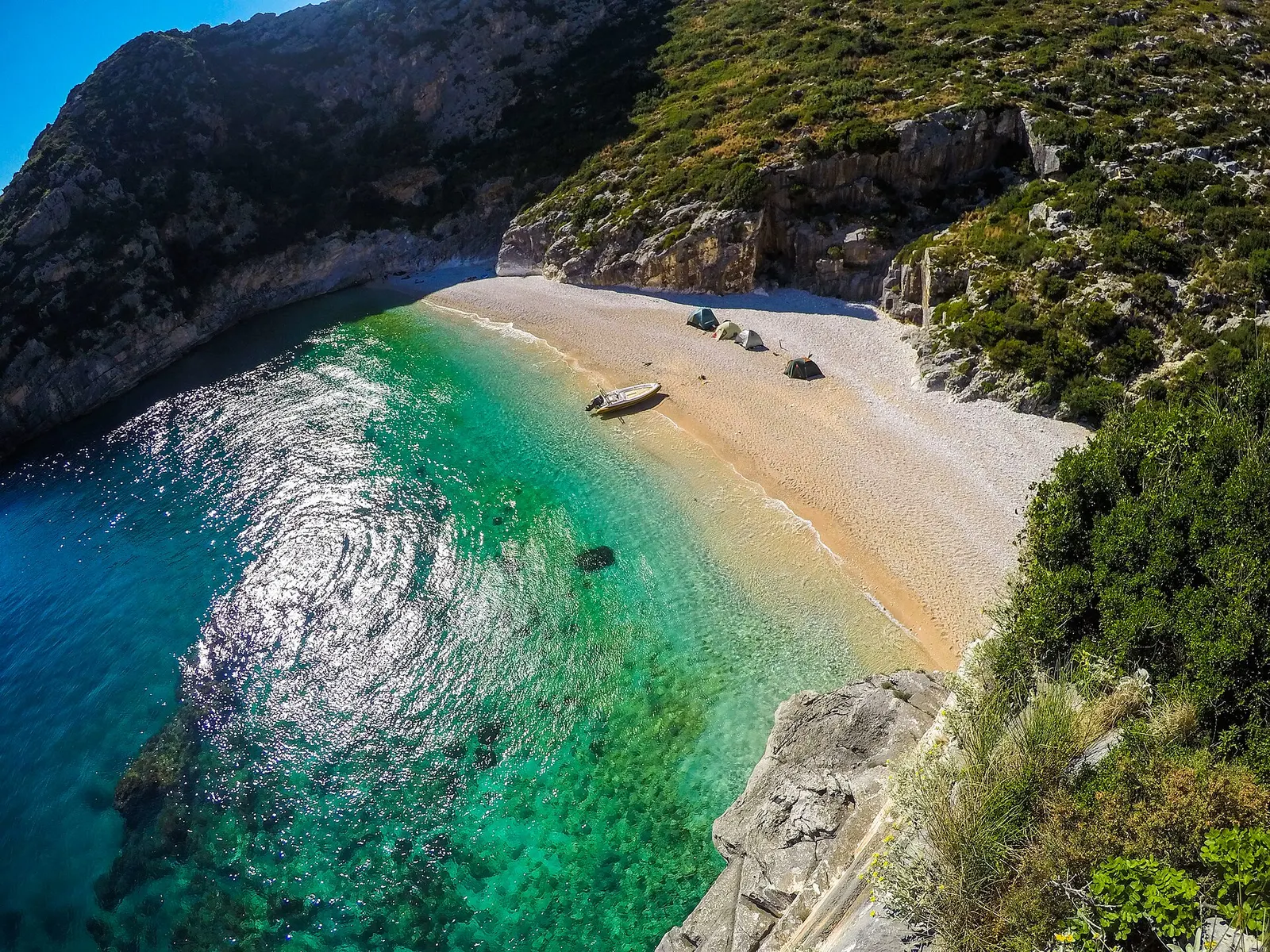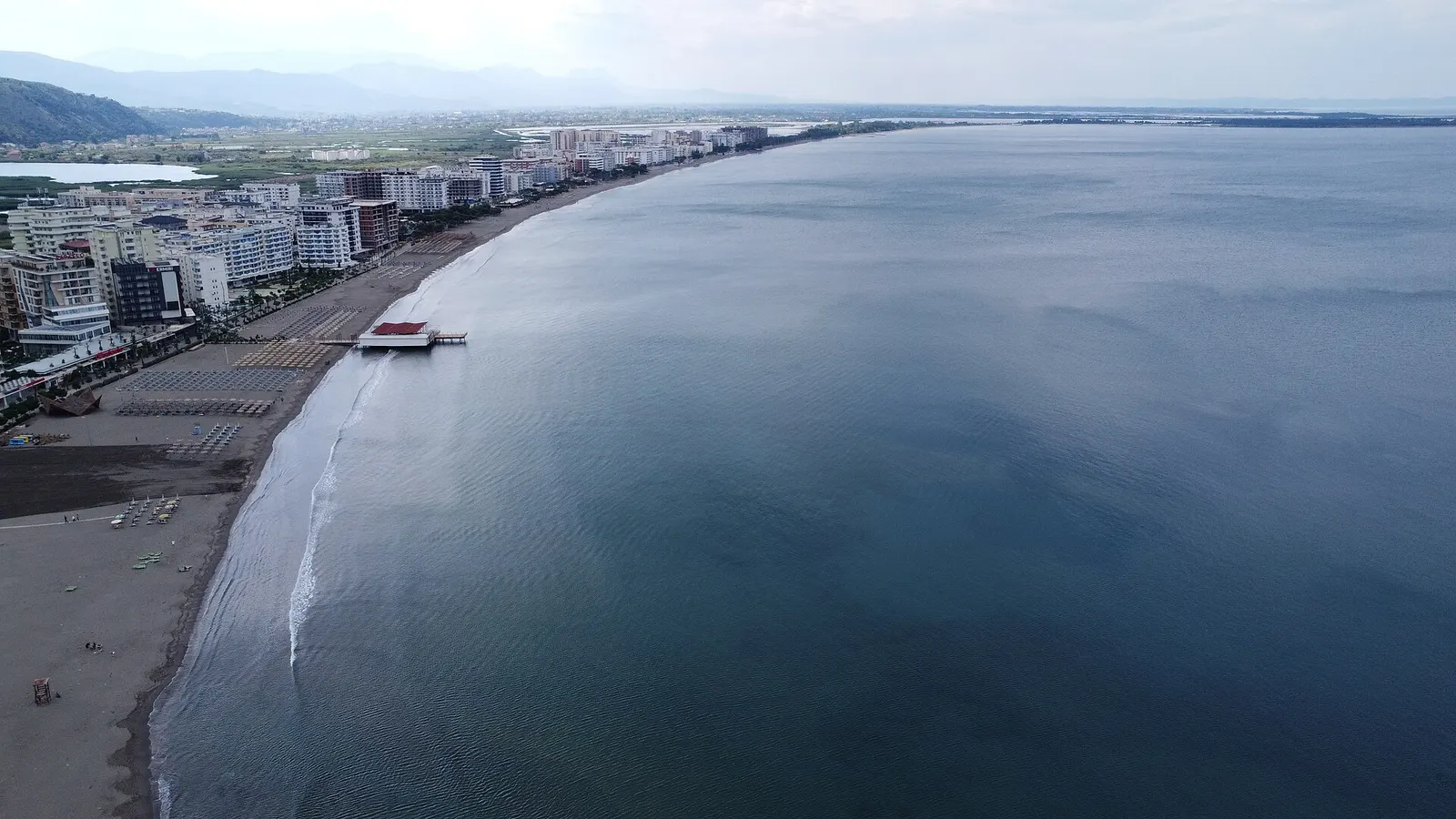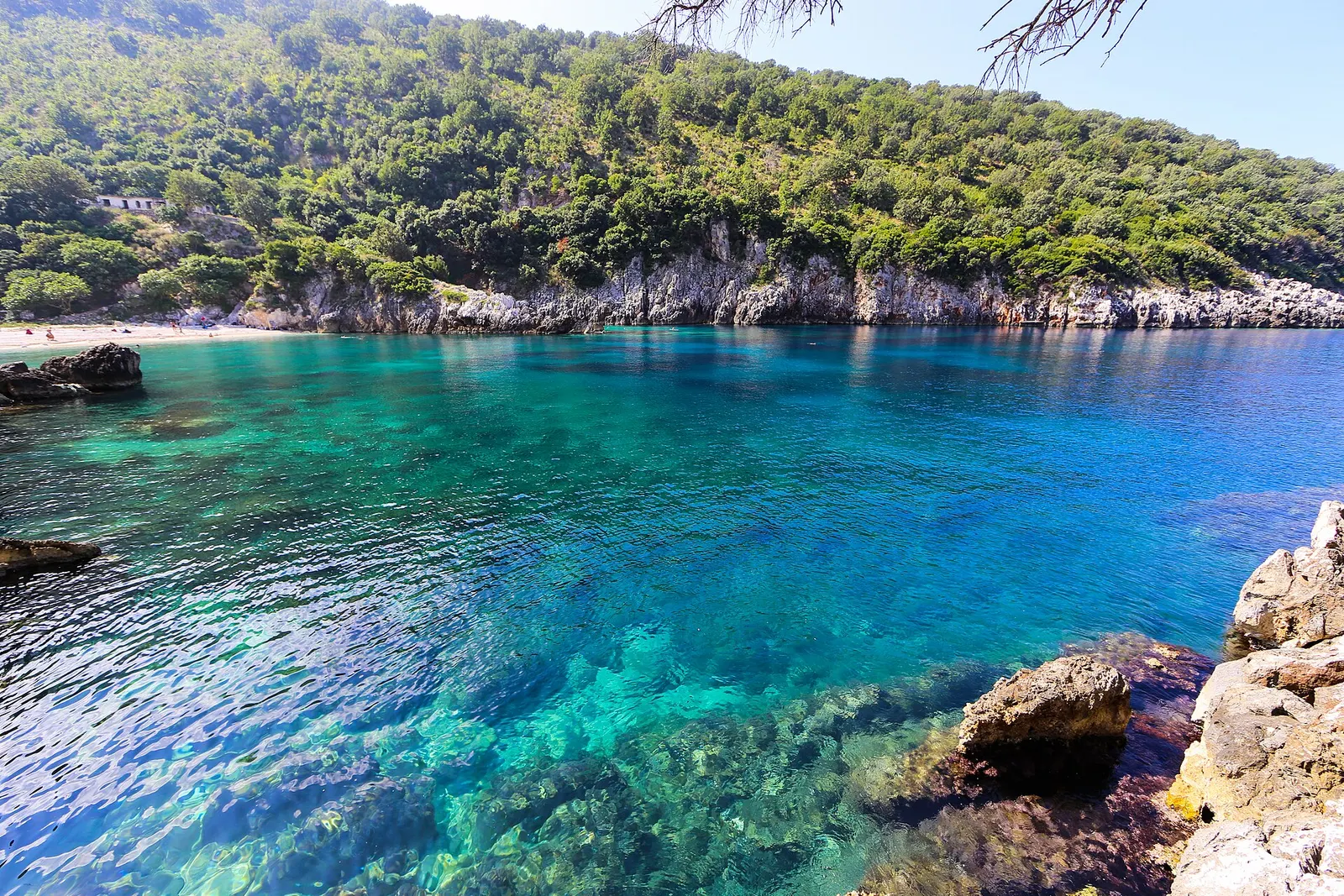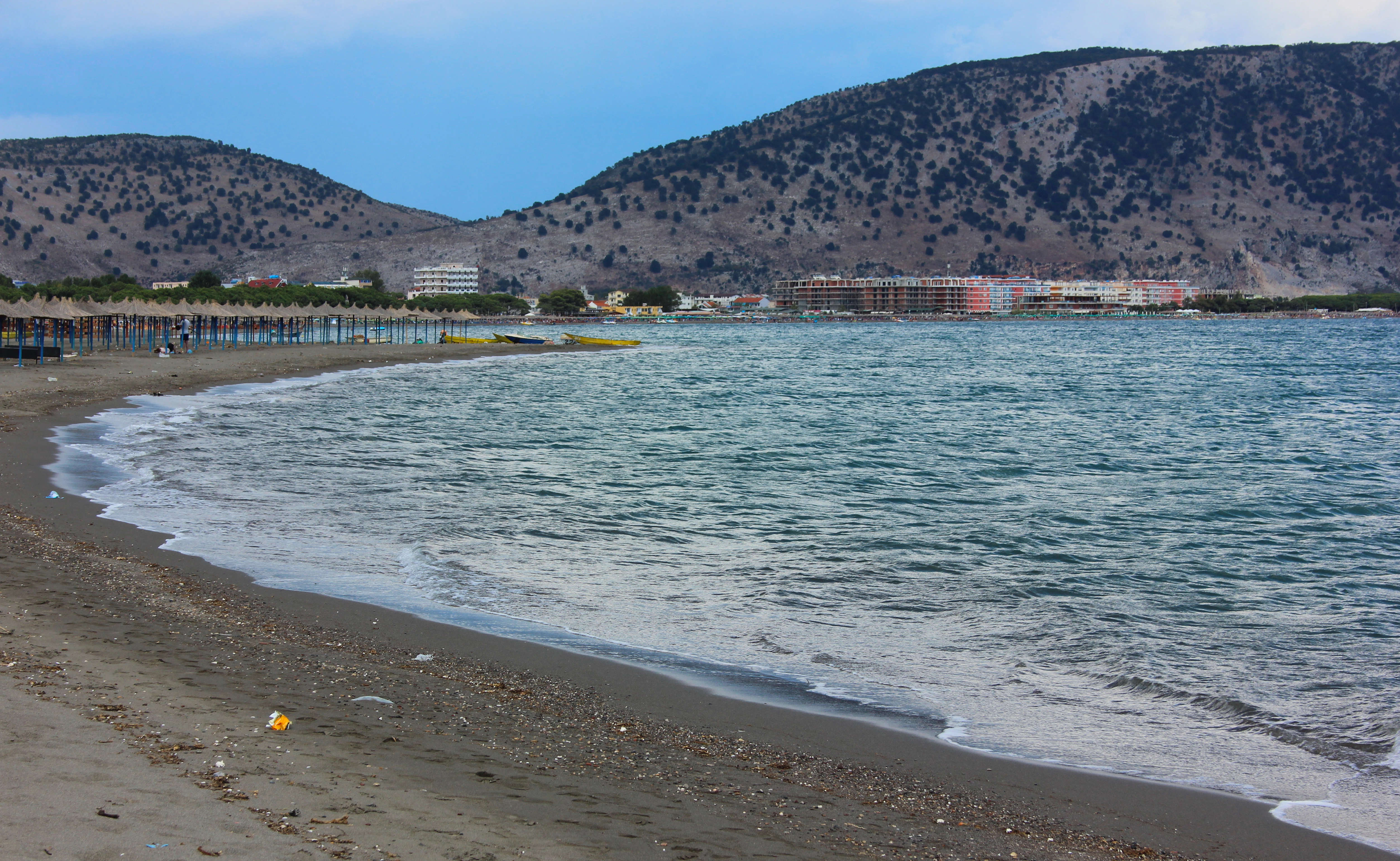
Albania's famous coast is the southern one: cliffs, pebbles, turquoise coves. The north is a different country. Below Shkodra, where the Buna river reaches the Adriatic, the shore flattens into dunes and the beach runs for fifteen kilometres of soft grey-gold sand. This is Velipoja, and Albanian families have been coming here for generations.
The beach
Wide, shallow and sandy — the practical opposite of the Riviera. The gradient is so gentle that children can wade a long way out, which is exactly why the resort grew. Sunbeds and beach bars fill the central section in July and August; walk fifteen minutes in either direction and it empties.
The water here carries more sediment than the Ionian, so it is not the postcard turquoise of Ksamil. In exchange you get warm shallow sea, space, and prices well below the south.
The lagoon
Behind the beach lies the Viluni lagoon, a protected wetland separated from the sea by a sand spit. It is shallow, brackish and quiet, and it draws flamingos, herons, egrets and waders through the migration seasons. A track runs along part of its edge; early morning is the time to walk it.
The whole area belongs to the protected landscape of the Buna river mouth, one of the most important bird sites on the eastern Adriatic.
The Buna and Franz Joseph island
The river forms the border with Montenegro. Boats run short trips from Velipoja along the Buna to the river mouth and the small island named after the Austrian emperor, where fishermen's huts stand on stilts over the water. It is an hour or two well spent and a different view of the coast entirely.
Getting there
Velipoja is about forty minutes from Shkodra by car on a good road, and roughly two hours from Tirana. Buses run from Shkodra through the summer, frequently in August and sparsely outside it. The village has plenty of simple hotels and guesthouses.
When to go
June to September for swimming. For birds, March to May and September to November are better, and the lagoon is at its best when the beach is empty. July and August are busy with domestic tourism — lively rather than tranquil.
Practical notes
- Mosquito repellent after sunset, especially near the lagoon.
- Cash is useful; smaller places may not take cards.
- The sea is shallow a long way out — good for children, limited for swimming lengths.
- Combine with Shkodra, Rozafa castle and Lake Shkodra for a three-day northern loop.
If your picture of Albania is all cliffs and coves, the north will surprise you: flat, sandy, full of birds, and almost entirely domestic.
Common questions
How is Velipoja different from the southern beaches?
It is sand rather than pebble, shallow rather than deep, and far cheaper. The water carries more sediment than the Ionian, so it is not the turquoise of Ksamil.
Is Velipoja good for small children?
Unusually so. The gradient is gentle enough to wade a long way out, which is why Albanian families have been coming here for generations.
When is the best time for birdwatching?
March to May and September to November, when migration brings flamingos, herons and waders to the Viluni lagoon and the Buna river mouth. Early morning is best.