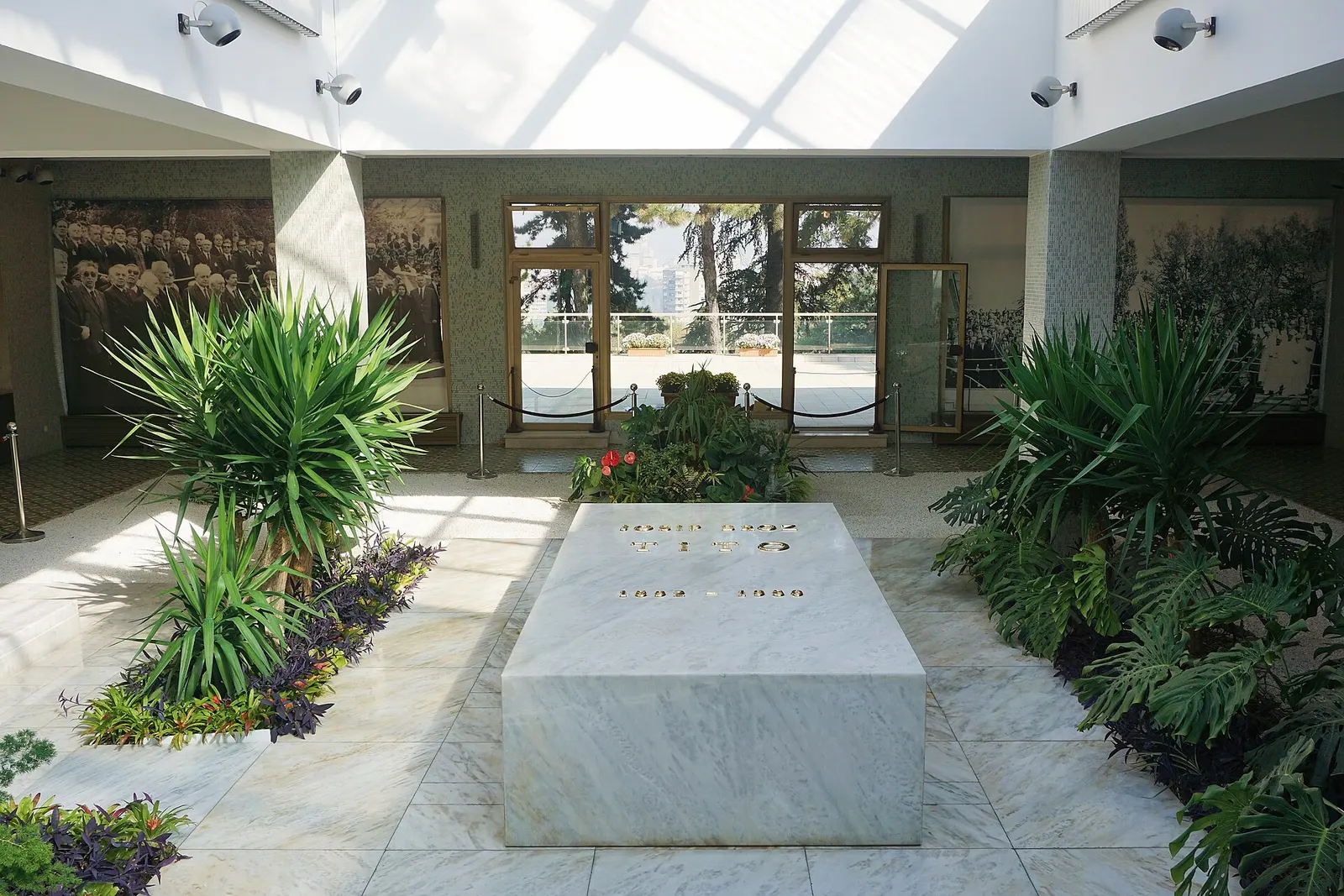
The building was completed in 1975 to a design by the architect Stjepan Kralj as a winter garden near Tito’s residence, with rooms where he could work and rest among the plants. In keeping with his wishes, Tito was buried here in May 1980, a few days after his death, and Jovanka Broz was laid to rest beside him in 2013. Because calling the grave a tomb or mausoleum was considered inappropriate at the time, the name House of Flowers took hold, inspired by the flowers that once surrounded it.
The white marble tomb lies in the central hall, while the side wings display a collection of relay batons, carried across Yugoslavia each year for Youth Day, celebrated on 25 May as Tito’s official birthday. The museum complex also includes the 25 May Museum and the Old Museum, with gifts presented to Tito and collections on Yugoslav history, and the site still draws visitors from across the former Yugoslavia.
It is a thought-provoking stop for anyone curious about Yugoslavia and its complex legacy.