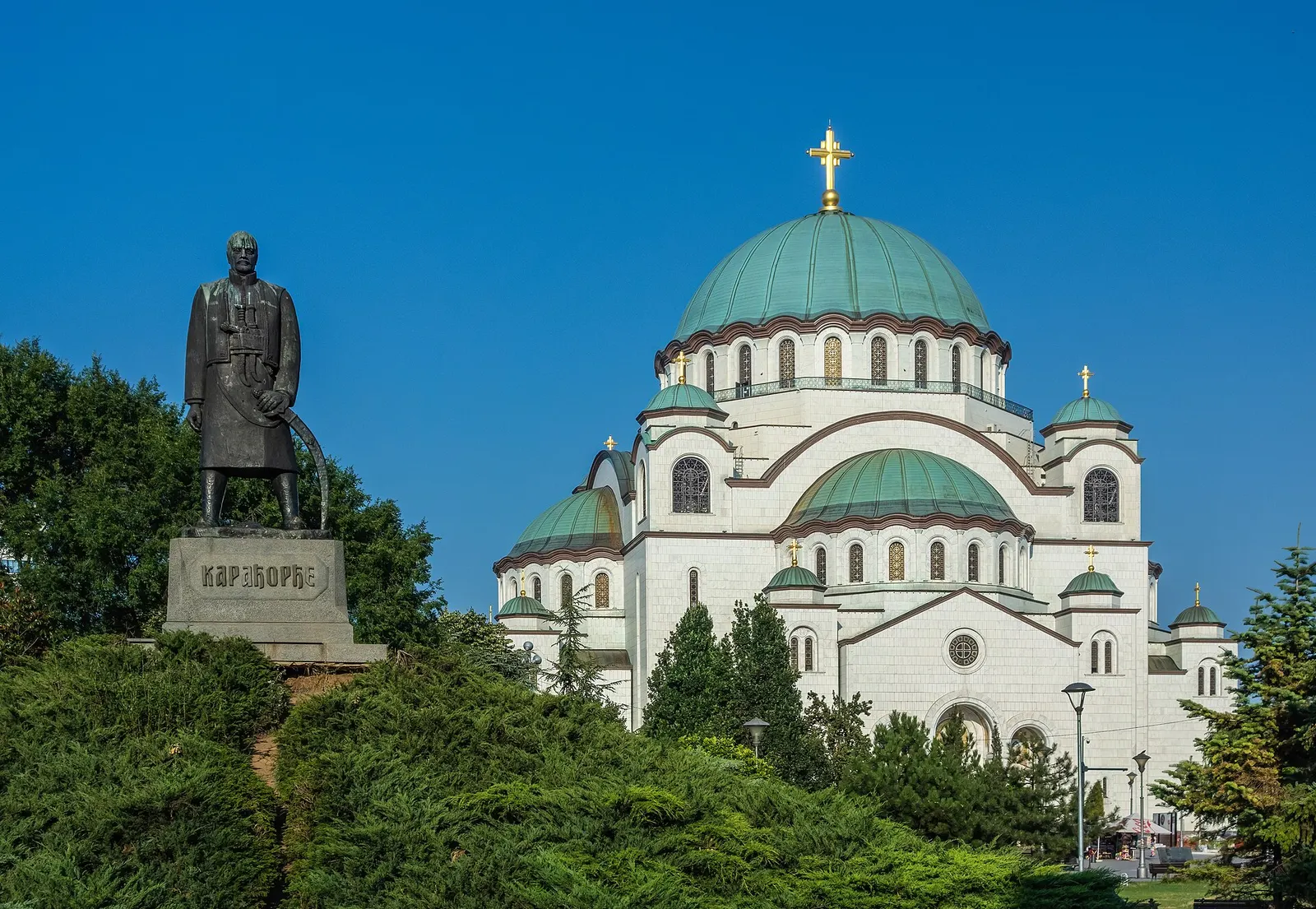
The church is dedicated to Saint Sava, the first Serbian archbishop and the nation’s patron saint, and stands on the area where, according to tradition, the Ottomans burned his relics in the late 16th century. Inspired by the Hagia Sophia in Istanbul, it was begun in 1935, but construction was halted by the Second World War and the decades that followed. The exterior was finished only in 2004, and work on the interior was completed in 2020.
Inside, the vast space is covered with gold-ground mosaics designed by the Russian artist Nikolay Mukhin. The highlight is the central dome mosaic of the Ascension of Christ, which covers some 1,230 square metres. Below the main floor, the crypt is richly decorated and well worth seeing, and the bell towers house a carillon. As this is an active place of worship, visitors should dress modestly and keep quiet during services.
Whether seen from the surrounding park or from beneath its dome, the Temple of Saint Sava is an unforgettable sight in Belgrade.