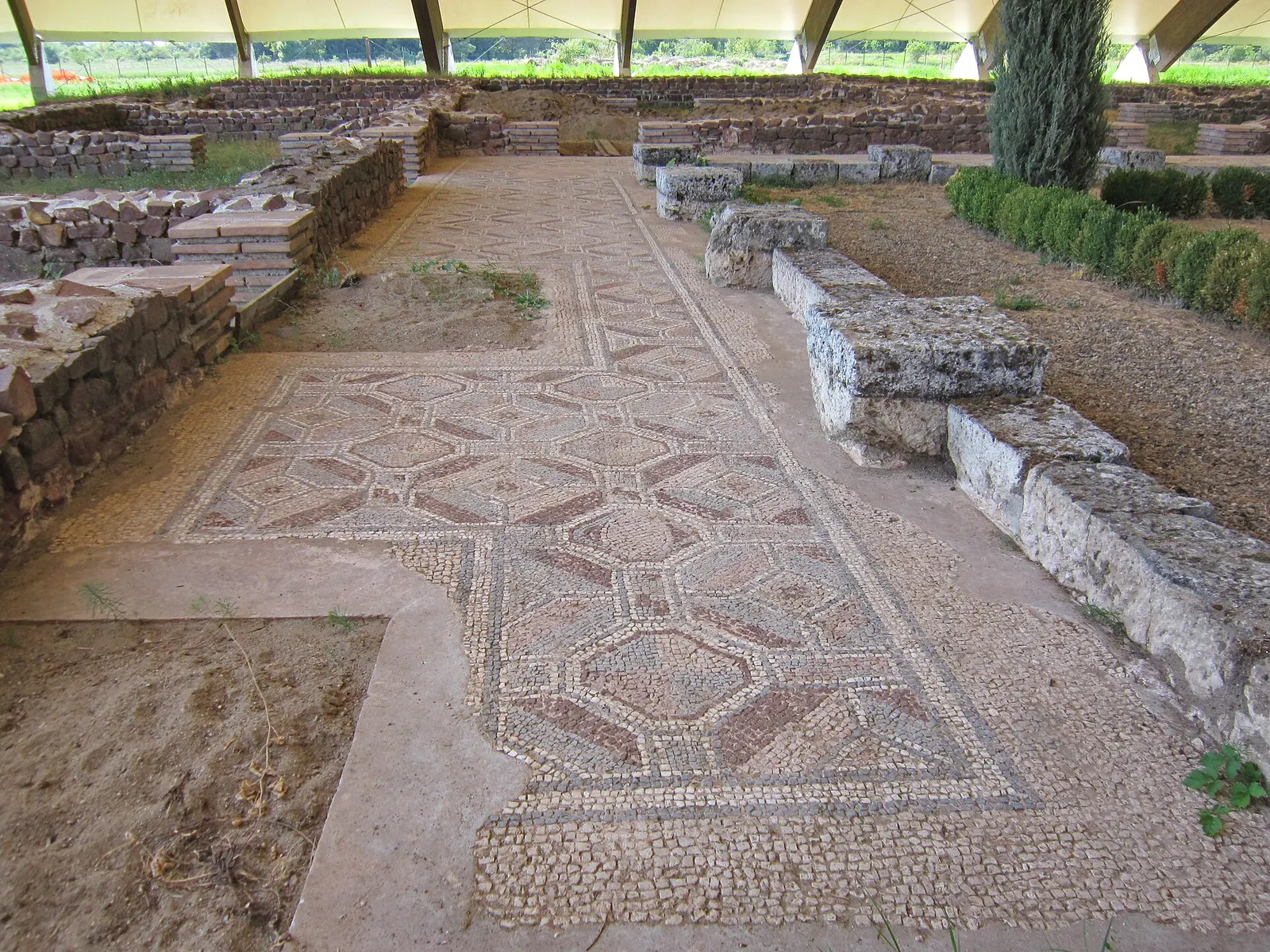
Laid out in the early 4th century near thermal springs, the estate combined an elegant suburban villa with a working agricultural complex, and later emperors stayed here on their travels. The historian Ammianus Marcellinus records that in 364 the brothers Valentinian I and Valens met at Mediana to divide the court and army between them, before ruling the western and eastern halves of the empire. The residence was abandoned after the Huns devastated Naissus in the 440s, and Mediana is now protected as an archaeological site of exceptional importance.
Visitors can walk among the remains of the central villa with peristyle. Excavations have uncovered around 1,000 square metres of floor mosaics, most of them geometric, including the conserved figural mosaics of Medusa and of Leda and the Swan. Around the villa lie the remains of baths, a large granary, a water tower and two early Christian churches. After a decade of excavation and conservation work, the site reopened to visitors in December 2022.
It is a rewarding stop for anyone interested in the Roman roots of the Balkans and the birthplace of Constantine.