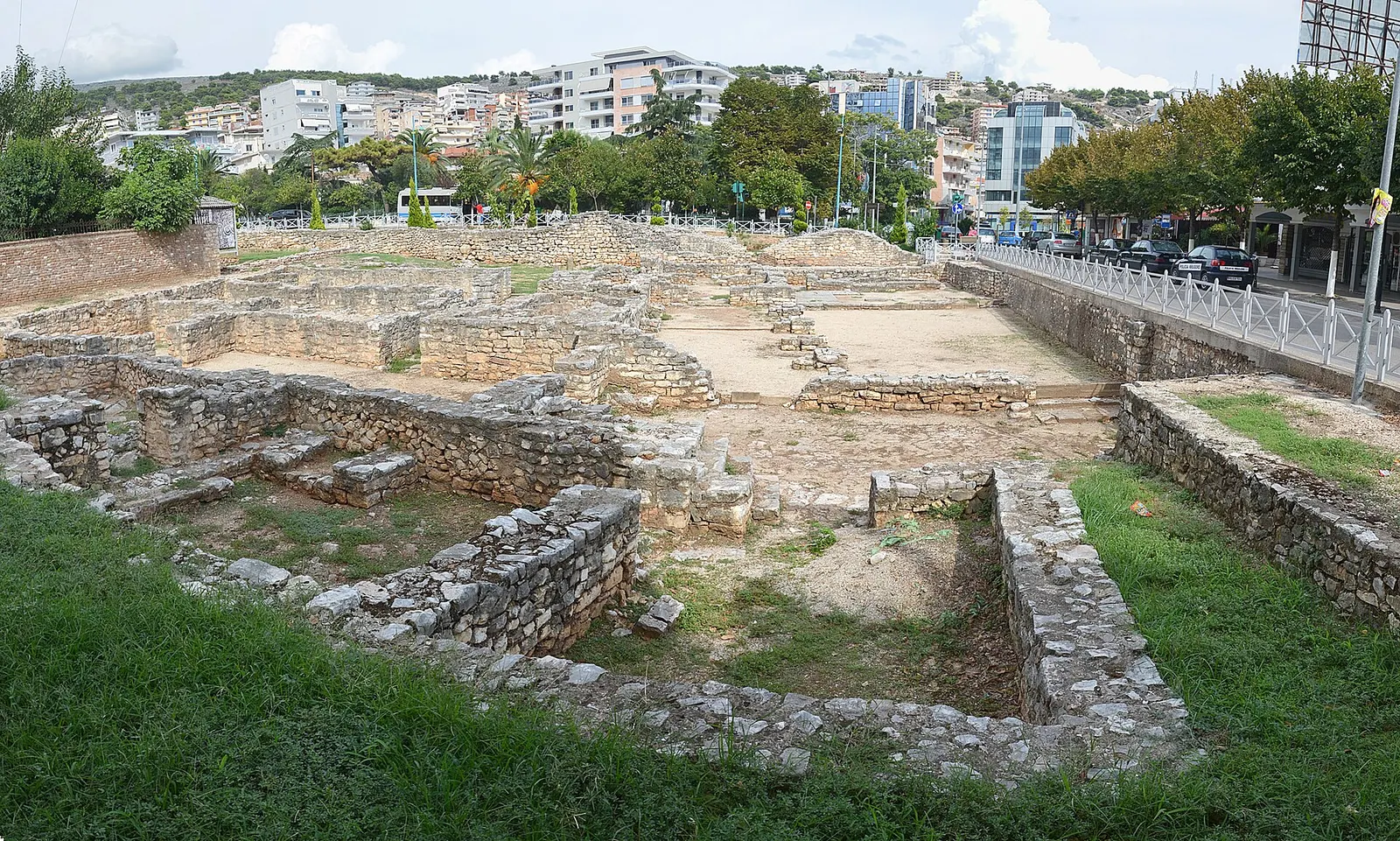
The site was first uncovered in the 1980s, when it was taken for an early church. Joint excavations by Albanian archaeologists and a team from the Hebrew University of Jerusalem, begun in 2003, revealed a longer story: a house with fine mosaic floors, then a synagogue dated to the 5th–6th centuries AD and enlarged with a large basilica-style hall, and finally a church, after the building was converted in the 6th century. It is believed to be the earliest known synagogue in Albania.
The highlight is the mosaic floors. One panel shows a seven-branched menorah flanked by a ram’s horn (shofar) and a citron (etrog), symbols of Jewish festivals, while others feature animals, trees, fish and what appears to be the façade of a Torah shrine. Because the mosaics are fragile, they are usually kept covered for protection, with information panels showing what lies beneath. The open-air ruins sit in the town centre and need only a short visit.
A brief stop here adds an unexpected chapter to the long history of Sarandë, linking today’s busy resort with the ancient harbour town of Onchesmos.