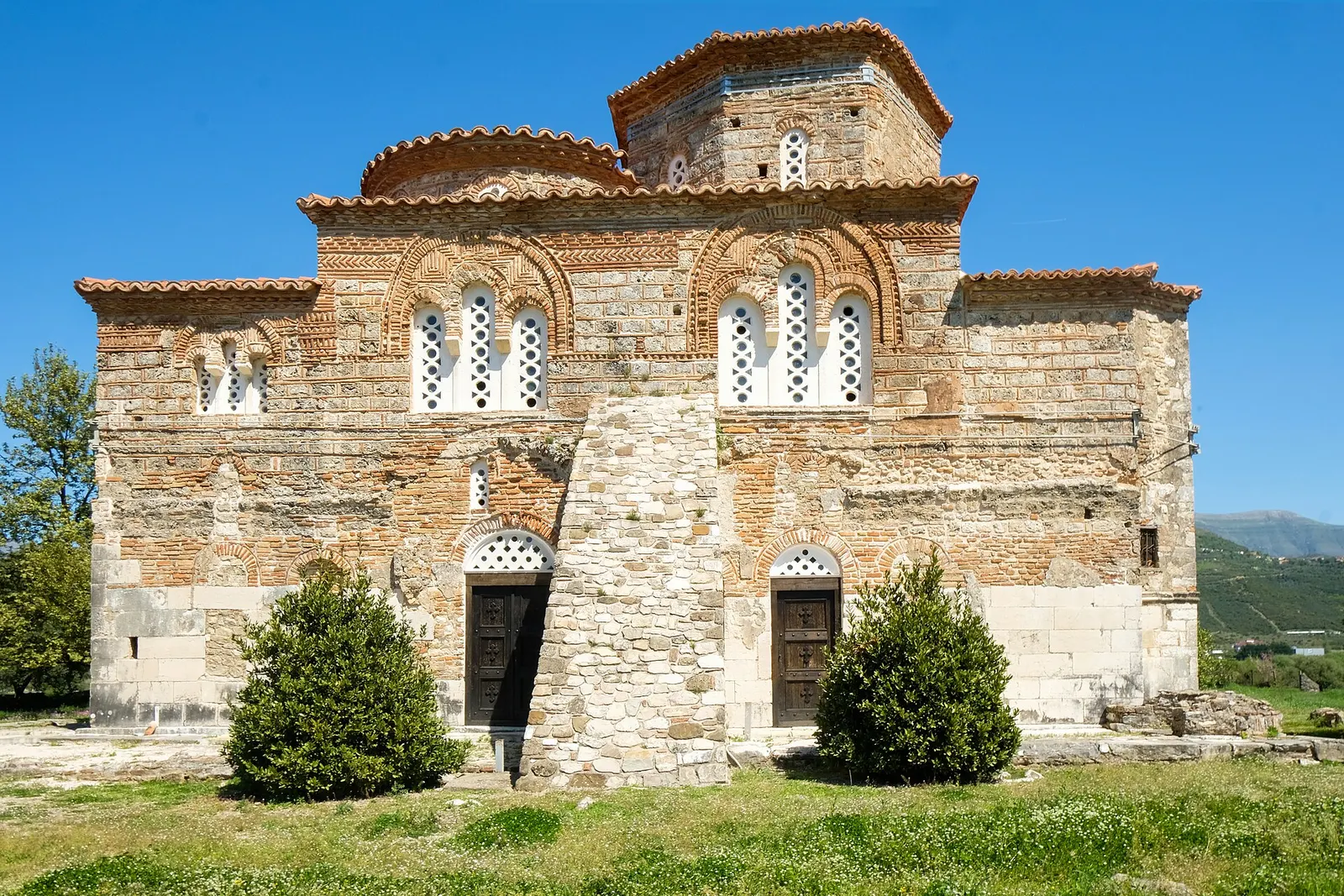
All that survives of the monastery is its main church, the Church of St. Nicholas, generally dated to the 13th century. In the Middle Ages the monastery answered directly to the Patriarch of Constantinople rather than to the local bishop. Its layout is unusual: two parallel naves are roofed by domes resting on a single central pillar and end in a double apse, which some scholars believe allowed both Orthodox and Catholic rites to be celebrated.
The exterior is the real draw. Large limestone blocks, probably reused from older buildings, form the lower walls, with brickwork above, and several are carved with animal reliefs, among them a lion, an eagle and dragons. Cypress trees and stretches of the old enclosure wall surround the church, and murals have recently been uncovered beneath later plaster inside. Conservation work has been under way in recent years, so access to the interior may be limited, but the carved façades alone reward the detour.
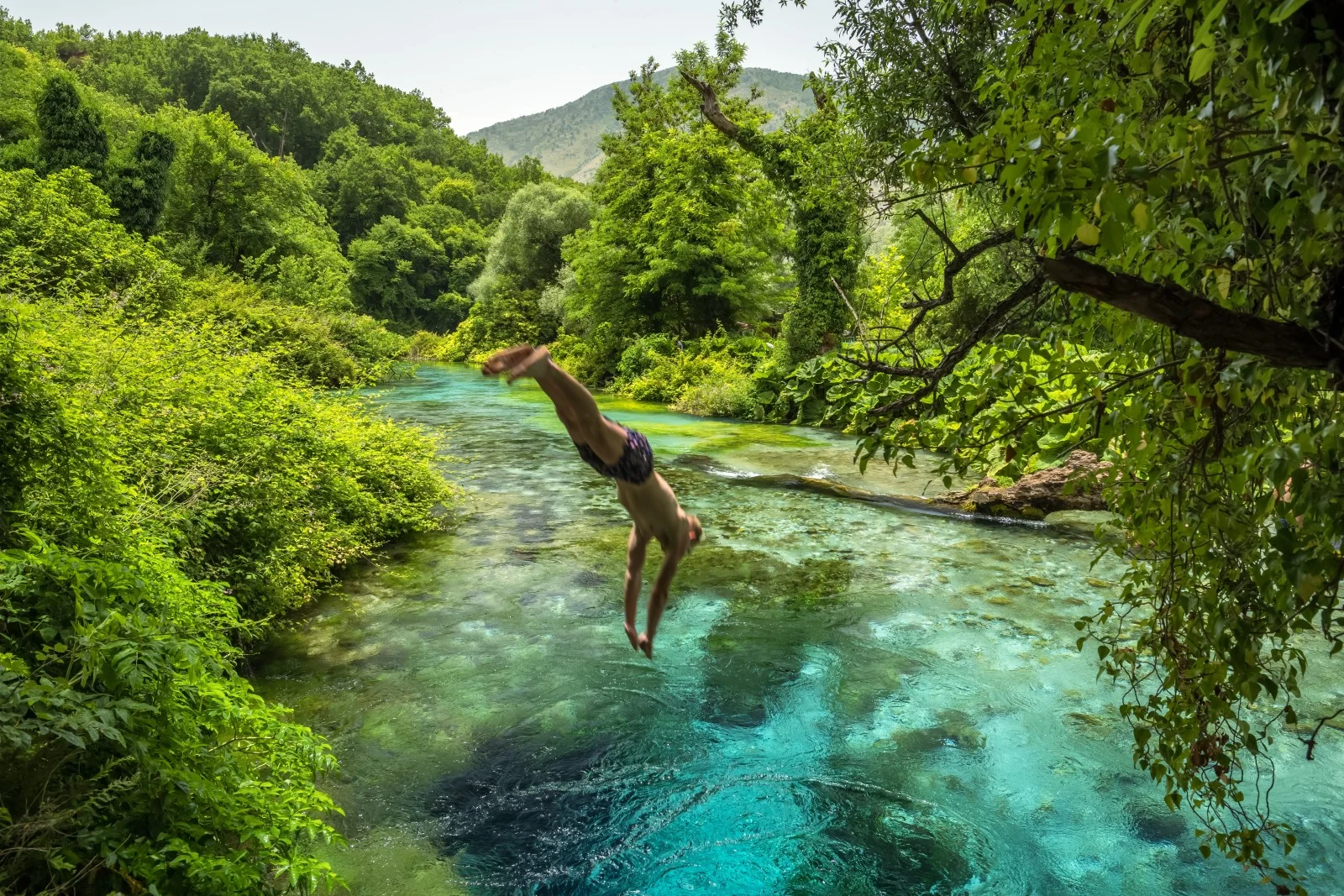
Combine it with the Blue Eye spring, a little further along the same road, for a rewarding half-day trip from Sarandë.