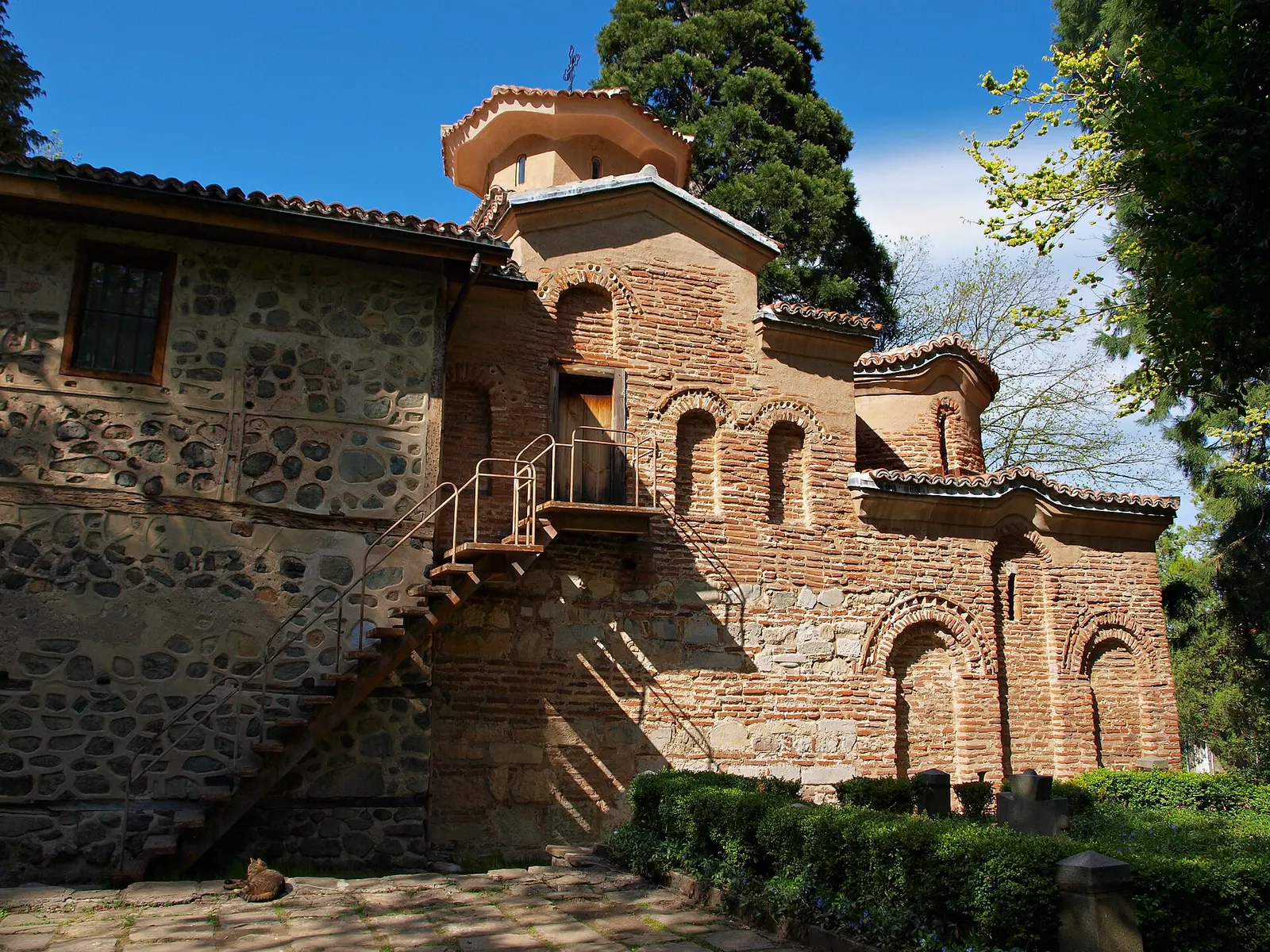
The church was built in three stages. The oldest, eastern part dates from the late 10th or early 11th century, the central section was added in the mid-13th century by Sebastocrator Kaloyan and his wife Desislava, and the western extension dates from the mid-19th century. The church owes its fame above all to its frescoes from 1259, painted by unknown masters over an earlier layer and considered among the most complete and best-preserved examples of medieval art in the Balkans.
Inside, visitors can see around 240 painted figures, many of them remarkably lifelike. Highlights include the donor portraits of Kaloyan and Desislava, the portraits of Tsar Constantine Tikh and Tsaritsa Irina, and the 18 scenes from the life of Saint Nicholas. To protect the paintings, the temperature is kept low and visits are carefully controlled, so time inside is limited. The church stands in a quiet, leafy garden.
Easily combined with a trip to Vitosha, the Boyana Church is a must for anyone interested in art and history.