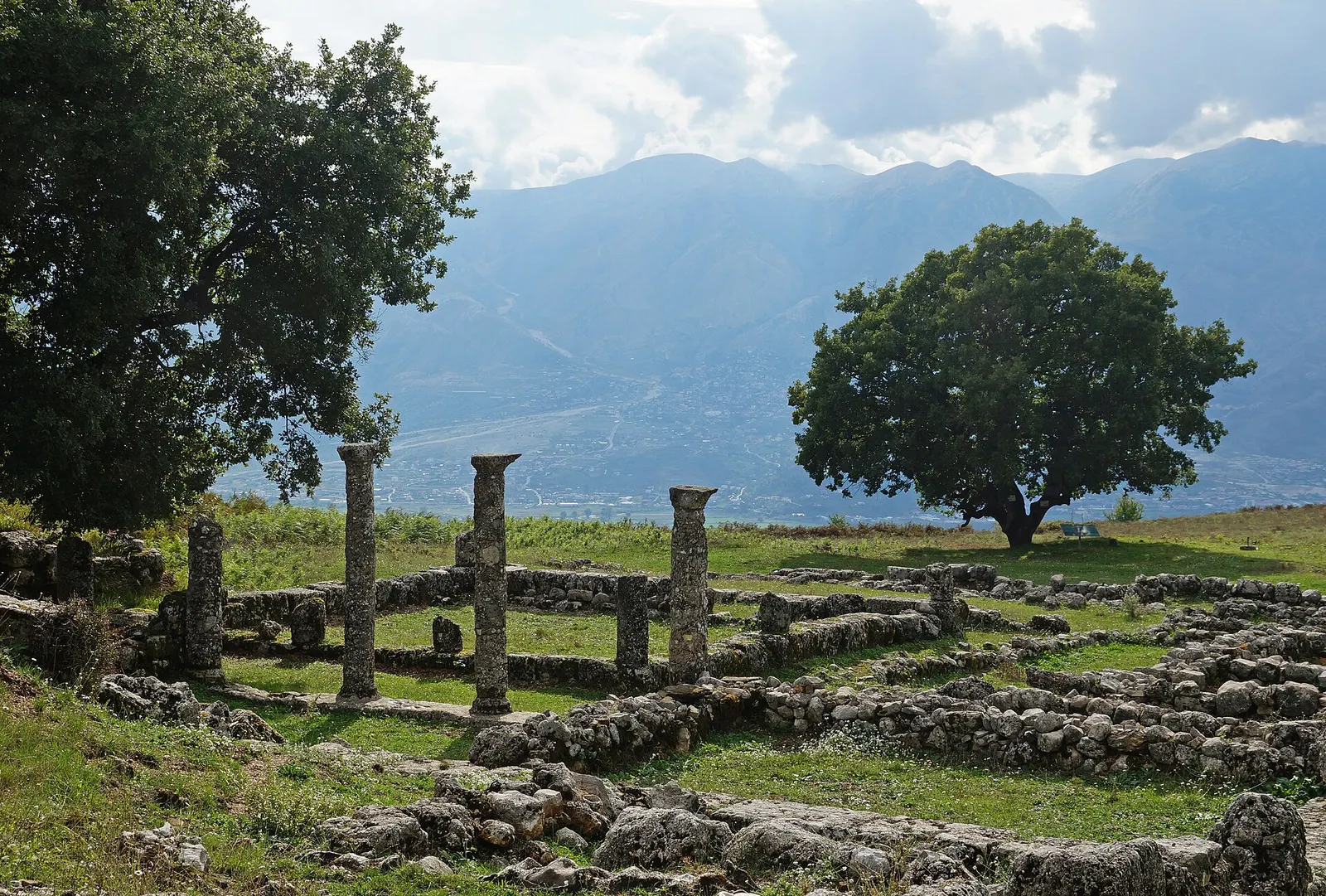
Across the valley from Gjirokastër, on a ridge at around 600 metres, lie the remains of a city founded by Pyrrhus, king of Epirus, in roughly 295 BC. He named it Antigonea after his wife Antigone. It lasted about 130 years before a Roman army destroyed it in 167 BC, and it was never rebuilt.
What survives
Street grids, house foundations, a stoa, cisterns, parts of the defensive wall, and mosaic fragments under protective cover. It is a site for imagination rather than spectacle: there is no standing temple, no theatre to sit in. What you get instead is the plan of a Hellenistic city laid out on a hillside, with nothing built over it in two thousand years.
That absence is the point. Antigonea was abandoned completely, so the archaeology is undisturbed in a way that is rare anywhere in the Mediterranean.
The setting
The park occupies a long ridge of oak scrub and grass with the Drino valley below and the Lunxhëri mountains opposite. Gjirokastër's castle is visible across the valley. On a spring morning, with wildflowers through the foundations and no one else there, it is one of the most atmospheric places in southern Albania.
Getting there
From Gjirokastër it is about thirty to forty minutes by car via Asim Zeneli village, on a road that narrows and climbs towards the end. Any car manages it in dry weather. There is no public transport; a taxi or a guided trip are the alternatives.
The site has a visitor building and marked paths; signage exists but is sparse, so a guide adds a great deal here.
When to go
April to June and September to October. The ridge is fully exposed, so midsummer at midday is punishing and winter can be wet and windy. Morning light is better for photographing the valley.
What to combine it with
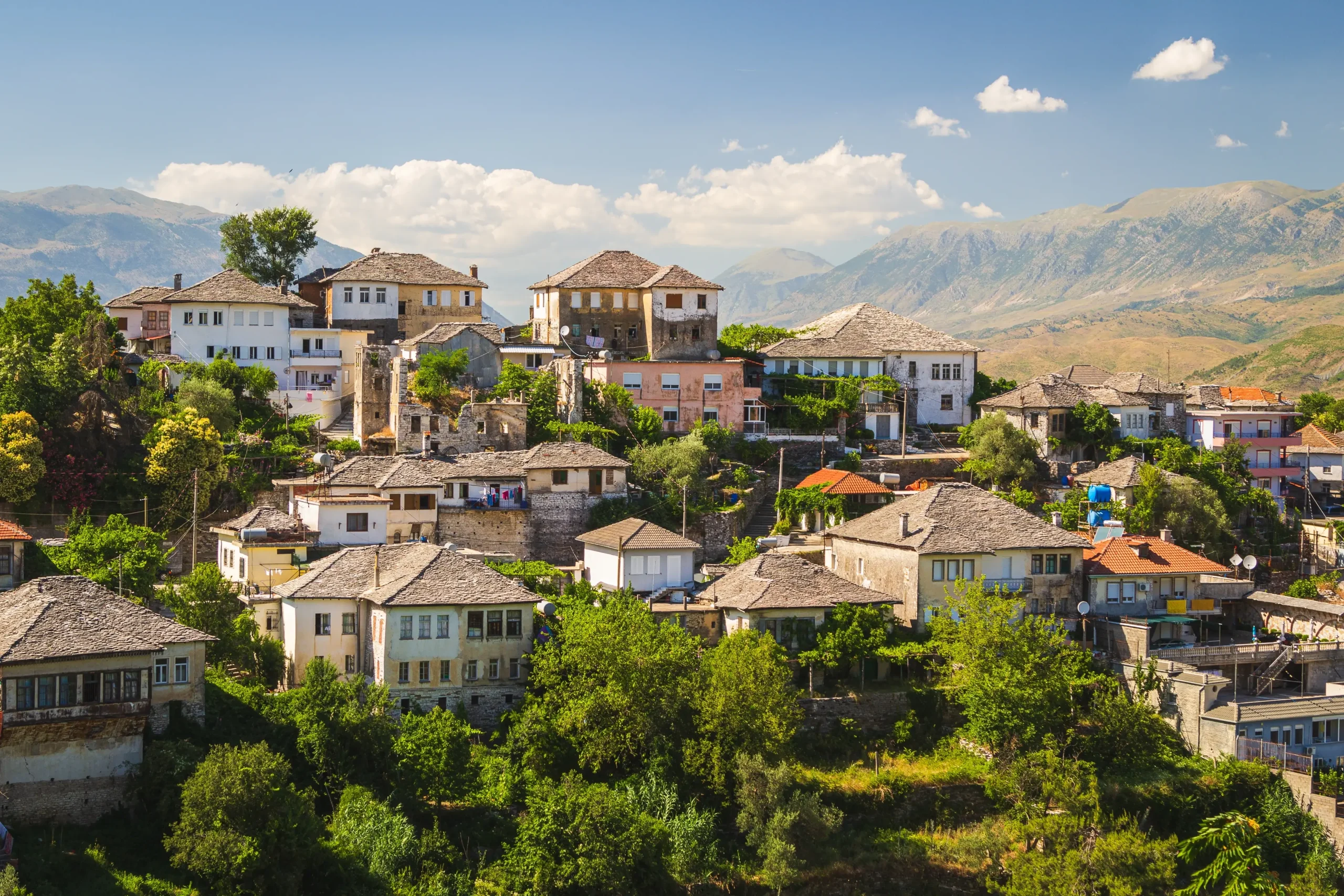
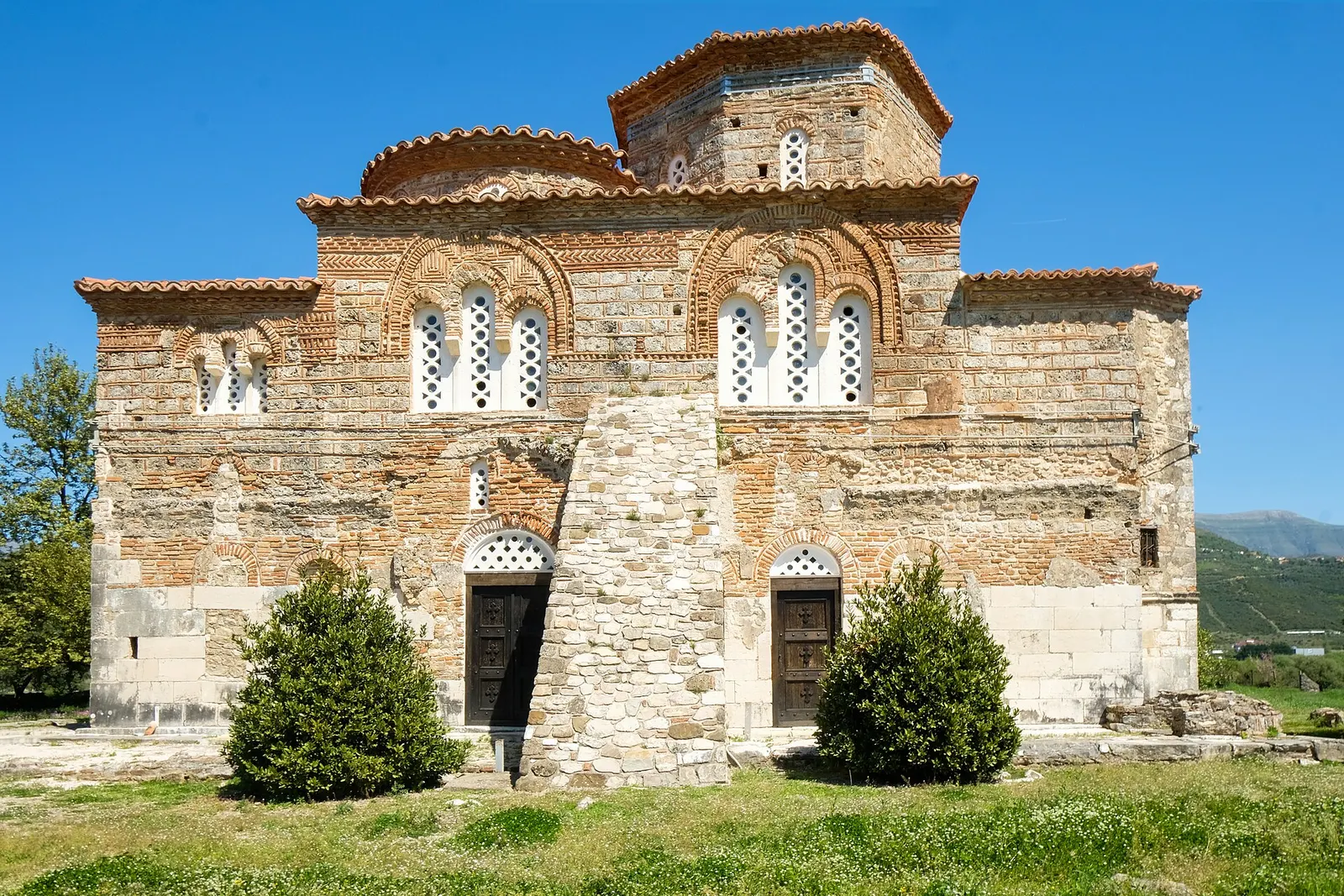
Gjirokastër's old town and castle are the obvious pairing. Further down the valley, Libohova has its own castle and a famous plane tree; Labova e Kryqit holds one of the oldest churches in the country. Together they make a day that almost no visitor to Gjirokastër does.
Practical notes
- There is a small entrance fee and limited opening hours — go in the morning.
- Bring water and a hat; there is no shade on the ridge.
- Sturdy shoes: the ground is uneven and stony throughout.
- Snakes are present in summer, as on any Mediterranean hillside — watch where you step.
Most visitors to Gjirokastër never cross the valley. Those who do get a Hellenistic city to themselves.
Common questions
Who founded Antigonea?
Pyrrhus, king of Epirus, around 295 BC. He named the city after his wife Antigone. A Roman army destroyed it in 167 BC and it was never rebuilt.
What is actually left to see?
Street grids, house foundations, a stoa, cisterns, parts of the wall and mosaic fragments under cover. There is no standing temple — the appeal is a Hellenistic city plan with nothing built over it.
How long does a visit take?
An hour and a half to two hours on the site, plus thirty to forty minutes of driving each way from Gjirokastër. Go in the morning: the ridge is fully exposed.