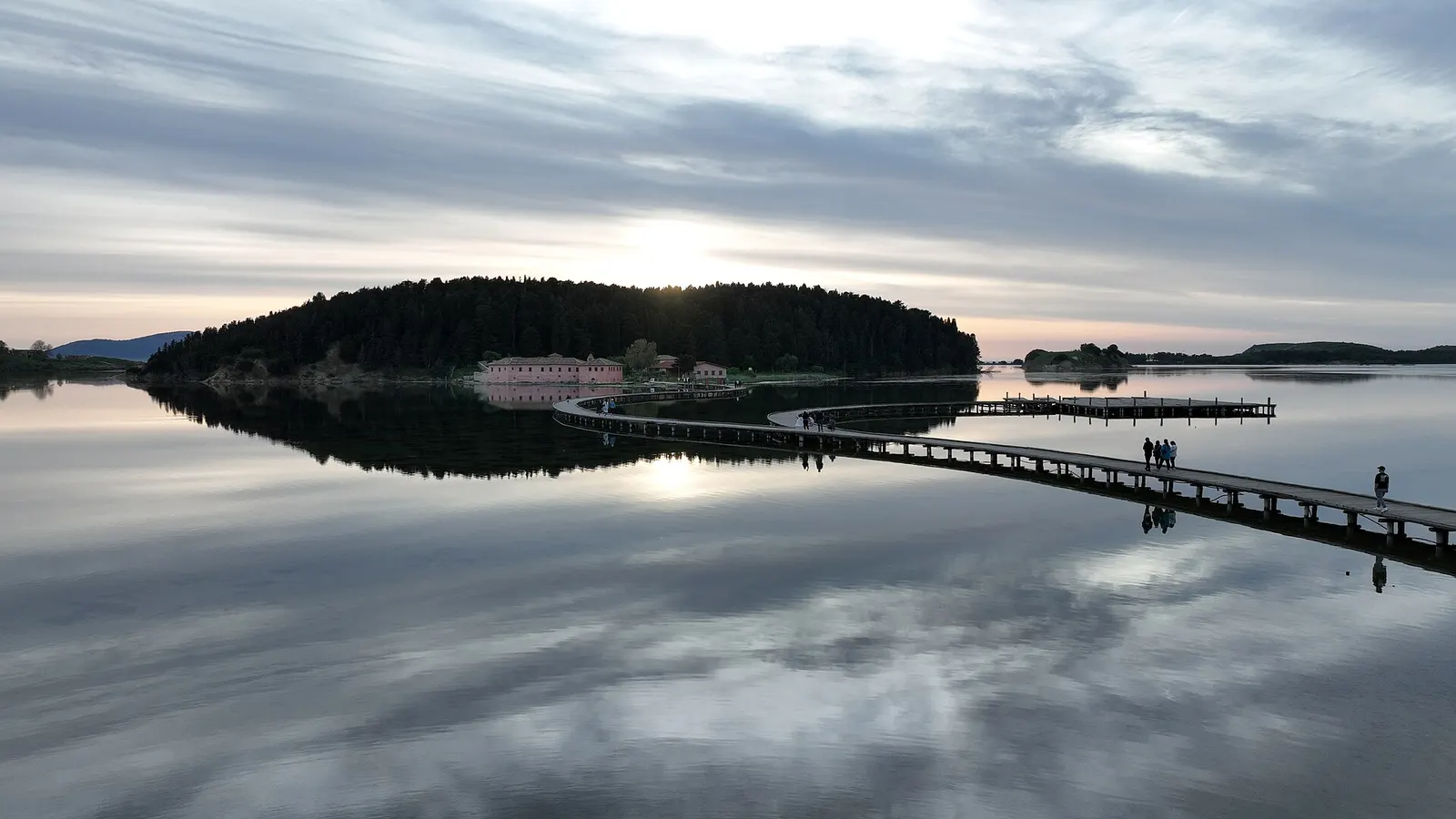
Halfway between Durrës and Vlora, the coast flattens into a landscape of lagoon, pine forest and sandbar. Divjaka-Karavasta National Park protects the largest lagoon in Albania and one of the most significant wetland bird sites in the Mediterranean — and it sits ninety minutes from Tirana.
The pelicans
Karavasta holds a breeding colony of Dalmatian pelicans, among the largest freshwater birds in the world and a species that came close to disappearing from the region. They nest on islets in the lagoon, and numbers have recovered with protection.
Viewing is from platforms and by boat with local guides. Do not expect to get close: the colony is protected and disturbance during breeding is the main threat. Binoculars are essential, not optional.
The forest and the beach
A long spit of umbrella pine separates the lagoon from the Adriatic. Tracks run through it, shaded and flat, and the beach on the seaward side is wide and quiet outside August. The combination — forest on one side, water on both — is the closest thing Albania has to the Italian lagoon landscapes across the water.
Other birds
Flamingos, herons, egrets, terns, waders in numbers through migration, and raptors over the pines. The site is on the Adriatic flyway, which means spring and autumn bring species that are not there the rest of the year. More than 200 species have been recorded.
Getting there
From Tirana it is about an hour and a half by car via Lushnja to Divjakë town, then a short drive into the park. The roads are paved and easy. Buses reach Divjakë; from there a taxi covers the last stretch.
The park has a visitor centre and marked trails, and guides can be arranged there for the lagoon.
When to go
March to May and September to November for birds. June to September for the beach and the forest, when the pines give shade the rest of the coast lacks. Pelicans are present year-round but most visible in the breeding season.
Practical notes
- Binoculars make the difference between a trip and a disappointment.
- Mosquito repellent from late spring onwards.
- Keep to tracks near the lagoon; nesting areas are off limits.
- Facilities are limited — bring water and food.
Albania markets its mountains and its beaches. Its wetlands are internationally more important than either, and Karavasta is where that is easiest to see.
Common questions
Can I see the pelicans up close?
No, and that is deliberate. The Dalmatian pelicans nest on protected islets and disturbance during breeding is the main threat to them. Viewing is from platforms and by boat, with binoculars.
Is there a beach at Divjaka?
Yes. A long spit of umbrella pine separates the lagoon from the Adriatic, and the seaward side is wide and quiet outside August, with shade the rest of the coast lacks.
When is the best time for birds?
March to May and September to November, when migration along the Adriatic flyway brings species that are not there the rest of the year. More than 200 have been recorded.