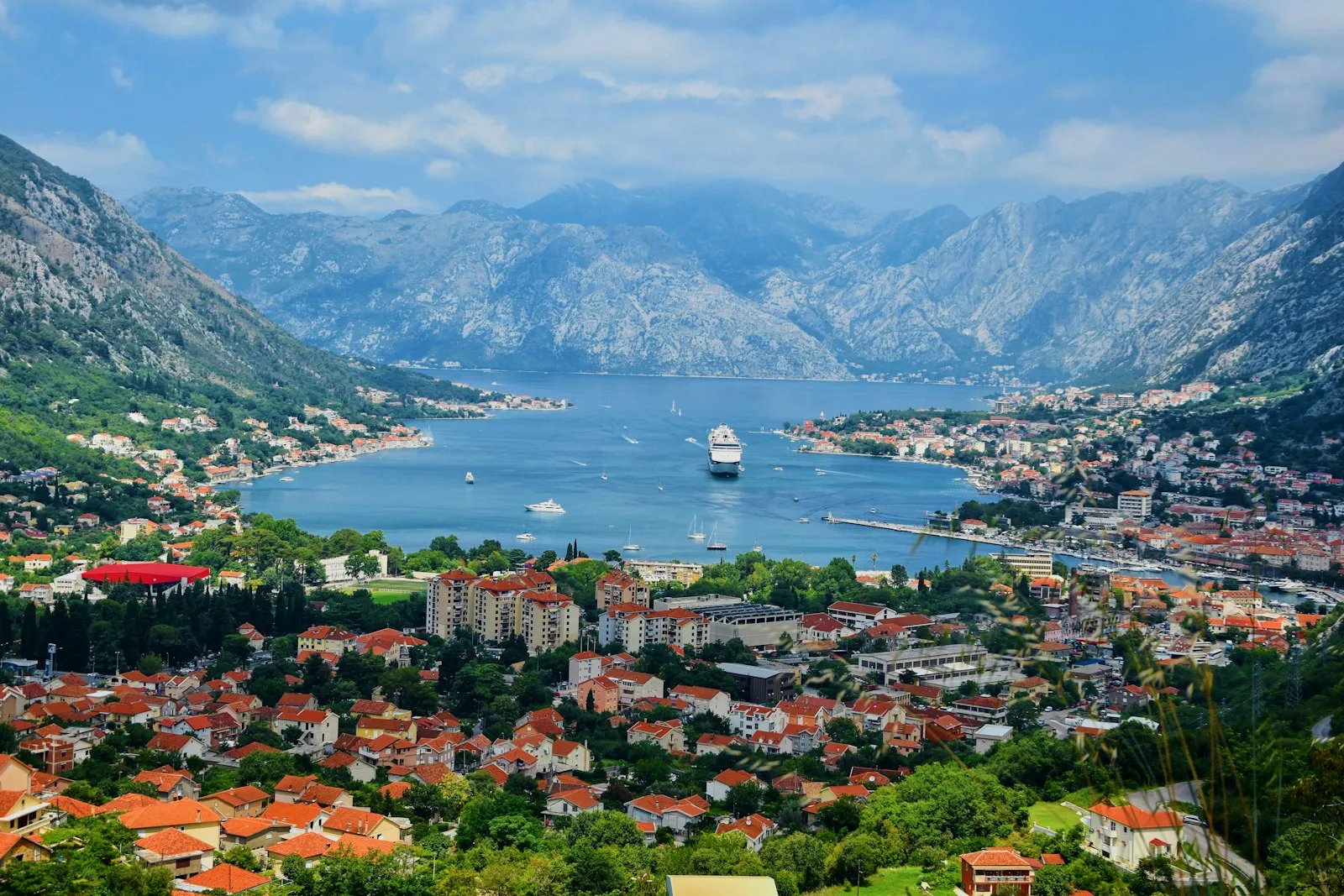
A Kotor day trip from Albania is a long but rewarding day out: from Tirana you drive north past Shkodër, cross into Montenegro and reach the Bay of Kotor in roughly four hours, leaving three to four hours to explore before the drive back. Kotor, a walled medieval town at the head of a fjord-like bay, is the classic choice. Budva, with its compact old town and beaches, is the alternative, and the famous islet of Sveti Stefan lies on the coast road along the way.
This guide explains the route, what to see in each town, how to choose between them and how to make the most of a short visit.
Kotor or Budva: which should you choose?
On a day trip there is realistically time for one town, so it helps to know what each offers:
- Choose Kotor for history and scenery: a UNESCO-listed walled town, a Romanesque cathedral, a dramatic climb up the city walls and the Bay of Kotor all around you.
- Choose Budva for a mix of sightseeing and seaside: a small, pedestrian old town on a peninsula, a citadel, a lively waterfront and beaches within walking distance.
On our Montenegro day tour from Tirana, you choose one of the two when you book, because visiting both properly in a single day is not practical. Either way, the tour includes a photo stop at Sveti Stefan.
The route from Albania
From Tirana the road runs north to Shkodër, where Rozafa Castle watches over the town from its hill. Beyond Shkodër, the two main crossings into Montenegro are Hani i Hotit, on the road to Podgorica, and Muriqan–Sukobin, which leads towards Ulcinj and the coast. From either, it is a scenic drive to Sveti Stefan, Budva and Kotor.
Montenegro is not in the EU but uses the euro. Queues at the border can be long on summer weekends, so it pays to start early. For more ideas on hopping between countries, see our guide to collecting four passport stamps on an Albania trip.
What to see in Kotor
The old town
Kotor’s old town is a tight maze of squares, palaces and churches behind thick Venetian-era walls. The Kotor region was inscribed on the UNESCO World Heritage List in 1979, and the town’s fortifications were added in 2017 as part of a listing of Venetian defensive works. Simply wandering the lanes is the main pleasure.
The Cathedral of St Tryphon
Consecrated in 1166, the Romanesque cathedral is dedicated to St Tryphon, Kotor’s patron saint. It has been damaged and repaired after several earthquakes, including those of 1667 and 1979, and remains the town’s most important church.
The city walls and San Giovanni fortress
Kotor’s walls stretch for around 4.5 kilometres and zigzag up the mountain behind the town to the Castle of San Giovanni. The full climb is steep, with well over a thousand steps, but even going part of the way rewards you with superb views over the rooftops and the bay. Go early or late in the day to avoid the heat, and take water.
Perast and Our Lady of the Rocks
If you have your own transport or an extra day, the baroque village of Perast, further round the bay, is unmissable. Offshore sits Our Lady of the Rocks, an artificial islet built up over centuries from rocks and sunken ships after local sailors reportedly found an icon of the Virgin on a rock in the sea in 1452. Every 22 July, locals keep the tradition alive in the fašinada, rowing out at sunset to throw more stones into the water.
What to see in Budva
The old town and citadel
Budva claims some 2,500 years of history, which makes it one of the oldest settlements on the Adriatic coast. Its walled old town, on a small peninsula, is now pedestrian-only. Much of it was devastated by an earthquake in 1979 and carefully rebuilt over the following eight years, so today it looks remarkably intact. At its southern tip, the citadel offers views along the coast.
Churches and beaches
Inside the walls, a square near the citadel gathers several churches, including the Orthodox Holy Trinity Church of 1804. A short cliffside path leads from the old town to Mogren beach, one of Budva’s best known, while the marina and the long town beach lie just outside the walls.
Sveti Stefan
A few kilometres south of Budva, Sveti Stefan is one of Montenegro’s most photographed views: a 15th-century fortified village on an islet, joined to the mainland by a narrow strip of sand. It was turned into a luxury hotel in the Yugoslav era and remains a private resort that is not open to casual visitors, so the best way to enjoy it is from a viewpoint on the coast road.
How much can you see in a day?
With around three and a half hours in town, a good plan for Kotor is to walk the old town, visit the cathedral, climb part of the walls and leave time for lunch in one of the squares. In Budva, combine the old town and citadel with a stroll along the waterfront or a swim at Mogren. Both towns can be crowded at midday in high season, and Kotor is a busy cruise port, so expect lunchtime to be the most hectic time in the old town.
Practical tips
- Bring your passport or, if your nationality allows it, an ID card; some nationalities need a visa for Montenegro.
- If you drive yourself, make sure your rental agreement allows cross-border travel and that the insurance covers Montenegro.
- Carry some euros in cash for small purchases.
- Wear comfortable shoes with good grip for the polished stone lanes and the walls.
- Pack a swimsuit if you choose Budva in summer.
Turning it into a longer trip
Kotor and Budva are even better with a night or two, which lets you see both towns, Perast and perhaps Lovćen National Park above the bay. They also slot neatly into multi-country itineraries. Our Albania – Macedonia – Kosovo – Montenegro 6-day tour finishes with Budva and Kotor, and our longer Balkan tours continue north to Dubrovnik.
Frequently asked questions
Can you visit Kotor and Budva in one day from Tirana?
Seeing both properly in one day is not realistic. With around four hours of driving each way, plus the border, there is time to explore one town well. On our Montenegro day tour you choose either Kotor or Budva when booking, with a photo stop at Sveti Stefan on the way. If you want both, plus Perast, plan at least one night on the Montenegrin coast.
How long is the drive from Tirana to Kotor?
Allow roughly four hours each way, depending on traffic and the queue at the border. The journey runs north via Shkodër before crossing into Montenegro and continuing to the Bay of Kotor. In July and August, and at weekends, border waits can add significantly to the journey time, so start early and keep your plans flexible.
Do I need a passport to go from Albania to Montenegro?
Yes, you need a valid passport, or a national ID card if your nationality allows entry with one. Some travellers also need a visa for Montenegro, depending on their passport, and the rules can change. Check the official requirements before you travel, and make sure your documents are also valid for the return crossing into Albania.
What currency is used in Montenegro?
Montenegro uses the euro, even though it is not a member of the European Union or the eurozone. Cards are widely accepted in Kotor and Budva, but it is useful to carry some euros in cash for small cafés, boat trips and entrance tickets. Albania uses the lek, so do not count on spending leftover lek in Montenegro.
Is it worth climbing Kotor’s walls on a day trip?
If you are reasonably fit, yes, even if you only go part of the way. The views over the old town and the bay improve with every turn. The full climb to San Giovanni is steep, exposed and hot in summer, so allow plenty of time for the round trip, take water and avoid the middle of the day.
Can I join the trip from Durrës or Golem?
Yes. Our Montenegro day tour offers pick-up in Tirana, Durrës and Golem, at or near your accommodation. Pick-ups in Durrës and Golem are earlier than in Tirana, and you receive the exact time and meeting point the day before the tour. Check the tour page for the latest details before you book.
Ready for Montenegro? Book our Montenegro day tour to Kotor or Budva from Tirana, Durrës or Golem, or explore our cross-country Balkan tours to combine Montenegro with its neighbours.