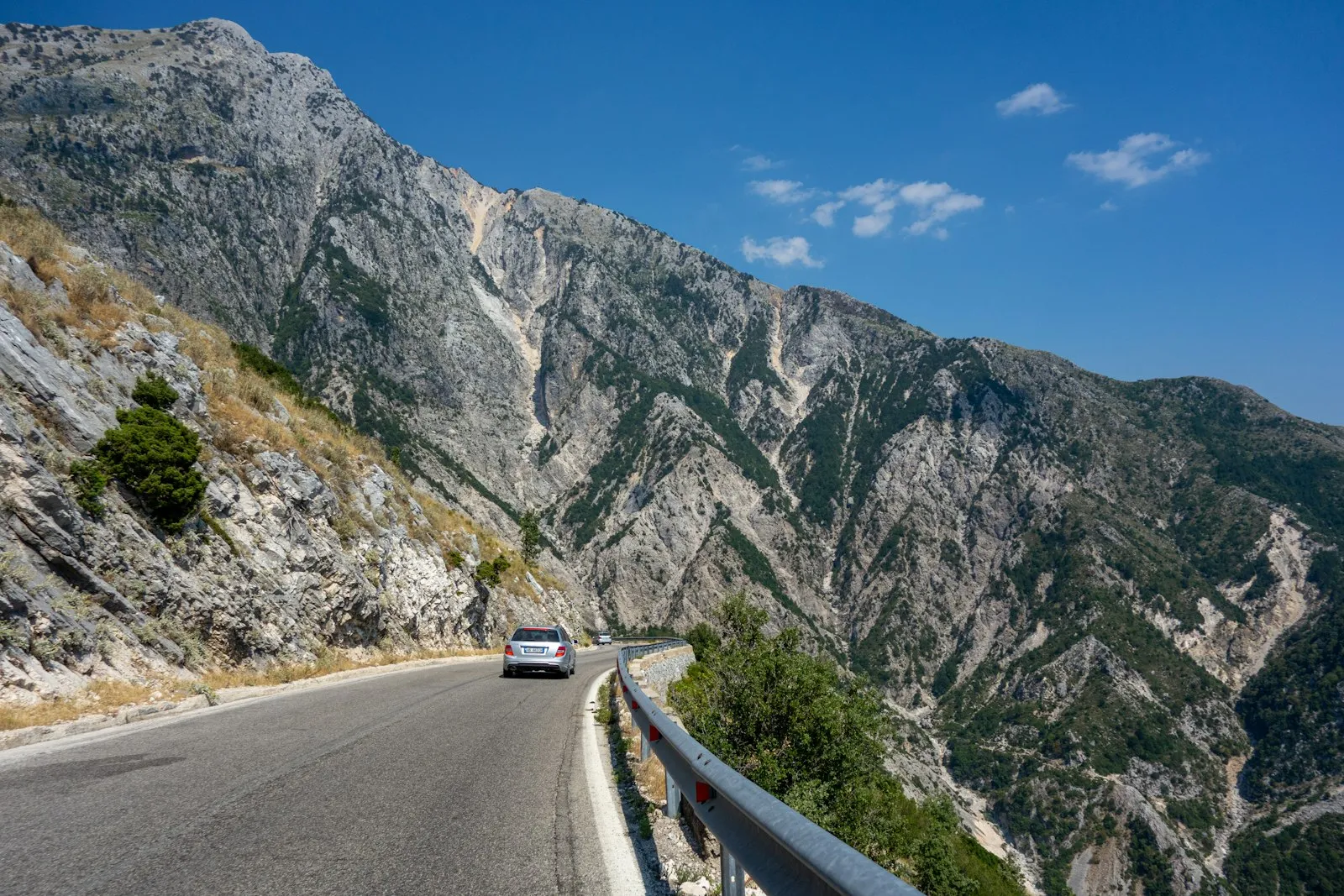
The Llogara Pass is a mountain pass just over 1,000 metres high in the Ceraunian Mountains of southern Albania, carrying the coast road between Vlorë and the Albanian Riviera. It is famous for its pine forests, its hairpin descent towards the Ionian Sea and a summit view over Palasë, Dhërmi and a long stretch of coastline. Since a road tunnel opened beneath it in July 2024, driving over the top has become the scenic option rather than the only one.
Whether you are road-tripping the Riviera or heading south to Sarandë, Llogara deserves more than a glance through the windscreen. This guide covers the route, what to see at the top, the national park around it, the best time to go and a few practical tips for the drive.
Where is the Llogara Pass?
The pass lies on the SH8 road, roughly an hour’s drive south of Vlorë without stops. Its summit, usually given as 1,027 metres, sits between two peaks of the Ceraunian range: Maja e Çikës, which rises to just over 2,000 metres, and Maja e Gjipalit. On the northern side the road climbs out of the Dukat valley, with Orikum the nearest town; on the southern side it drops steeply towards Palasë and Dhërmi, the first villages of the Riviera.
Until 2024, every vehicle driving the coast road between Vlorë and the Riviera had to climb over the pass. Today you can choose between the old road over the top and the tunnel underneath.
Pass or tunnel? What changed in 2024
The Llogara Tunnel, around 6 kilometres long, opened to traffic on 5 July 2024. It runs from the Dukat side to Palasë and turns what used to be a slow, winding half-hour stretch into a drive of a few minutes. If you are in a hurry to reach Himarë or Sarandë, it is the obvious choice.
The old road still crosses the mountain, though, and it is the way to reach the national park, the roadside restaurants and the famous viewpoint. If the weather is clear, drive over the top at least once, ideally heading south so that the sea opens up in front of you.
The drive from Vlorë to the Riviera
The northern climb
Leaving Vlorë, the road follows the bay south past Radhimë to Orikum, home to the remains of the ancient port of Oricum. It then turns inland up the Dukat valley, passes the village of Dukat and climbs through hairpins into thick pine forest. Look back on the way up for views over the Bay of Vlorë and the Karaburun peninsula.
The summit and the southern descent
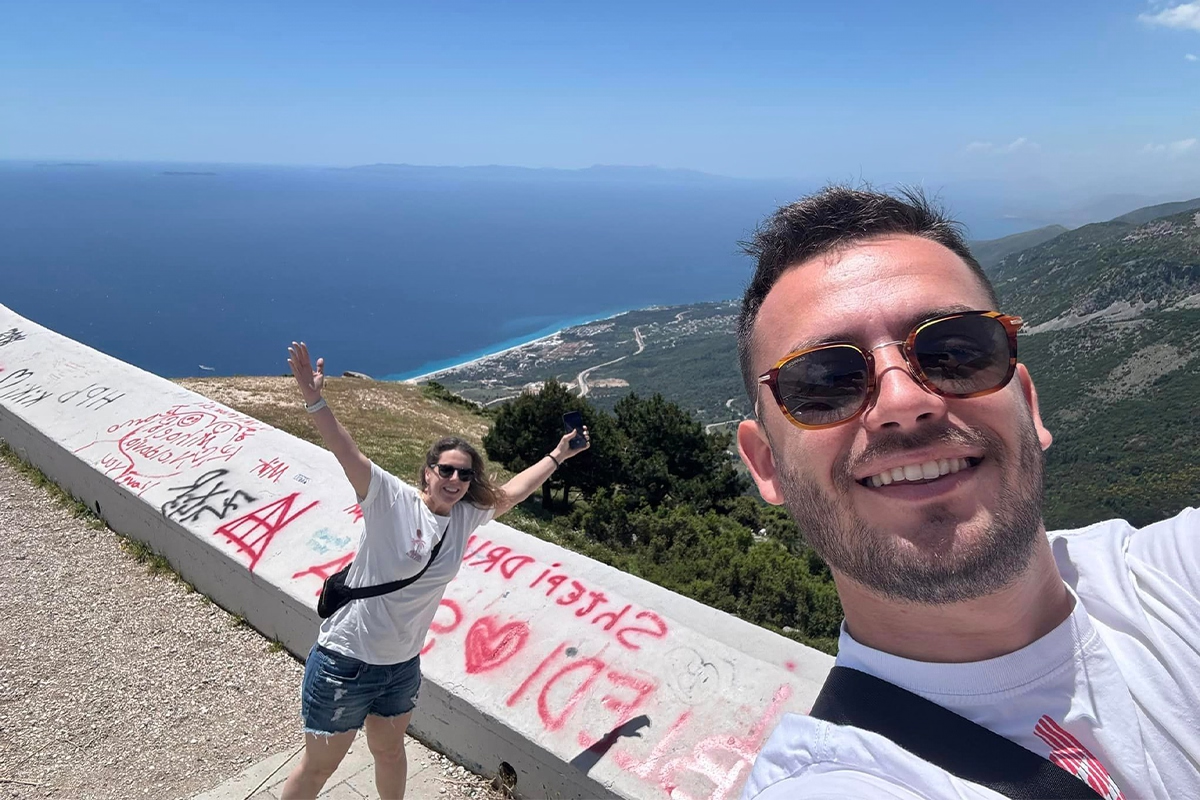
Near the top, the forest opens out at a cluster of hotels, wooden chalets and restaurants known as the Llogara tourist village. A little further on you reach the pass itself, where the mountainside falls away more than 1,000 metres to the Ionian Sea. The descent to Palasë is a tight series of switchbacks with constant views, so use the pull-outs rather than stopping on bends.
What to see and do at Llogara
The viewpoint
The Llogara panorama at the top of the pass is one of the great views of the Albanian coast. On a clear day you look straight down on the beach at Palasë and along the shore towards Dhërmi, with the mountains running south as far as you can see. Come in the morning for the clearest air, or late in the afternoon when the sun drops towards the sea.
Llogara National Park
The forests around the pass have been protected as Llogara National Park since 1966. Black pine, Bosnian pine and fir cover the slopes, and the strong winds have bent some trees into strange shapes – the best known is the Pisha e Flamurit, or “flag pine”. The park is also home to golden eagles, griffon vultures, roe deer and even wolves, though you will need luck and patience to spot most of them. It features in our round-up of Albania’s top national parks.
Walks and hikes
Easy forest walks start near the hotels and restaurants and are a pleasant way to stretch your legs after the drive. Longer routes lead towards the high ridges of the Ceraunian Mountains, including Mount Çika, but trails are not always well marked and the terrain is serious. Go with a local guide unless you are an experienced mountain walker.
Paragliding
The slopes above Palasë are one of Albania’s best-known paragliding areas. In summer, local operators offer tandem flights that launch near the pass and glide down towards the coast, usually landing close to the beach. Flights depend entirely on wind and weather, so choose an established operator and keep your plans flexible.
Food and local produce
The restaurants at Llogara are a traditional lunch stop, with grilled meat – especially lamb – and fresh salads on most menus. Along the road you will often find stalls selling local honey and mountain tea (çaj mali), which make good, light souvenirs.
A brush with history
Julius Caesar landed his army at Palasë, just below the pass, in 48 BC during his civil war against Pompey, and the name Caesar’s Pass is still used locally. It is a reminder that this stretch of coast has been a crossing point between Italy and the Balkans for more than two thousand years.
Stops along the way
- Orikum – a small seaside town with the ancient site of Oricum nearby.
- Dukat – the village at the foot of the northern climb.
- Llogara tourist village – restaurants, chalets and forest walks just below the summit.
- The summit viewpoint – the classic panorama over the Riviera.
- Palasë and Drymades – the first beaches at the bottom of the descent.
- Dhërmi – a hillside village above one of the Riviera’s most popular beaches.
When to go
The pass is open all year, but the best time to visit is from May to October. Late spring and early autumn bring clear views, comfortable temperatures and lighter traffic, while July and August are busy with holidaymakers heading for the beaches. At the top it is noticeably cooler than on the coast, so pack a layer even in summer.
Winter has its own appeal, with snow on the peaks and empty roads. However, fog can roll in quickly and cut visibility to almost nothing, and snow occasionally closes the road for short periods. If the summit is wrapped in cloud, take the tunnel and save the view for another day.
Driving tips
- The road is paved, but the hairpins are tight: use a low gear on the descent and take your time.
- Expect coaches, cyclists and the occasional animal on the road, and never overtake on blind bends.
- Stop only in proper pull-outs and car parks, never on the bends themselves.
- Fill up with fuel in Vlorë or Orikum before the climb.
- If you suffer from car sickness, sit in the front and plan a break at the top.
Seeing Llogara on a tour
Our multi-day south Albania tours travel the Riviera between Himarë and Vlorë, combining it with Berat, Gjirokastër, Sarandë and Ksamil. The pass itself is not a fixed stop on these itineraries, so if time at the top matters to you, mention it when you enquire or build it into a private trip. For more ideas on the coast, see our one-week Albanian Riviera road trip guide.
Frequently asked questions
How high is the Llogara Pass?
The summit of the Llogara Pass is usually given as 1,027 metres above sea level, although you will see slightly different figures quoted. Because the southern side drops so steeply to the Ionian Sea, it feels even higher than it is: from the viewpoint you look down more than a thousand metres to the beaches at Palasë, only a few kilometres away as the crow flies.
Is the Llogara Pass road dangerous?
Not if you drive carefully. The road is paved and well used, but it has many tight hairpins, steep gradients and some fast local drivers. Take the descent slowly in a low gear, avoid overtaking on bends and stop only in pull-outs. In winter, fog and occasional snow can make conditions difficult, so check the weather first and use the tunnel if visibility is poor.
Do I have to drive over the pass now that the tunnel is open?
No. Since July 2024 the Llogara Tunnel has offered a much quicker route between the Dukat side and Palasë. The old road over the top is still there, however, and it is the way to reach the viewpoint, the national park and the roadside restaurants. If you have time and the weather is clear, the pass is well worth the extra half hour.
Can you go paragliding at Llogara?
Yes. Llogara is one of Albania’s best-known paragliding areas, and in the summer season local operators run tandem flights from the slopes near the pass down towards the coast around Palasë. You do not need any experience for a tandem flight, but everything depends on the wind, so flights can be cancelled at short notice. Book with an established operator and keep a spare day if you can.
How long should I spend at Llogara?
For most travellers, an hour or two is enough to enjoy the viewpoint, take photos and have lunch at one of the restaurants. If you want to walk in the forest, allow half a day. Serious hikers aiming for the high ridges or Mount Çika should plan a full day, start early and go with someone who knows the trails well.
Which is the best direction to drive the pass?
Both directions are spectacular, but driving south from Vlorë is the classic choice. You climb through the forest with the Bay of Vlorë behind you, then crest the pass to find the Ionian coast spread out below. Heading north, you face the mountain on the climb up from Palasë, so stop at the top and turn around to enjoy the same view.
Ready to explore the south? Our Tour of South Albania in 4 days combines Berat, Gjirokastër, the Ksamil islands, Butrint and the Riviera, while a private group tour can be planned around your own interests – including time at the top of the pass.