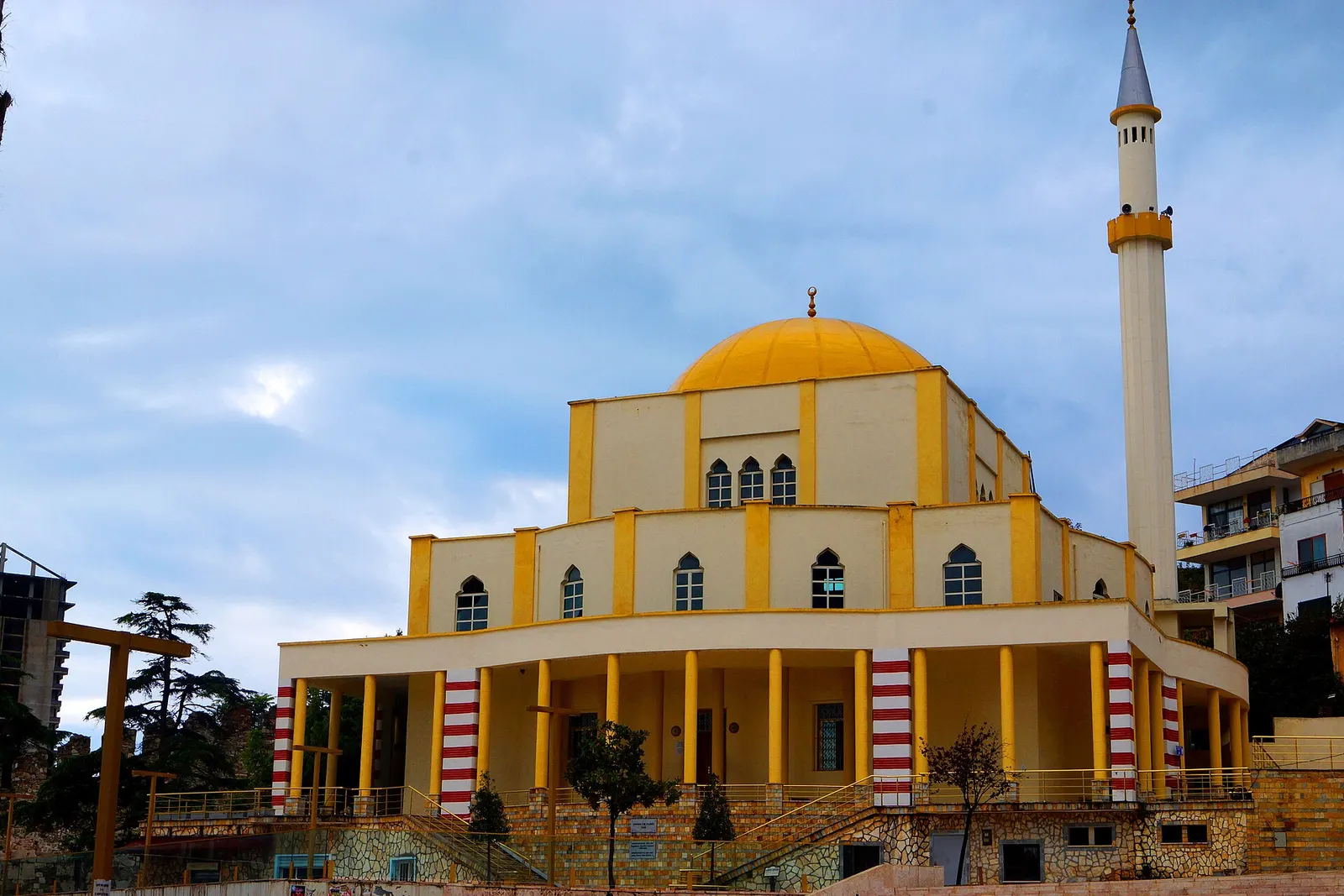
Built on the site of an earlier Ottoman-era mosque, it was begun in 1931, during the reign of King Zog, and completed in 1938 with the backing of the city’s Muslim community and merchants. Italian architects drew up the design, combining elements of Islamic architecture with columns and motifs inspired by local Durrës tradition. When the communist regime banned religion in 1967, the mosque was closed, its dome and minaret were demolished, and the building became a cultural centre known as the Youth Palace.
After the fall of communism the mosque reopened in 1993 and was restored, regaining its central dome and minaret while keeping its original architecture. Visitors can admire the columned façade, a distinctive blend of 1930s design and Islamic tradition, and the open prayer hall inside. As at any working mosque, visit outside prayer times, dress modestly and remove your shoes.
It is an easy stop on a walk around the centre of Durrës.