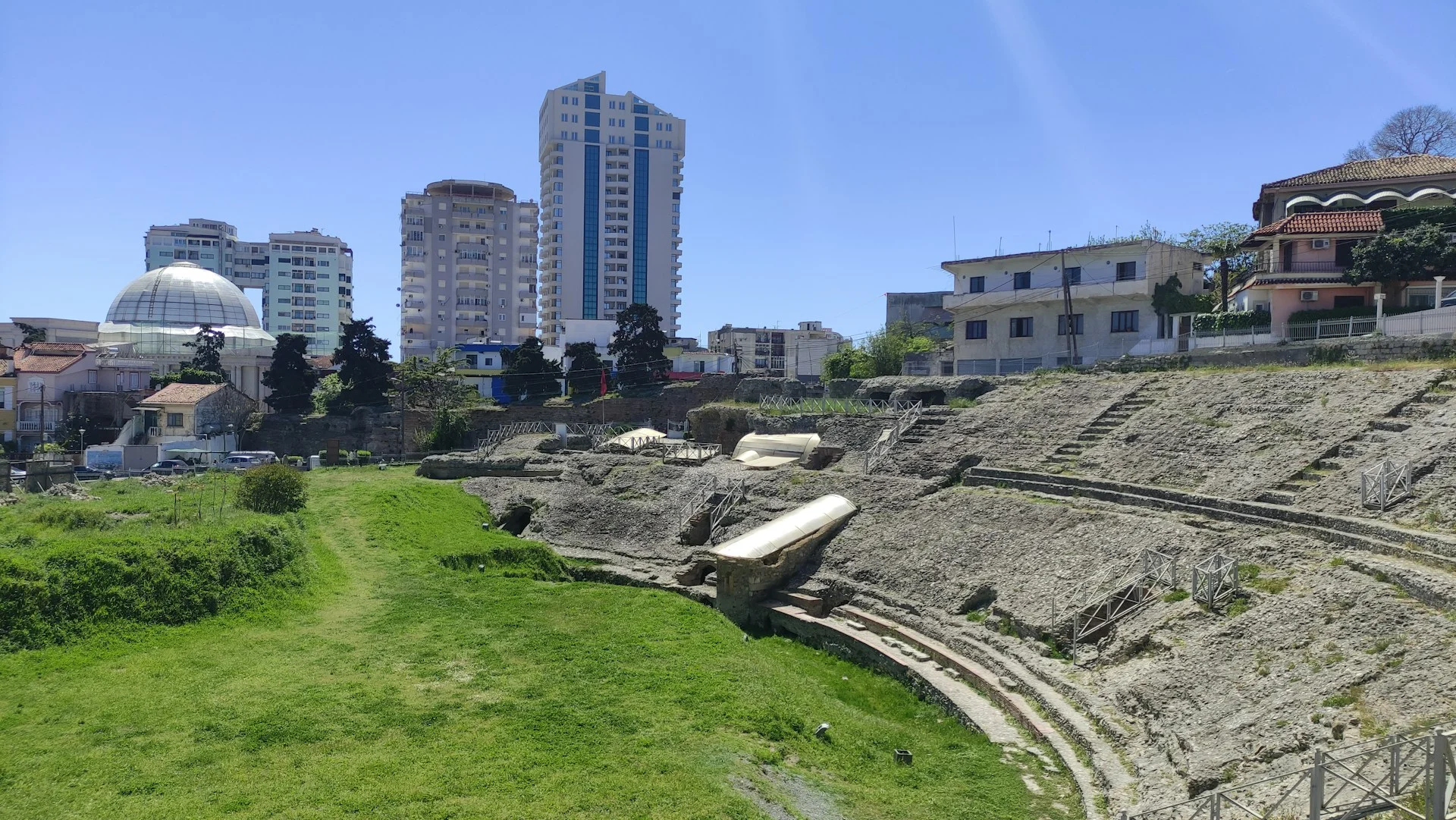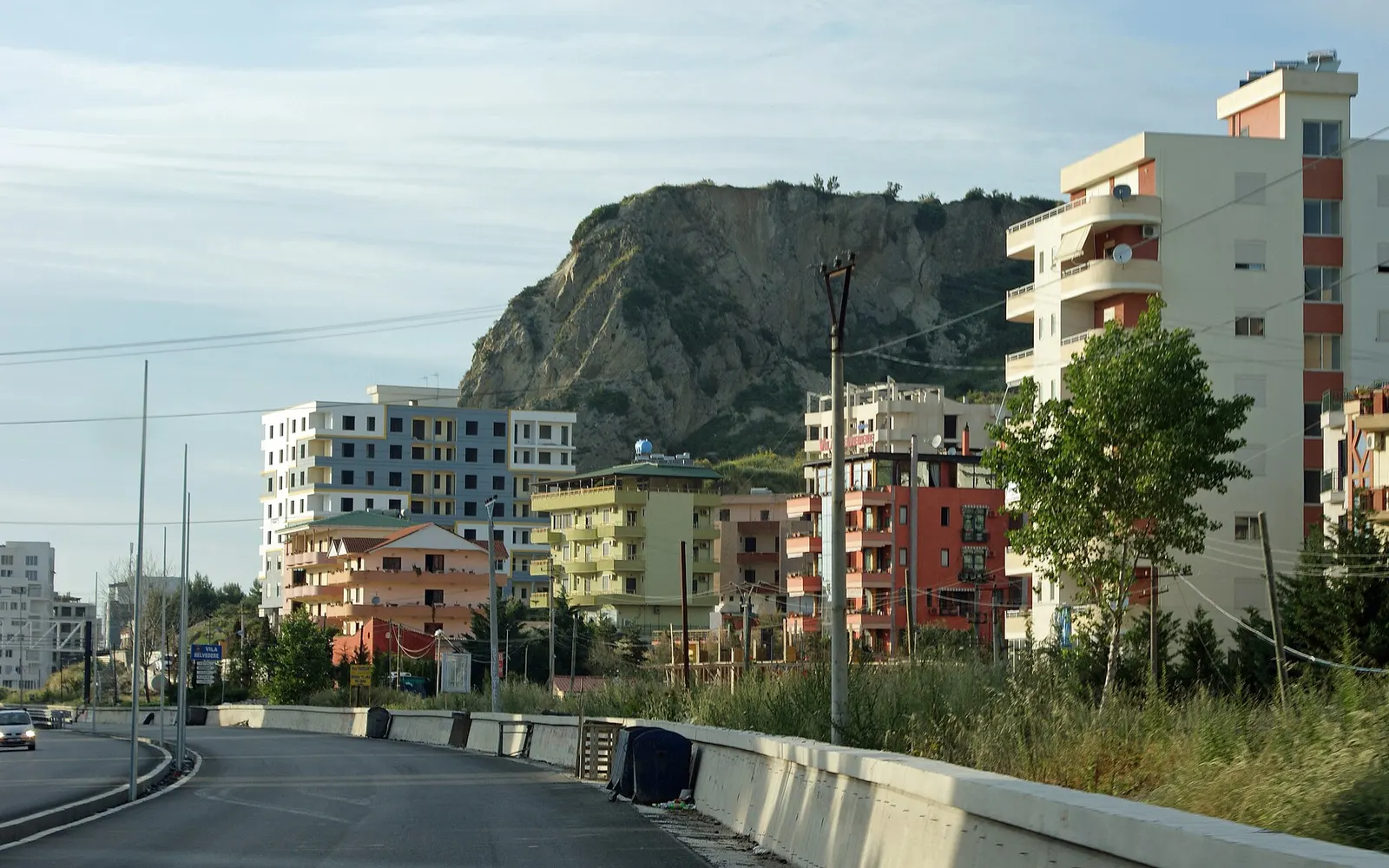
The rock is made of sandstone and conglomerate, sculpted by the wind into unusual forms and largely covered with shrubs and trees, and it is protected as a natural monument. Its strategic position has drawn armies for millennia: tradition links the headland to the campaign of 48 BC, when Julius Caesar and Pompey faced each other around ancient Dyrrachium, today’s Durrës. Under communism the area was a closed military zone.
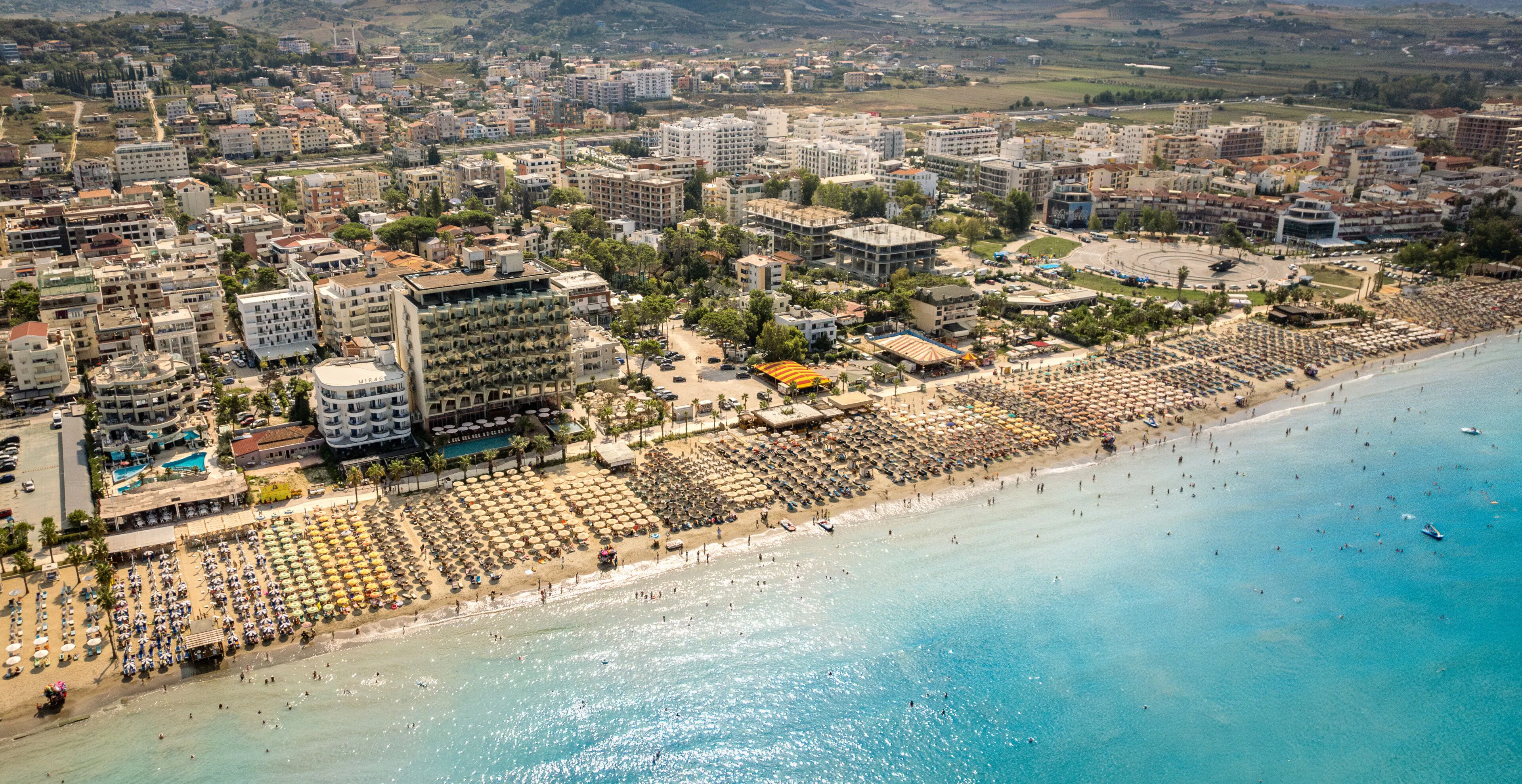
Today it is better known for leisure. Below the rock, Kavaja Rock Beach offers golden sand, a gentle entry into the sea, beach bars, restaurants and water sports, and lies only 15–20 minutes by car from central Durrës. From the higher ground there are wide views across the Bay of Durrës, and the shore here is a popular place to watch the sun set over the Adriatic.
It makes an easy outing from Durrës, combining beach time with a touch of history.