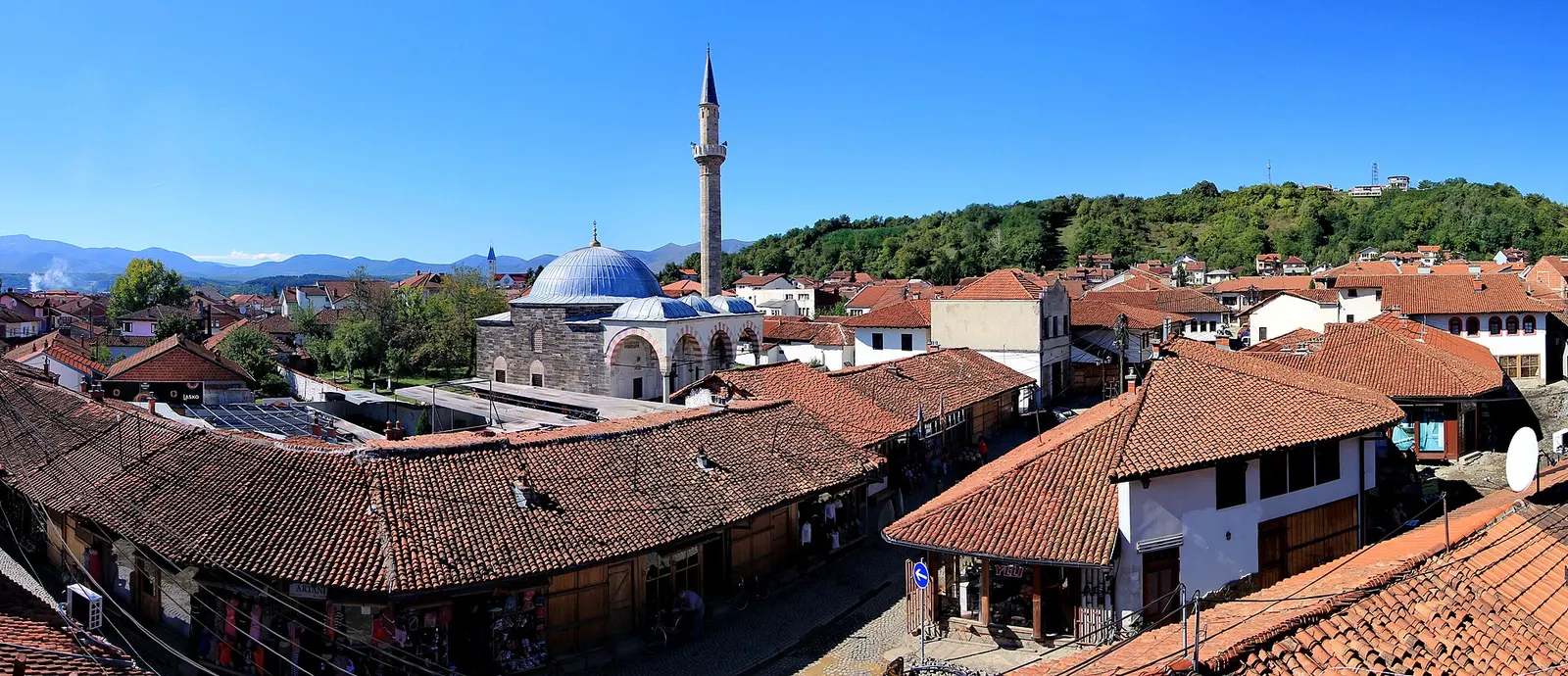
The bazaar grew up during the Ottoman period, when Gjakova developed into a trading centre on the route between Shkodër and Istanbul. Craftsmen and merchants gathered around the Hadum Mosque, built in the 1590s and adorned with painted floral decoration. Nearby stand the Great Tekke (Teqja e Madhe), a Sufi lodge dating back to the late 16th century, and a clock tower. Much of the bazaar was burned during the 1999 war, and it has since been carefully rebuilt in its traditional style.
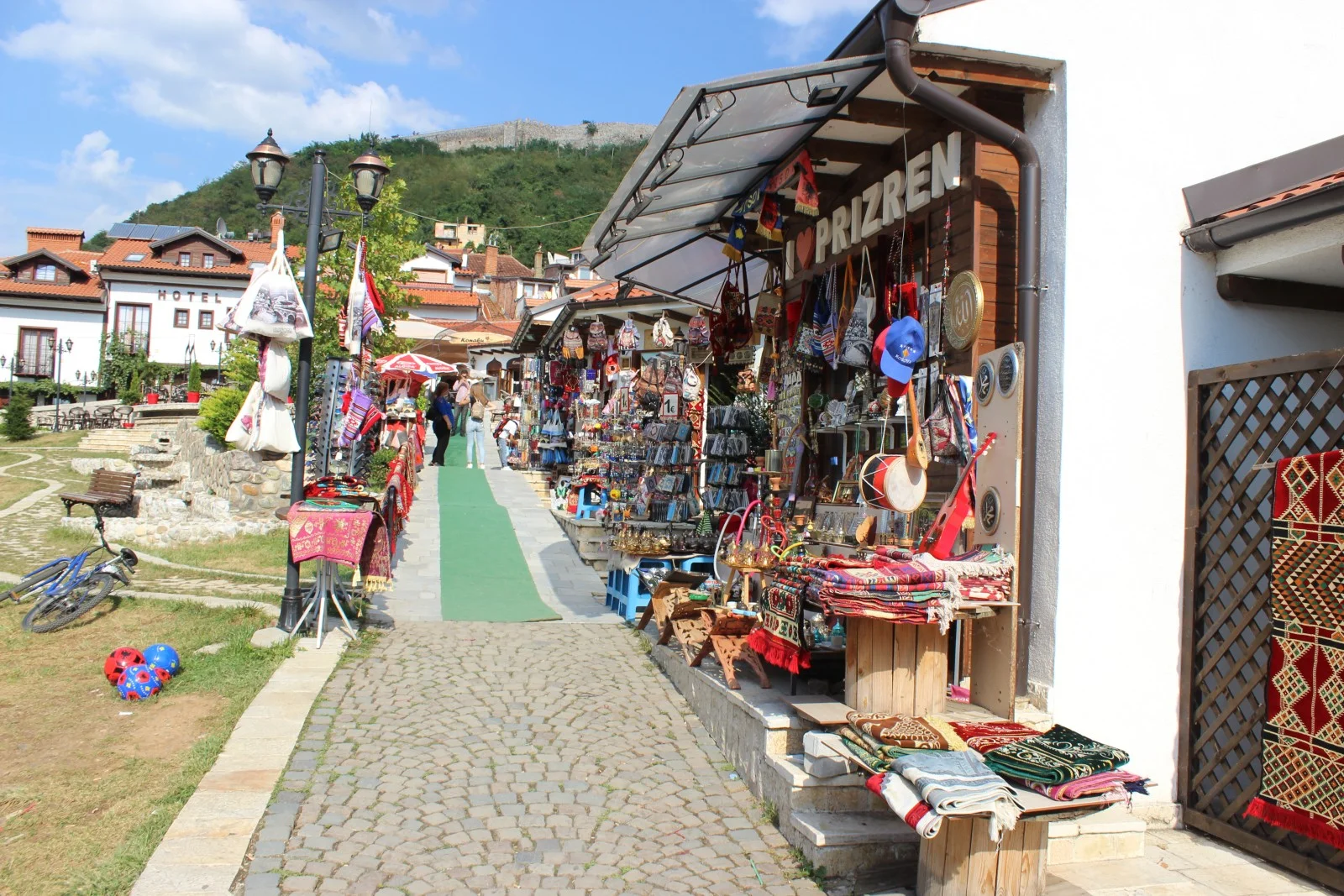
Today visitors can stroll beneath the overhanging eaves, browse small shops selling local handicrafts and traditional costumes, and watch artisans at work. The bazaar is also a lively social hub, with cafés where locals meet over coffee or a glass of tea, especially in the late afternoon and evening.
A walk through the Çarshia is the best way to feel the character of Gjakova, and it combines easily with visits to Pejë and Prizren.