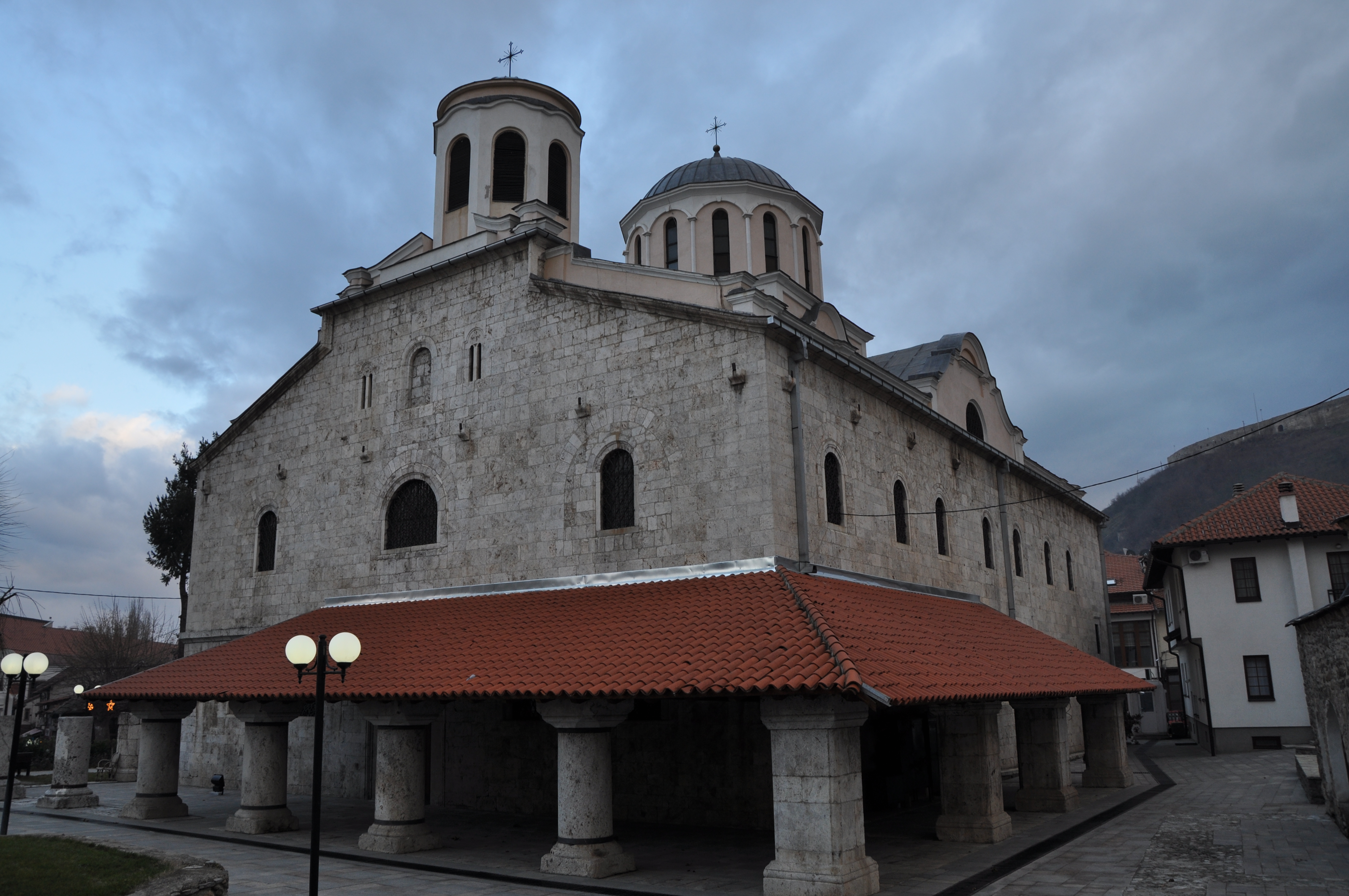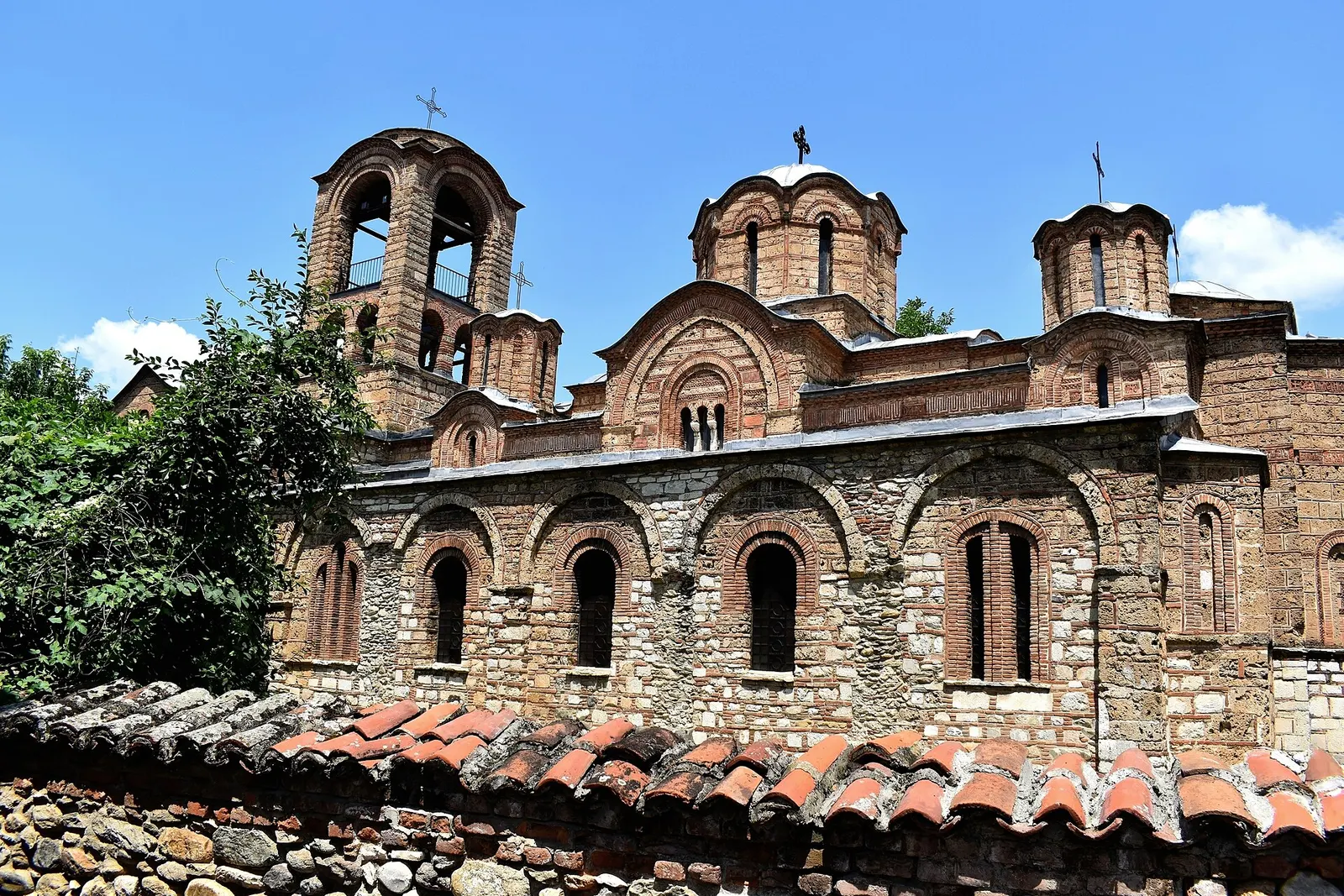
The church was rebuilt and enlarged in the early 14th century on the orders of King Stefan Milutin, on the site of an older Byzantine basilica. The master builder Nicholas gave it five domes and an open, two-storey entrance porch topped by a bell tower, while the painters Michael and Eutychios Astrapas, from Thessaloniki, decorated its interior with frescoes. During the Ottoman period the building served as a mosque and the paintings were covered with plaster; it was returned to use as a church in the early 20th century.
From outside, look for the five domes and the tall bell tower above the entrance. Inside, the surviving frescoes include the image of the Virgin Eleusa that gave the church its name, although the walls still bear the scars of centuries under plaster and of a fire during the unrest of March 2004; restoration work has continued since. The church is often locked and access can depend on a caretaker being present, so it is worth asking locally before you go.
For anyone interested in Byzantine art and Prizren’s layered history, it is a deeply rewarding stop.