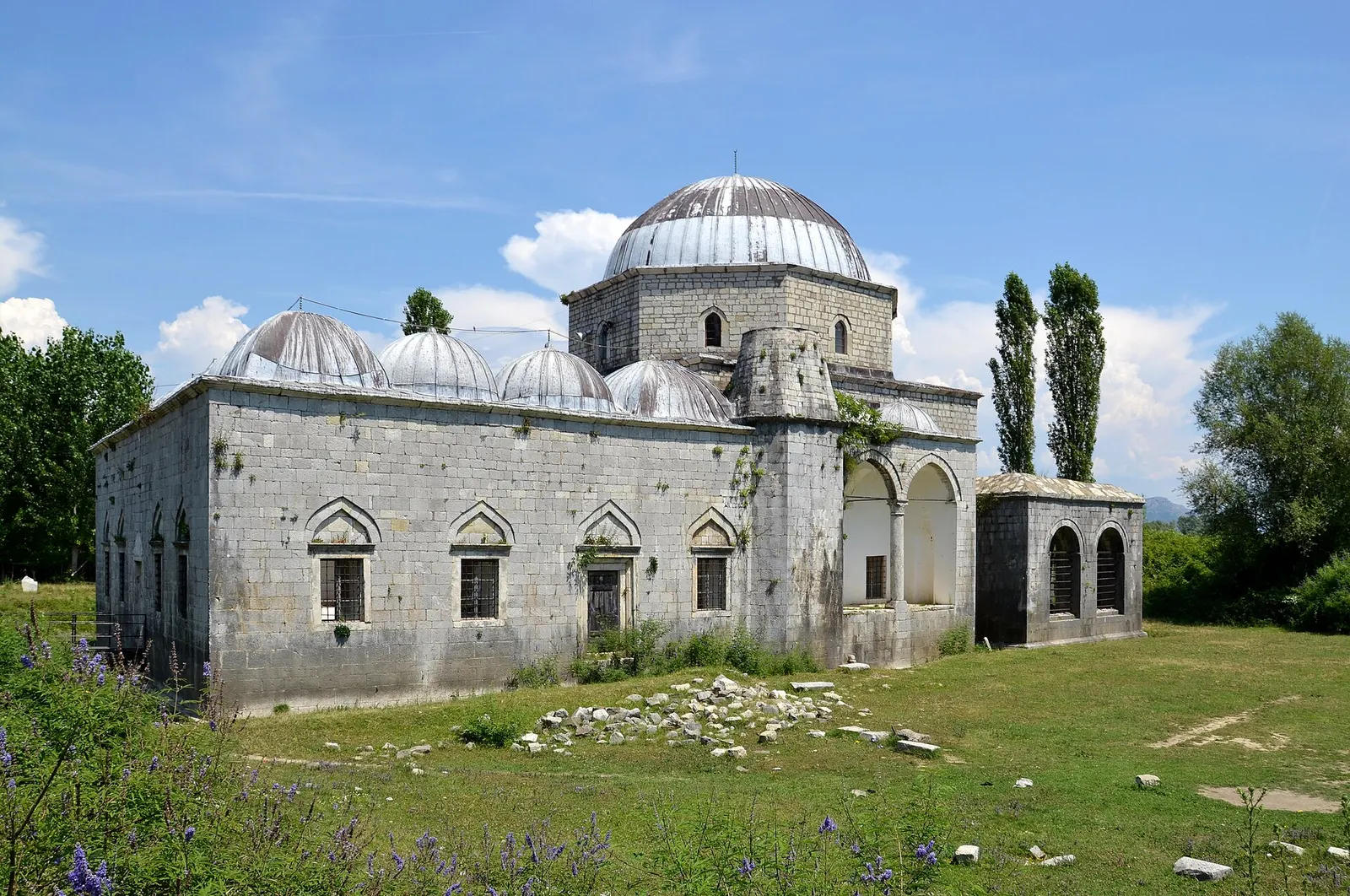
It was completed in 1773 by Mehmed Pasha Bushati, ruler of the Pashalik of Scutari, who wanted his home city to feel like a capital. Unusually for Albania, its design follows the classical Istanbul style associated with the great architect Mimar Sinan, with a large central dome surrounded by smaller ones. The mosque takes its name from the lead that once covered its domes, most of which was stripped away over time, with the last removed by the Austrian army in 1916.
The building survived difficult times: its minaret was destroyed in 1967, when religion was banned, and the mosque reopened in 1990 as communism came to an end. Its low-lying setting means the grounds are prone to flooding in the rainy season. A restoration carried out with Albanian and Turkish support began in 2021.
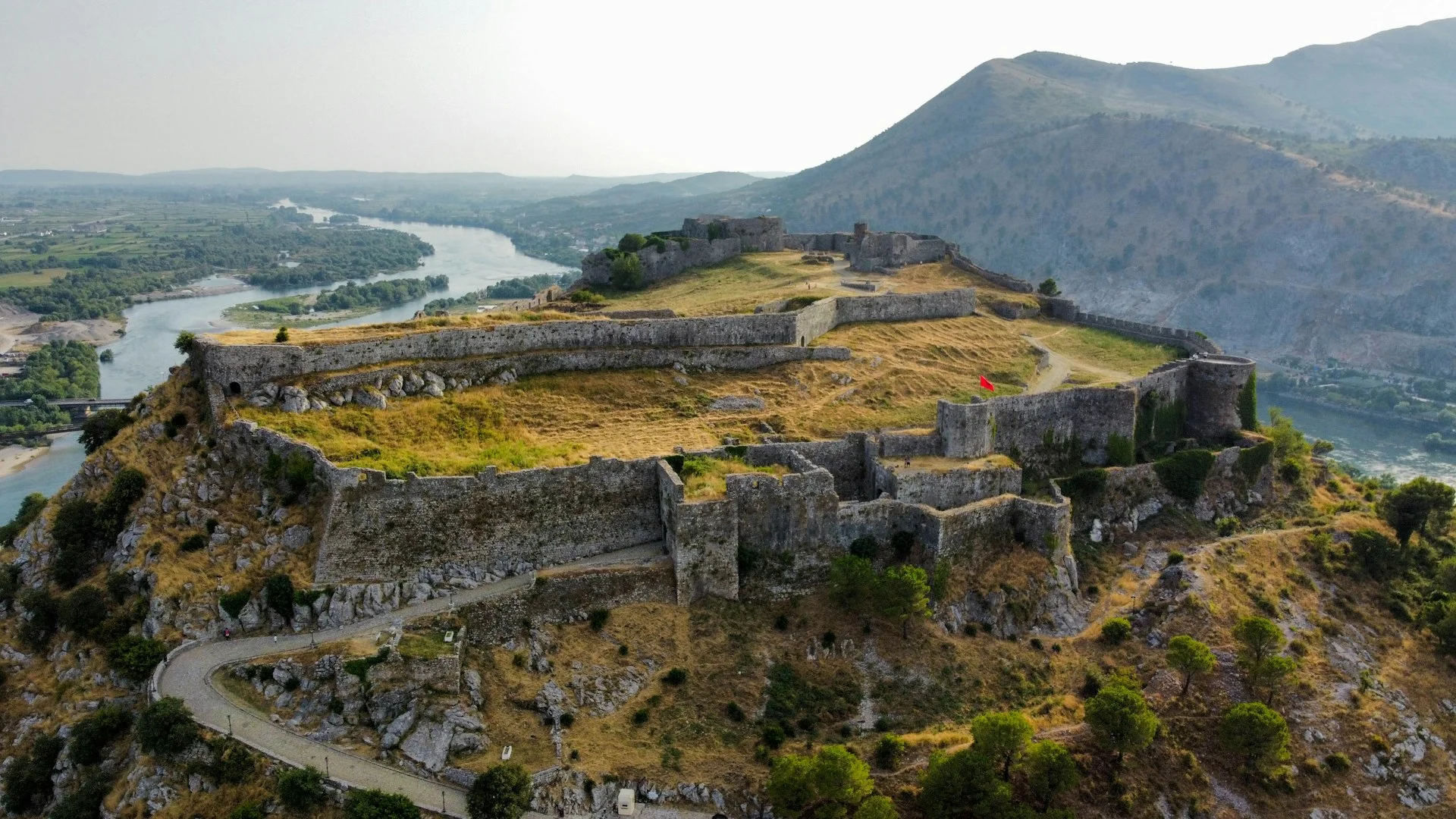
Combine a visit with the climb to Rozafa Castle, from where the domes of the mosque make a striking sight against the plain below.