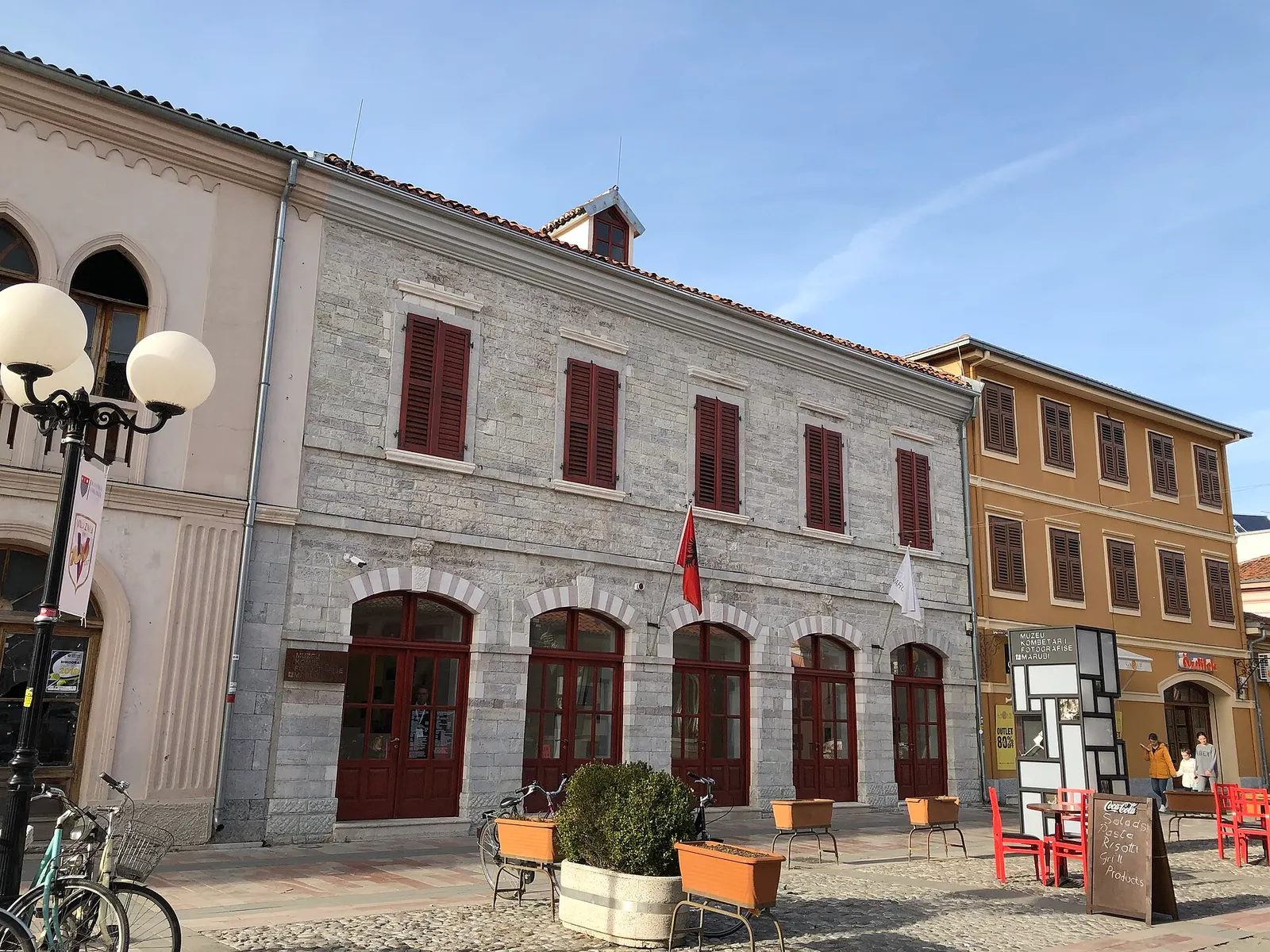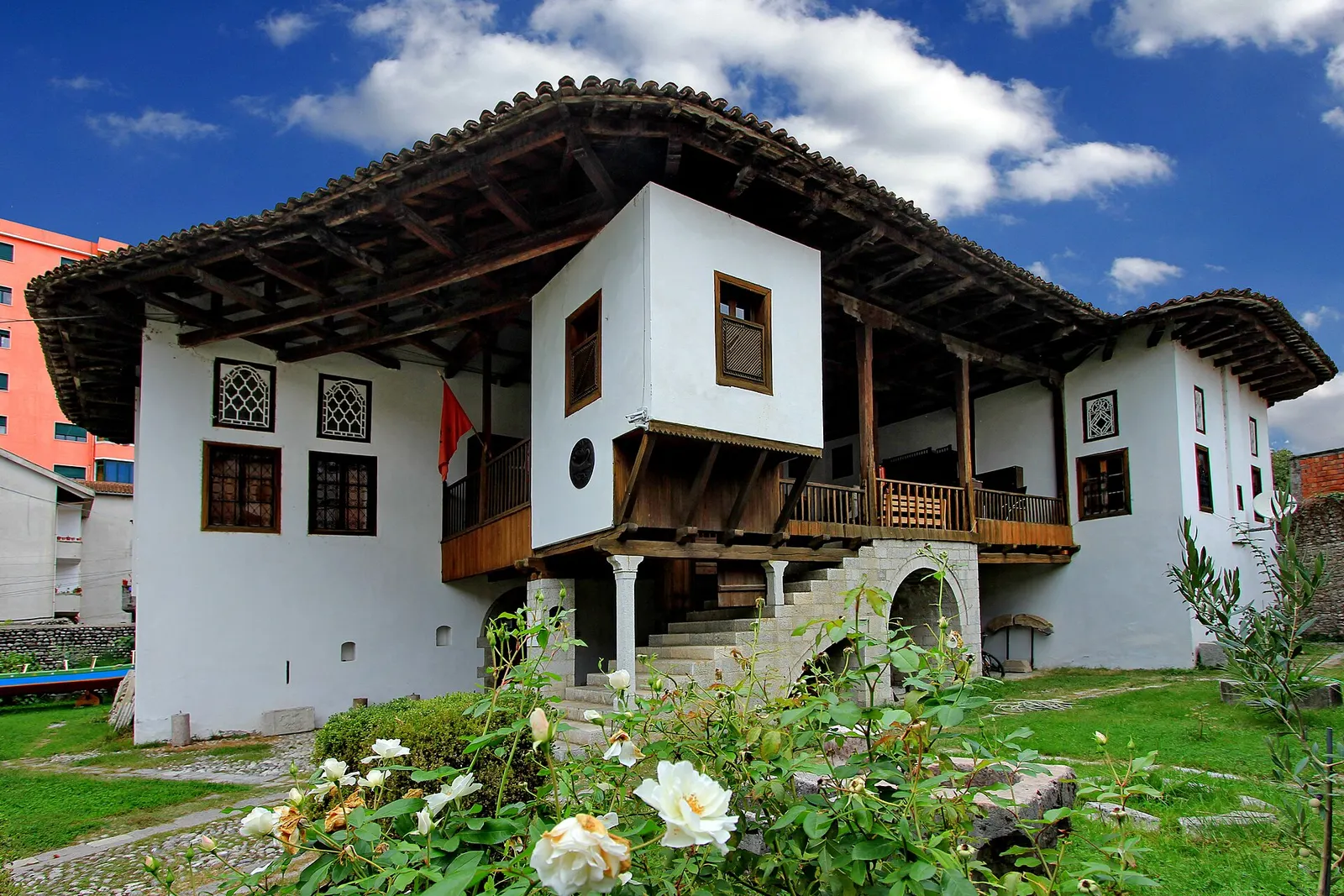
The museum moved into the house in 1996. Dating from the early 19th century, it is a classic Shkodër merchant’s residence, enclosed by high walls, with a broad upper balcony, decorated wooden ceilings and rooms once divided between family life and business. It bears the name of Oso Kuka, the local hero who in 1862 blew up the tower he was defending on Vranjina island in Lake Shkodër rather than surrender to Montenegrin forces, and who was later celebrated in Albanian epic poetry.
The collections are arranged in sections devoted to archaeology, ethnography and the visual arts. Archaeological finds from Shkodër and its surroundings range from prehistory to the Middle Ages, while the ethnographic rooms display traditional costumes, including the bell-shaped xhubleta skirt of the northern highlands, alongside old weapons and handicrafts. In the garden, look for a Roman tomb and a Venetian well-head carved with the lion of St Mark.
Give yourself time to enjoy the house as much as the exhibits: it is a rare glimpse of how prosperous Shkodër families once lived.