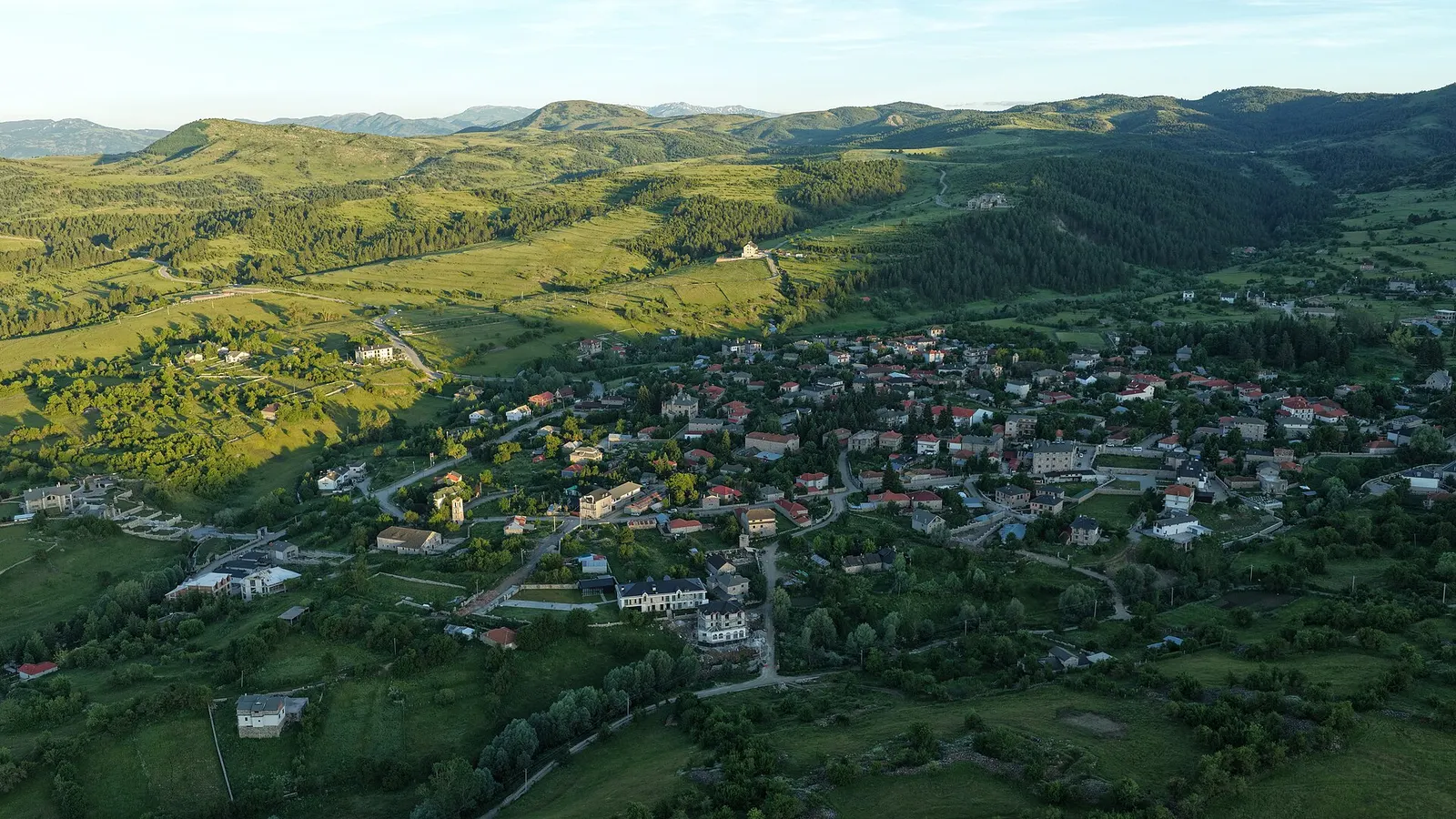
Twenty-odd kilometres west of Korçë, at 1,160 metres, sits a village of a few hundred people. In the middle of the eighteenth century the same place — then Moscopole — was among the largest and richest cities in the Balkans, with an academy, a printing press and merchant houses trading as far as Vienna and Venice.
What happened
Voskopoja was sacked repeatedly in the second half of the eighteenth century, and the population scattered across the Balkans and central Europe. Later wars did more damage. What was a city of tens of thousands became a village, and most of what you see today is what survived that collapse: churches, a few stone houses, and the outlines of something much bigger under the grass.
The churches
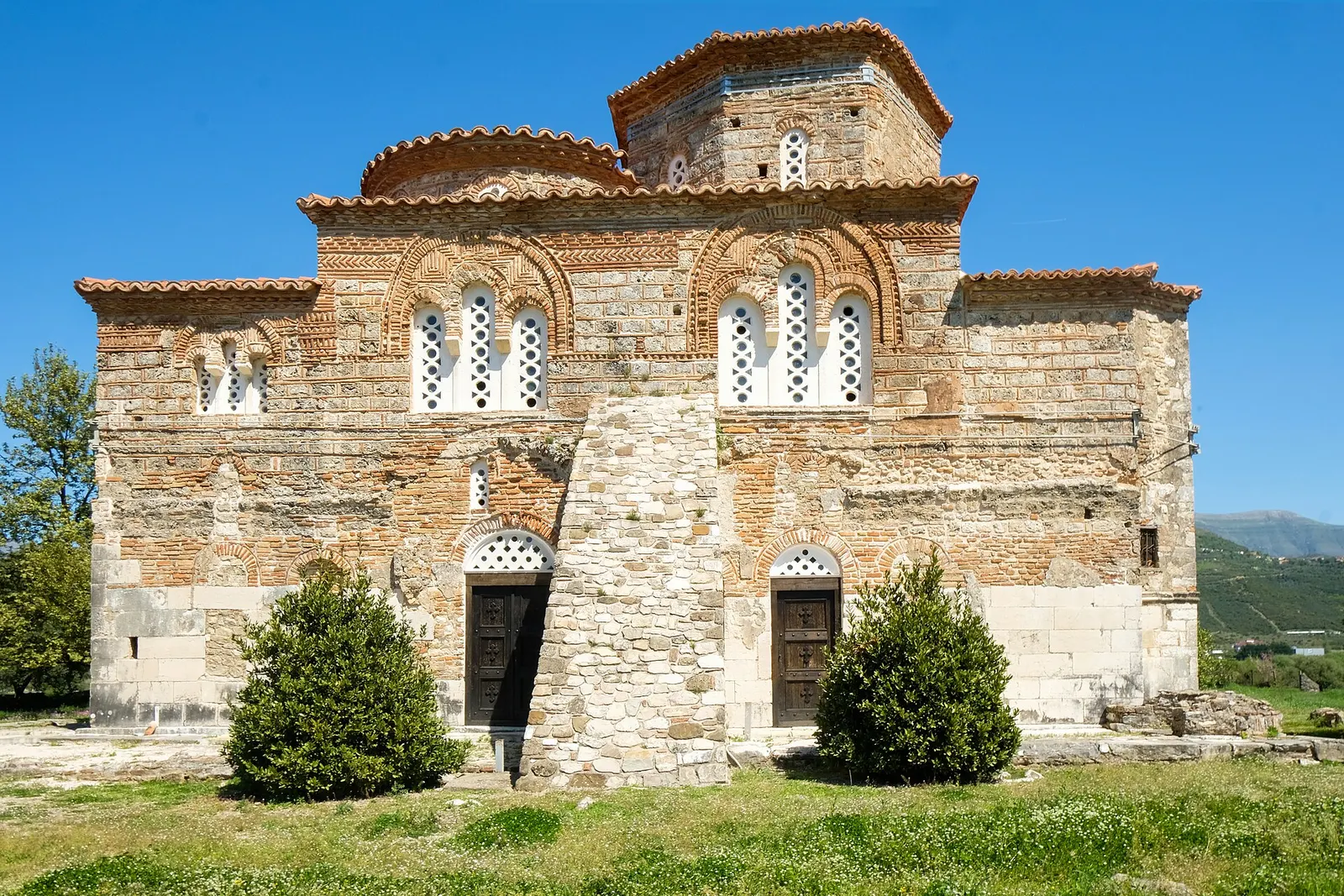
Six or seven Byzantine-style basilicas still stand, several with their fresco cycles substantially intact. Saint Nicholas is the one most visitors see first, with a painted exterior portico and interior walls covered floor to ceiling. Saint Athanasius and Saint Mary hold work by the Zografi brothers, the same painters who worked at Ardenica.
Churches are often locked. Asking in the village generally produces a keyholder; arriving with a guide removes the uncertainty entirely.
Vithkuqi
South of Voskopoja, Vithkuqi tells a similar story on a smaller scale — a prosperous eighteenth-century settlement reduced to a village, with surviving churches and a quiet main square. The road between the two is scenic and rough in places. Together they make a full day from Korçë.
Winter
Voskopoja has become a modest winter destination. Snow is reliable at this altitude, there is a small ski area, and guesthouses stay open. It is nothing like an Alpine resort, which is the appeal for some and the disappointment for others.
Getting there
From Korçë it is about forty minutes by car on a mountain road that is paved but narrow. There is no regular public transport; a taxi from Korçë or a guided trip are the practical options. Winter driving requires care and sometimes chains.
When to go
May to October for the churches and the walking, when the roads are easy and the light suits the frescoed exteriors. December to February if snow is what you are after.
Practical notes
- Bring cash for keyholders and small guesthouses.
- Photography inside churches is sometimes restricted — ask first.
- Guesthouses serve traditional Korçë food; book ahead in winter weekends.
- Combine with Dardha village and Korçë's old bazaar for a strong three-day base.
Few places in Europe fell so far so fast. Standing in front of a frescoed basilica surrounded by fields is the clearest way to understand what Albania lost.
Common questions
Why was Voskopoja so important?
In the mid-eighteenth century it was among the largest and richest cities in the Balkans, with an academy and a printing press, trading as far as Vienna and Venice. Repeated sackings reduced it to a village.
Are the churches open?
Often they are locked. Asking in the village usually produces a keyholder, and arriving with a guide removes the uncertainty entirely. Bring cash for the keyholder.
Is Voskopoja worth visiting in winter?
It has reliable snow at this altitude and a small ski area, and the guesthouses stay open. It is nothing like an Alpine resort, which is either the appeal or the disappointment.