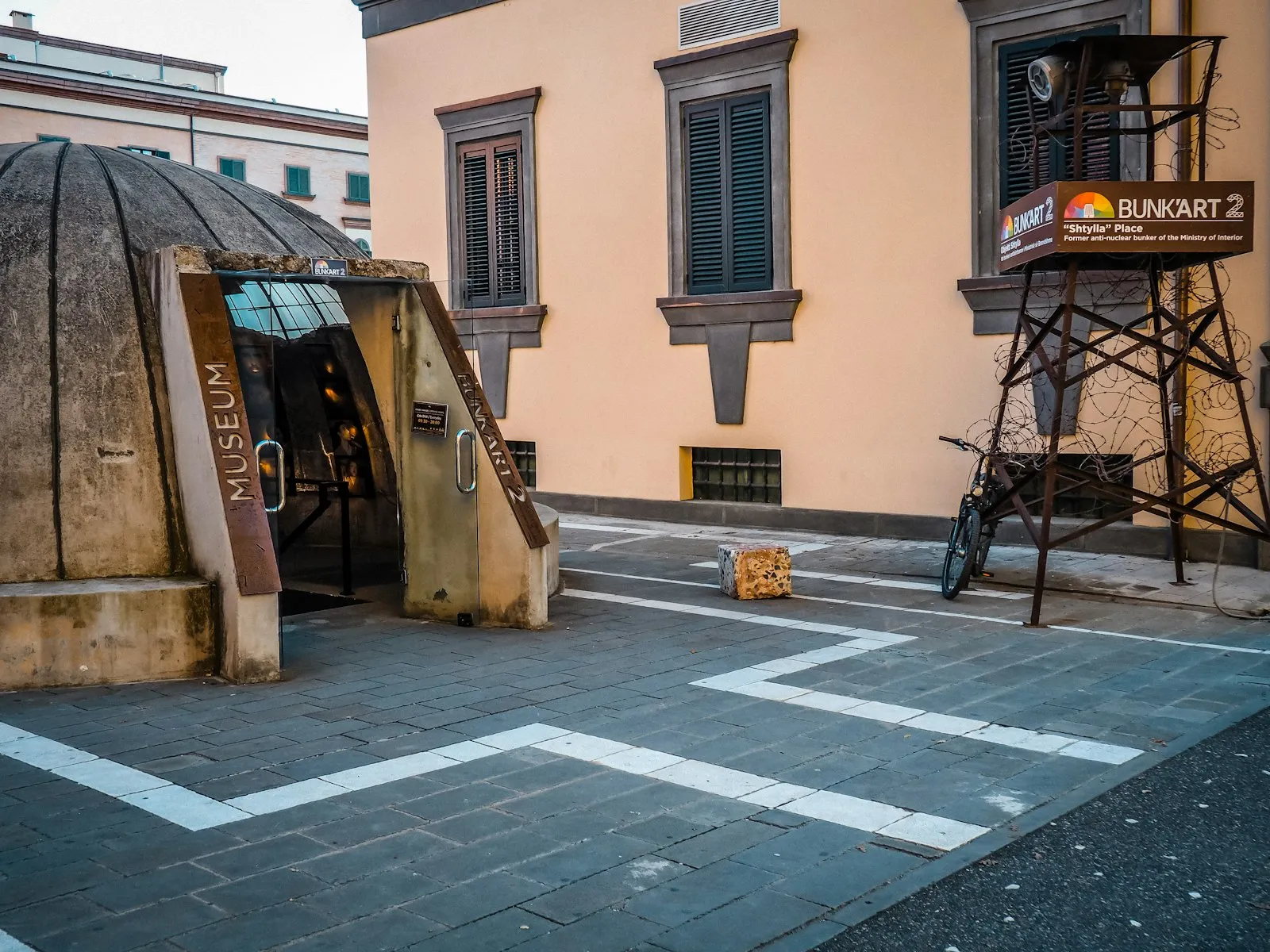
Albania has so many bunkers because its communist leader, Enver Hoxha, was convinced the country would be invaded and ordered it fortified from the coast to the mountains. From the late 1960s to the mid-1980s, a programme known as bunkerisation scattered concrete pillboxes across beaches, fields, hillsides and towns. Estimates of the total vary widely – from roughly 170,000 to more than 700,000 – and many still stand.
Today the domes are one of the most surprising sights for visitors: half-buried in olive groves, guarding empty beaches, painted with murals or turned into cafés. Here is why they were built, what types exist and where you can see them – including the vast underground shelters now open as museums.
Hoxha’s fear of invasion
After the Second World War, Hoxha’s Albania became one of the most isolated states in the world. It broke with Yugoslavia in 1948, with the Soviet Union in 1961 and finally with China in 1978. After the Warsaw Pact invasion of Czechoslovakia in 1968, Albania formally withdrew from the alliance, and the regime came to see enemies on every side.
Hoxha’s military doctrine of “people’s war” held that the whole population would defend the country, every village and valley included. The bunkers were the concrete expression of that idea: positions from which soldiers and ordinary citizens could resist an attack from any direction. Some historians argue they also served a political purpose, keeping the country in a permanent siege mentality that suited an authoritarian regime.
Not everyone agreed. Defence minister Beqir Balluku is reported to have favoured a different approach to defence; he was purged and executed in the mid-1970s.
How many bunkers are there in Albania?
Nobody knows exactly, and estimates vary widely. The figure most often cited, based on records from the communist era, is around 173,000 bunkers. Other estimates run to 700,000 or more, and the frequently repeated claim of “a million bunkers” is generally considered an exaggeration.
The differences come partly from what is counted – small one-person pillboxes, larger command posts or underground complexes – and partly from the fact that many have been demolished or buried since the early 1990s. Either way, for a country of around 28,700 square kilometres, the density is extraordinary.
The main types of bunker
QZ: the small pillbox
The most common type, known by the initials QZ, is a prefabricated concrete dome about 3 metres across, designed for one or two soldiers. Sections were made in advance and assembled on site, and the rounded shape was intended to help the dome withstand shelling. Along the coast, groups of them were sometimes linked by tunnels.
PZ: the larger command bunker
Larger PZ bunkers, around 8 metres in diameter and weighing hundreds of tonnes once assembled, served as command-and-control positions. They are much rarer than the small domes.
Tunnels and nuclear shelters
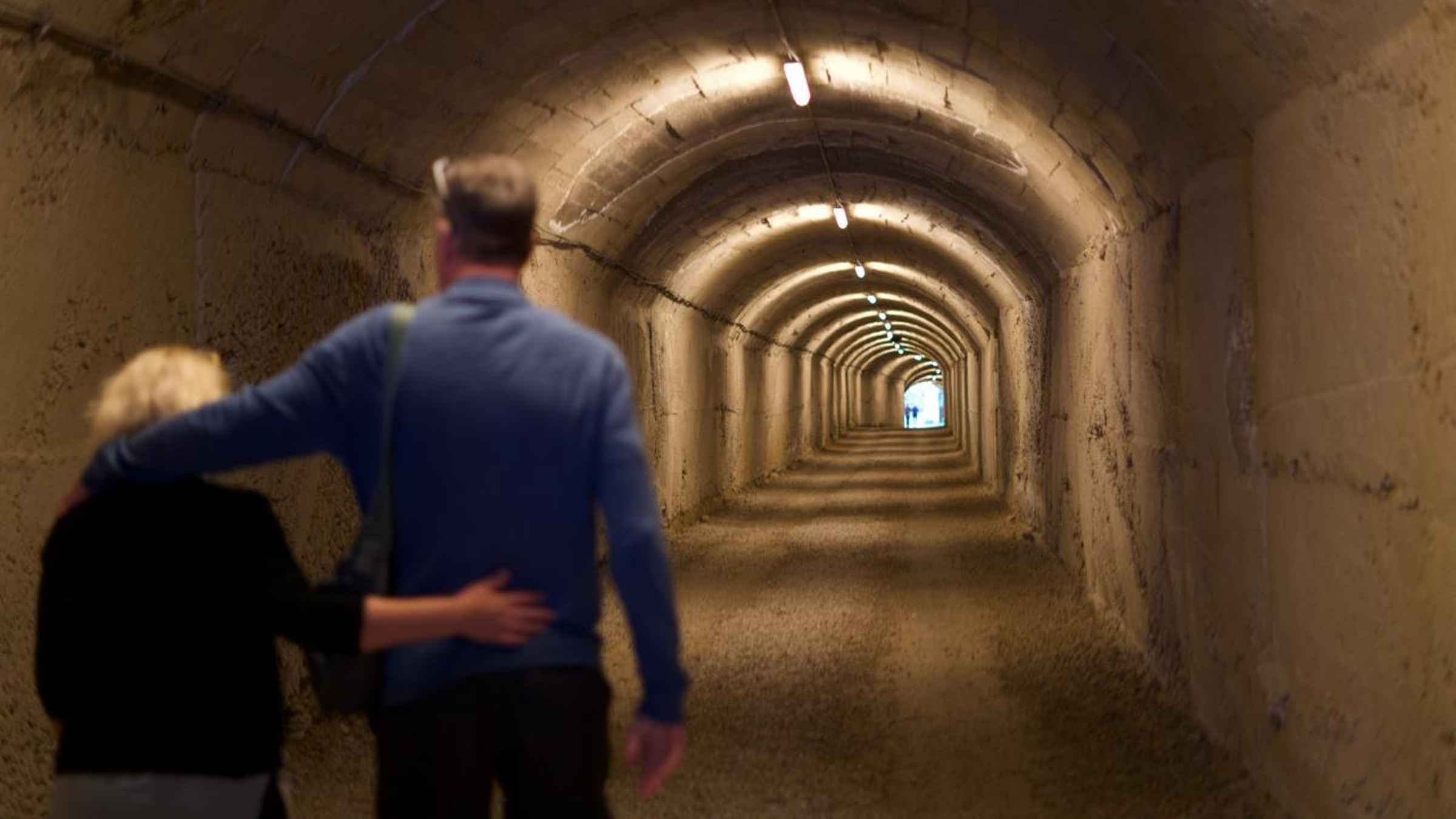
Beyond the domes, the regime built deep underground complexes for the political and military leadership, some designed to survive a nuclear attack. Two of them in Tirana are now the Bunk’Art museums.
The engineer and the tank
The standard QZ design is credited to military engineer Josif Zagali. According to a well-known story, he was required to stand inside a prototype while a tank fired at it, and emerged shaken but unhurt. Whether or not every detail is true, his later fate is better documented: he was purged and spent years in prison.
What the bunkers cost Albania
Estimates of the cost vary, but the programme swallowed vast quantities of concrete, steel and labour in what was then one of Europe’s poorest countries – resources that might otherwise have gone into housing and roads. Construction was also dangerous, and some estimates put the death toll among workers at up to around 100 a year.
The invasion Hoxha feared never came. After his death in 1985 the programme wound down, and when communism collapsed in the early 1990s the country was left with a landscape full of concrete domes and little use for them.
What happened to the bunkers after communism
Most bunkers were simply abandoned. Built to resist artillery, they are expensive and difficult to remove, so many remain in fields, on beaches and beside roads, slowly sinking into the sand or disappearing under vegetation. Others have been cleared for construction, sometimes by dragging them out of the ground with heavy machinery.
Albanians have also found creative uses for them. Bunkers have become storerooms, animal shelters, homes, cafés and even restaurants, while others serve as canvases for street artists. Architects have explored the idea further – the 2009 study Concrete Mushrooms proposed ways to reuse them for tourism – and miniature bunkers are now a staple of souvenir shops.
A word of caution: abandoned bunkers can be flooded, unstable or full of rubbish, so admire them from outside rather than climbing in. Some also stand on private land, so ask before wandering across fields to reach them.
Where to see Albania’s bunkers today
- Bunk’Art 1: Hoxha’s own five-storey nuclear shelter on the outskirts of Tirana, opened as a museum and gallery in 2014, with exhibitions on Albania’s 20th-century history and life under communism.
- Bunk’Art 2: a bunker built in the 1980s for the Interior Ministry in central Tirana, opened in 2016 and focused on the history of the police and the Sigurimi secret police.
- Postbllok – Checkpoint memorial: near Tirana’s Blloku district, a memorial combining a communist-era bunker, a section of the Berlin Wall and concrete pillars from the Spaç prison mine.
- Gjirokastër’s Cold War tunnel: a secret shelter beneath the old town, built for local officials and now open to visitors.
- The coast and countryside: pillboxes still dot beaches, headlands and farmland across the country, so keep an eye out on any road trip.
Frequently asked questions
How many bunkers are there in Albania?
Estimates vary widely. The most commonly cited figure, based on communist-era records, is around 173,000 bunkers built between the late 1960s and the mid-1980s, while other estimates run to 700,000 or more. The often-repeated claim of a million is generally considered too high. Many have since been removed, buried or destroyed, so fewer stand today.
Why did Enver Hoxha build so many bunkers?
Hoxha believed Albania could be invaded at any moment, whether by its neighbours, NATO or the Warsaw Pact, after breaking with Yugoslavia, the Soviet Union and China in turn. His doctrine of “people’s war” called for the whole population to defend every part of the country, and the bunkers were meant to give soldiers and citizens positions from which to fight.
Can you go inside Albania’s bunkers?
Yes, at museums such as Bunk’Art 1 and Bunk’Art 2 in Tirana and the Cold War tunnel in Gjirokastër, which are set up for visitors. Small abandoned pillboxes are a different matter: they can be flooded, unstable or dirty, and some stand on private land, so it is best to look at them from the outside.
Were Albania’s bunkers ever used?
Not for the purpose they were built for, as the invasion Hoxha feared never happened. Some bunkers were reportedly used during the unrest of 1997 and the Kosovo war in 1999, but most have served far more peaceful roles since the 1990s, as storerooms, animal shelters, cafés and art projects – or simply as curious landmarks.
What is the difference between Bunk’Art 1 and Bunk’Art 2?
Bunk’Art 1 occupies Enver Hoxha’s vast nuclear shelter on the outskirts of Tirana and covers wider 20th-century history and life under communism. Bunk’Art 2, in the city centre, is set in a smaller bunker built for the Interior Ministry and focuses on the police and the Sigurimi secret police. If you only have time for one, Bunk’Art 1 is the bigger experience.
Explore Cold War Albania with us
See the story for yourself on our Bunk’Art guided tour in Tirana, or explore it as part of our Full Albanian Experience, which includes Bunk’Art 1 alongside an e-bike tour of the capital. For more background, read our guide to Bunk’Art’s Cold War museums.