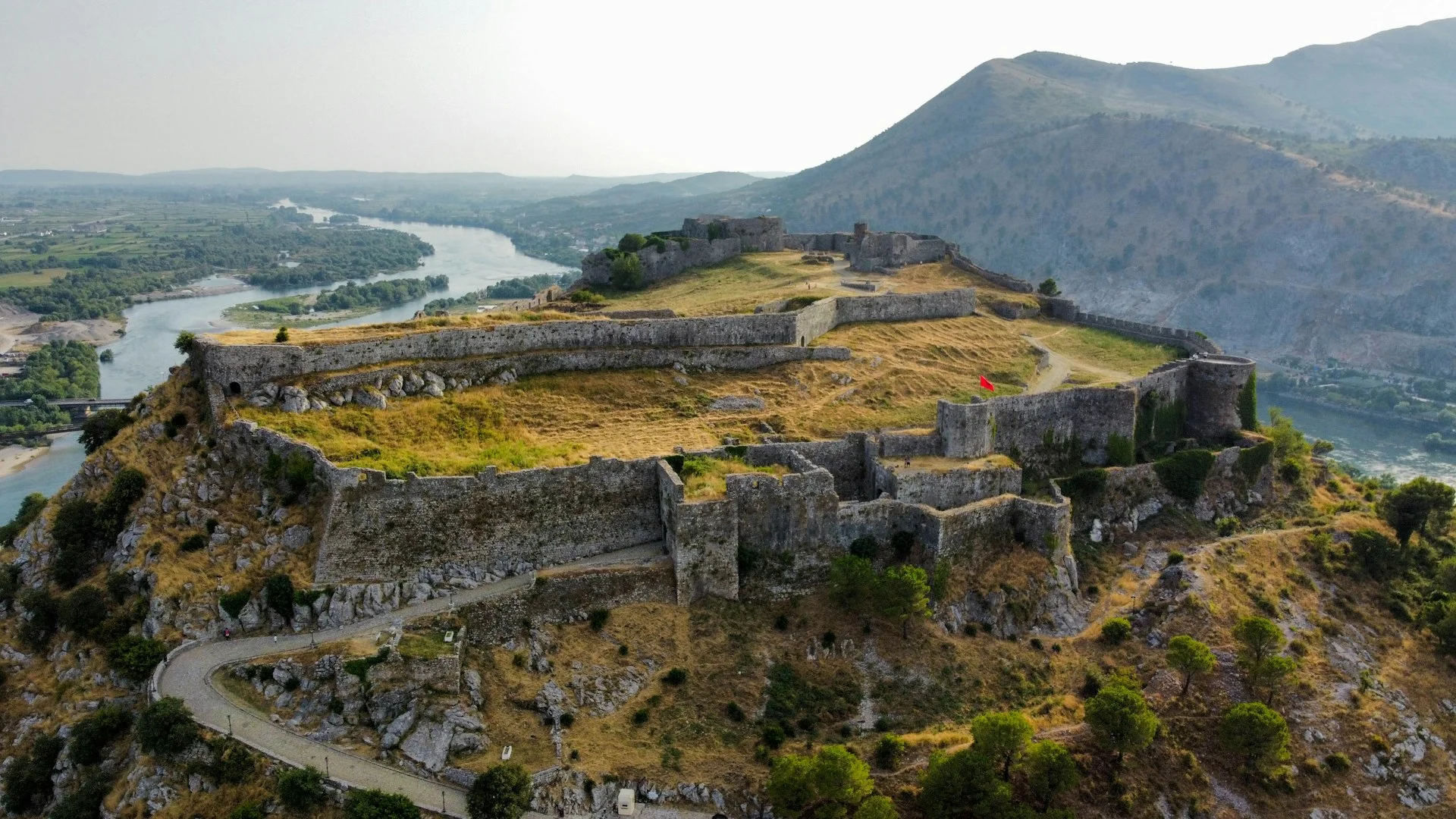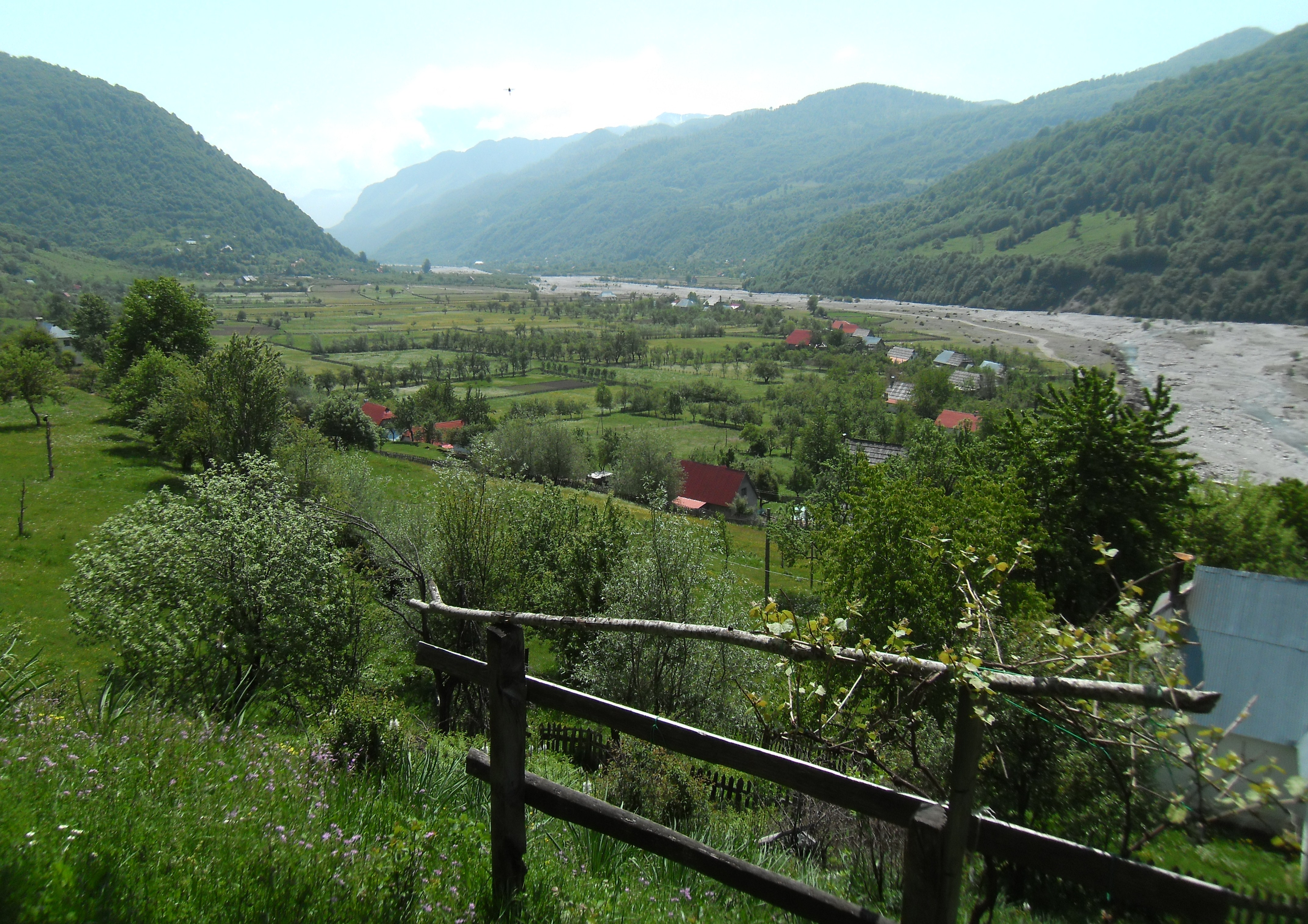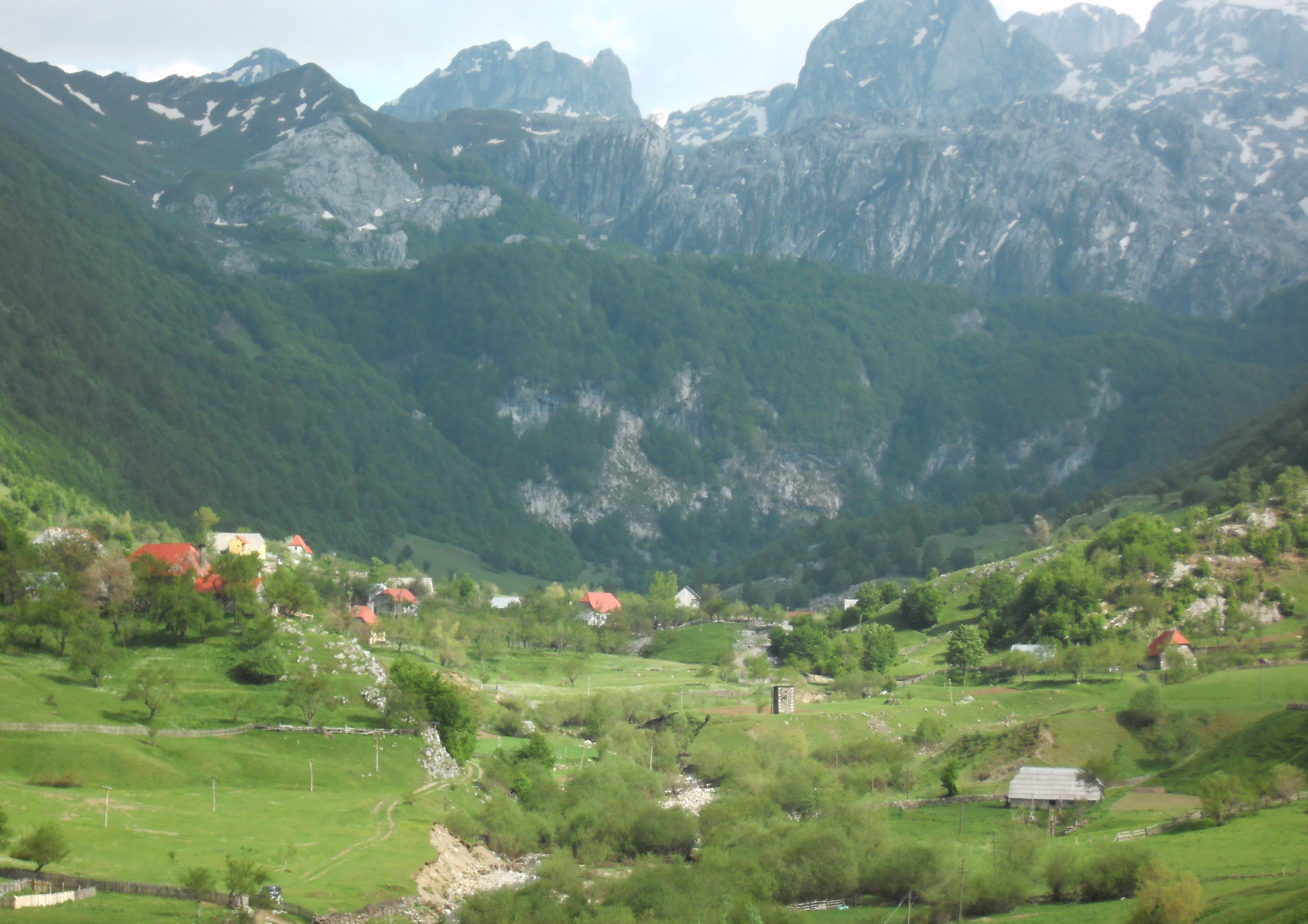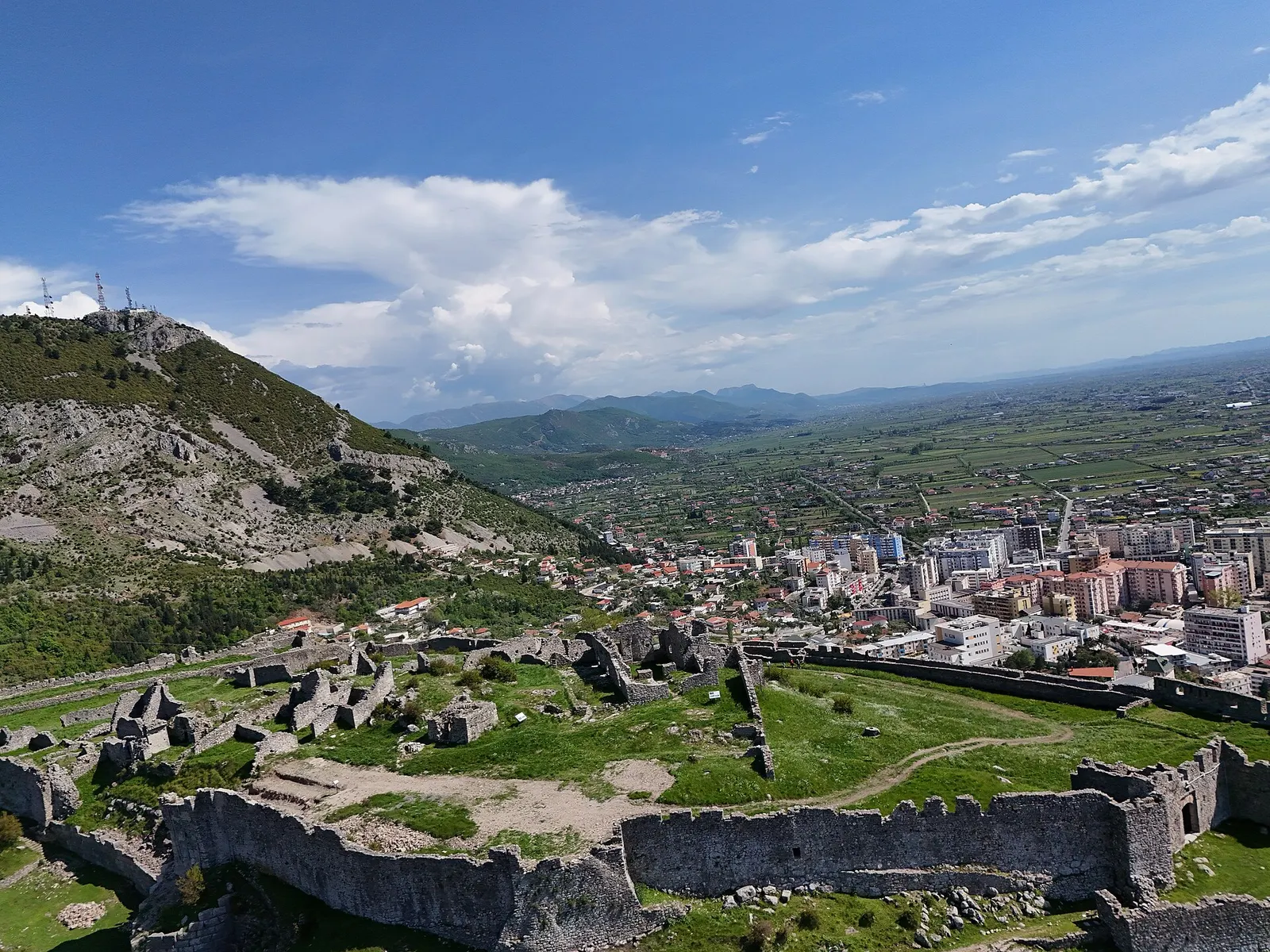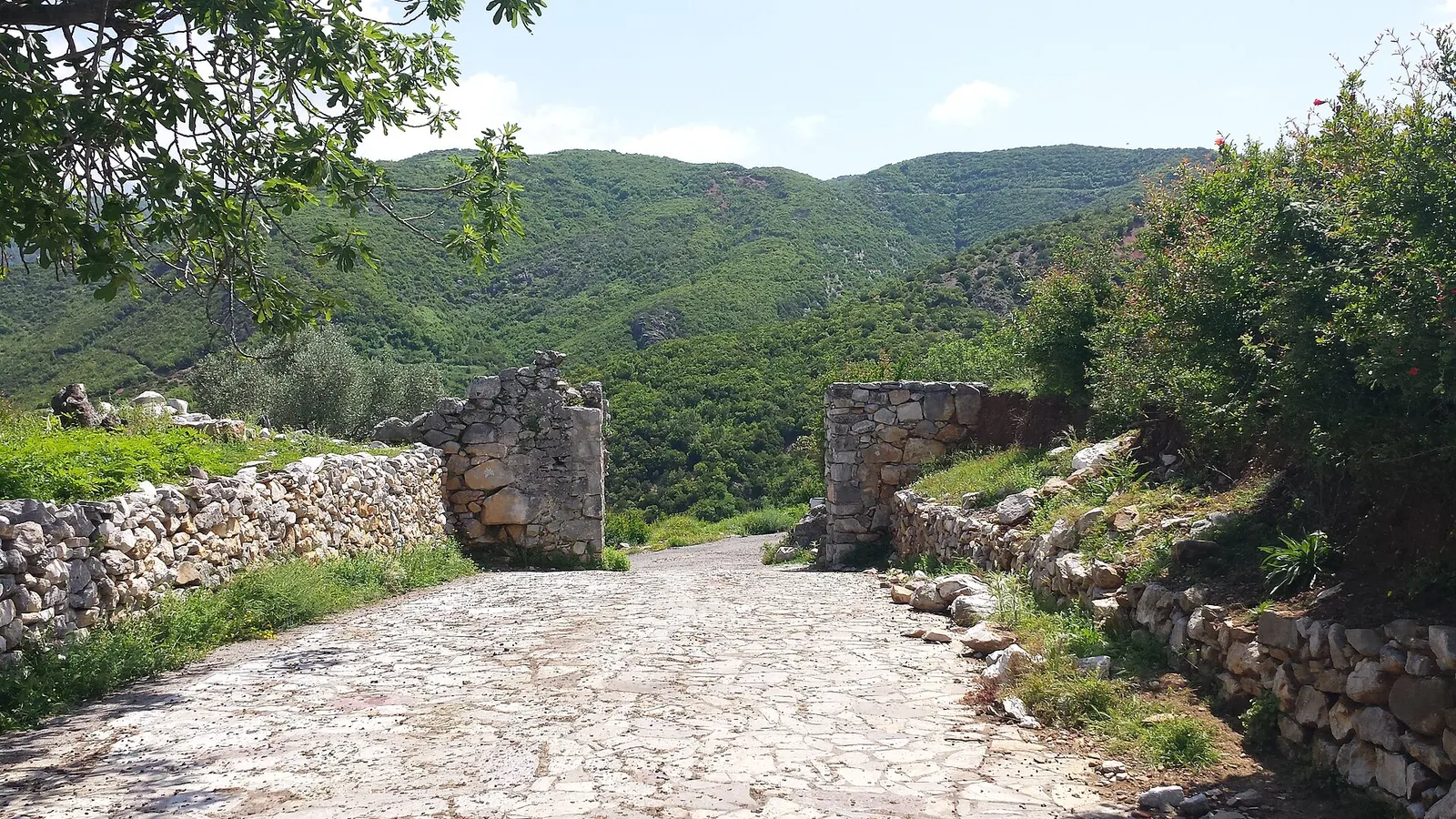
Drivastum grew from a Roman-era settlement on the road between Shkodër and Kosovo and was a bishopric by the 10th century. In the Middle Ages it passed between Serbian rulers, the Balsha family and Venice, and in the 14th century it even minted its own coins. The walls show several phases of building, from the 10th century to 15th-century Venetian works designed to withstand artillery. In 1478 the town fell to the Ottomans, after which most of its people left and it shrank to a village.
Within the circuit of walls, with towers facing the town and a sheer cliff on the far side, lie the remains of around eleven houses, while the ruins of a church survive on the slope below. The castle is reached on foot or by four-wheel drive along a rough track from the village, and the climb is rewarded with wide views over the surrounding hills and valleys. Wear sturdy shoes and carry water, as there are no facilities at the top.
Paired with the graceful arches of the Mesi Bridge, Drisht makes a memorable half-day trip from Shkodër.