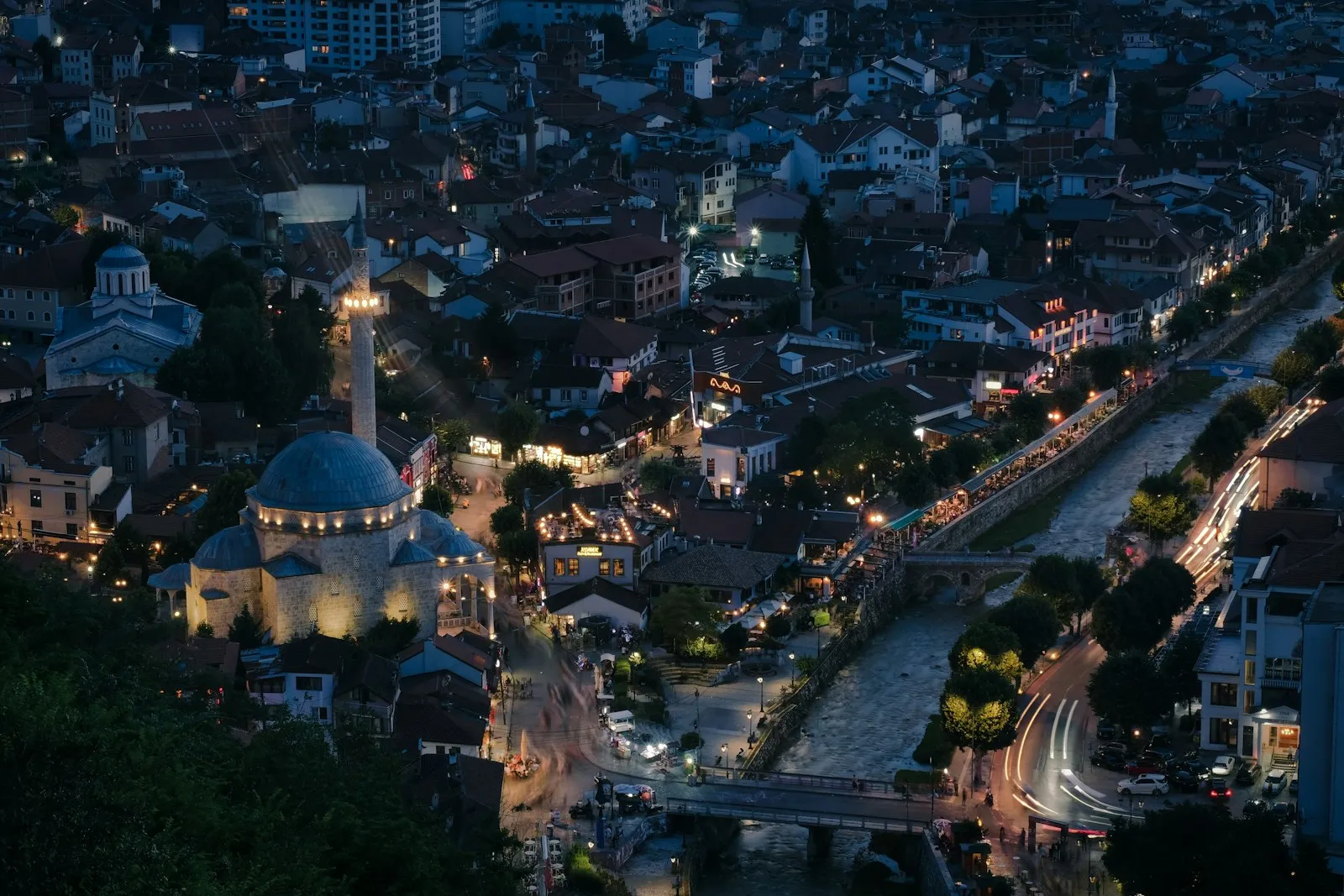
This Kosovo travel guide covers the three places most visitors start with: Prizren, an Ottoman-era old town beneath a hilltop fortress; Peja, gateway to the Rugova Canyon and the Patriarchate of Peć; and Pristina, the young, café-filled capital. From Tirana, the motorway makes Prizren roughly a two-and-a-half to three-hour drive, so Kosovo works as a day trip or, better still, as two or three days on a longer Albania itinerary.
Kosovo is small, easy to get around and full of history, from medieval monasteries to Ottoman mosques and bazaars. It uses the euro, and its official languages are Albanian and Serbian. Kosovo declared independence in 2008; its status is recognised by many countries but not by Serbia and a number of others, which matters to travellers mainly when planning onward routes.
Getting to Kosovo from Albania
The fastest route is the A1 motorway, known in Albania as Rruga e Kombit, the “Nation’s Road”. It runs north-east from the Tirana area past Milot and Rrëshen, through the 5.5-kilometre Kalimash tunnel and on to Kukës, before reaching the border at Morinë. On the Kosovo side, the motorway continues towards Prizren and Pristina.
- Documents: bring a valid passport or, where accepted for your nationality, an ID card, plus a visa if you need one.
- Driving: Kosovo is outside the Green Card insurance system, so drivers of foreign-registered cars usually need to buy border insurance on arrival. If you hire a car in Albania, check that cross-border travel is allowed.
- Buses: regular coaches link Tirana with Prizren and Pristina, although timetables change.
Kosovo is one of the easiest extra countries to add to an Albanian holiday; see our guide to collecting four passport stamps on an Albania trip for more ideas.
Prizren: Ottoman charm by the river
Most journeys from Albania begin in Prizren, and it is easy to see why. The old town spreads along both banks of the Bistrica river, also known as the Lumbardhi, with mosques, churches, hammams and stone houses crowded beneath the fortress. In the evening the riverside cafés fill up and the whole town seems to be out walking.
Prizren Fortress
A short but steep walk from the centre leads up to Prizren Fortress (Kalaja), which has the best view in town, especially at sunset. The hilltop has been inhabited and fortified in different forms since the Bronze Age, and from the walls you look straight down over the minarets, the river and the red roofs of the old town.
Sinan Pasha Mosque and the Stone Bridge
The Sinan Pasha Mosque, completed in 1615, dominates the riverside skyline with its tall minaret and painted interior. Nearby, the old stone bridge arches over the Bistrica and is one of the most photographed spots in Kosovo.
The League of Prizren and Our Lady of Ljeviš
In 1878, Albanian leaders met in Prizren to found the League of Prizren, a milestone in the Albanian national movement, and a museum complex now marks the site. The town’s Christian heritage is just as significant: the Church of Our Lady of Ljeviš, dating from 1307, is part of the UNESCO-listed Medieval Monuments in Kosovo. Every year Prizren also hosts Dokufest, an international documentary and short film festival that has been running since 2002.
Peja and western Kosovo
About an hour and a half from Prizren, Peja sits at the foot of the mountains near the border with Montenegro. Its compact bazaar is centred on the Bajrakli Mosque, originally built in 1471, and is a pleasant place for coffee and people-watching.
Rugova Canyon
Just west of town, the road climbs into the Rugova Canyon, a dramatic river gorge in a mountain region protected as a national park since 2013. It is Kosovo’s outdoor playground, with hiking, rock climbing, caves and a via ferrata for adventurous visitors.
The Patriarchate of Peć and Visoki Dečani
At the entrance to the canyon stands the Patriarchate of Peć, a Serbian Orthodox monastery whose churches date from the 13th and 14th centuries and are decorated with remarkable frescoes. South of Peja, the monastery of Visoki Dečani, built between 1327 and 1335, contains more than a thousand fresco compositions. Both belong to the UNESCO-listed Medieval Monuments in Kosovo. Dečani is protected by KFOR troops, so carry your passport, dress modestly and follow any instructions at the entrance.
Gjakova
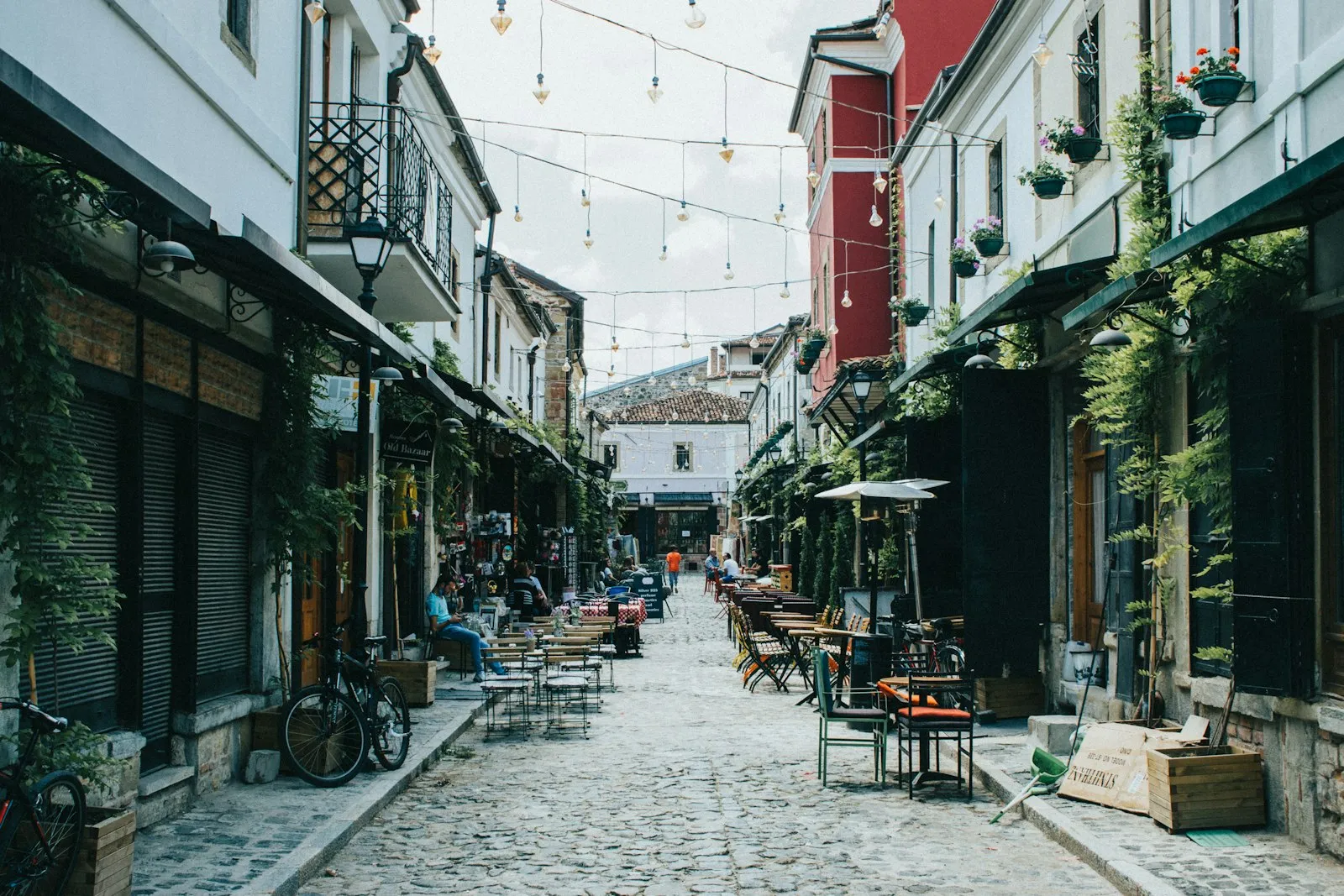
Between Peja and Prizren, Gjakova is worth a stop for its Old Bazaar, described as the oldest in Kosovo. Its main street runs for around a kilometre and is lined with hundreds of small shops, cafés and workshops. The bazaar was badly damaged in 1999 and has since been rebuilt.
Pristina: the capital
Pristina is less about classic sights and more about atmosphere: busy cafés, a young population and a lively evening scene along Mother Teresa Boulevard, the city’s long, largely pedestrianised main street. Highlights include:
- The NEWBORN monument, unveiled on 17 February 2008 and repainted with a new design every year.
- The National Library of Kosovo, completed in 1982, with 99 domes and a façade wrapped in metal latticework – one of the most unusual buildings in the Balkans.
- Mother Teresa Cathedral, dedicated to the saint, who was born to an Albanian family in Skopje.
- The statue of Bill Clinton on the boulevard named after him, unveiled in 2009.
- Just outside the city, the 14th-century Gračanica Monastery, another part of the UNESCO-listed Medieval Monuments in Kosovo.
How many days do you need?
- One day: a day trip from Tirana covering Prizren and Pristina, as on our Kosovo day tour, with about three hours in Prizren and an hour and a half in Pristina.
- Two days: Prizren with an overnight stay, then Gjakova, Dečani and Peja.
- Three days or more: add the Rugova Canyon and Pristina, or combine Kosovo with Albania on a multi-day tour.
Practical tips
- Money: Kosovo uses the euro; cards work in the cities, but carry cash for small places.
- Language: Albanian is the majority language and Serbian is also official; many younger people speak good English.
- Religious sites: dress modestly in mosques, churches and monasteries, and ask before photographing people.
- Onward travel to Serbia: Serbia does not treat Kosovo’s crossings as international entry points, so if your trip continues to Serbia, check the latest rules first; routing through a third country may be necessary.
- Seasons: late spring to early autumn is ideal; winters are cold, with snow in the mountains.
Frequently asked questions
Is Kosovo worth visiting?
Yes. Kosovo packs a lot into a small area: the Ottoman old town of Prizren, medieval Orthodox monasteries with world-class frescoes, mountain scenery in the Rugova Canyon and the energetic café culture of Pristina. It is also easy to reach from Albania, which makes it a natural addition to an Albanian trip rather than a separate journey.
How long does it take to drive from Tirana to Prizren?
Around two and a half to three hours, depending on traffic and the border at Morinë. Most of the journey is on the A1 motorway, Rruga e Kombit, which crosses the mountains of northern Albania through the Kalimash tunnel. It is a scenic drive, and the main reason Prizren is such a popular day trip from Tirana.
Do I need a visa to visit Kosovo?
It depends on your nationality. Many visitors can enter without a visa for a short stay, but the rules differ by passport and can change, so check the official requirements before you travel. Carry the passport or ID card you will use to re-enter Albania, and keep your documents with you throughout the trip.
What currency is used in Kosovo?
Kosovo uses the euro, even though it is not a member of the eurozone. That makes life easy if you are travelling on to Montenegro, which also uses the euro, but Albania uses the lek and North Macedonia the denar. Cards are accepted in many hotels and restaurants in the cities, but carry cash for markets, small cafés and rural areas.
Can I travel from Kosovo to Serbia?
It can be complicated. Serbia does not regard Kosovo’s border crossings as international entry points, so travellers who entered Kosovo from Albania, Montenegro or North Macedonia may be refused if they try to continue directly into Serbia. If Serbia is part of your plans, check your government’s latest travel advice and consider routing through a third country.
Ready to cross the border? Join our Kosovo: Prizren and Prishtina day tour from Tirana, or explore at a slower pace on our Albania and Kosovo in 5 days tour, which adds Tirana, Berat, Krujë and Peja.