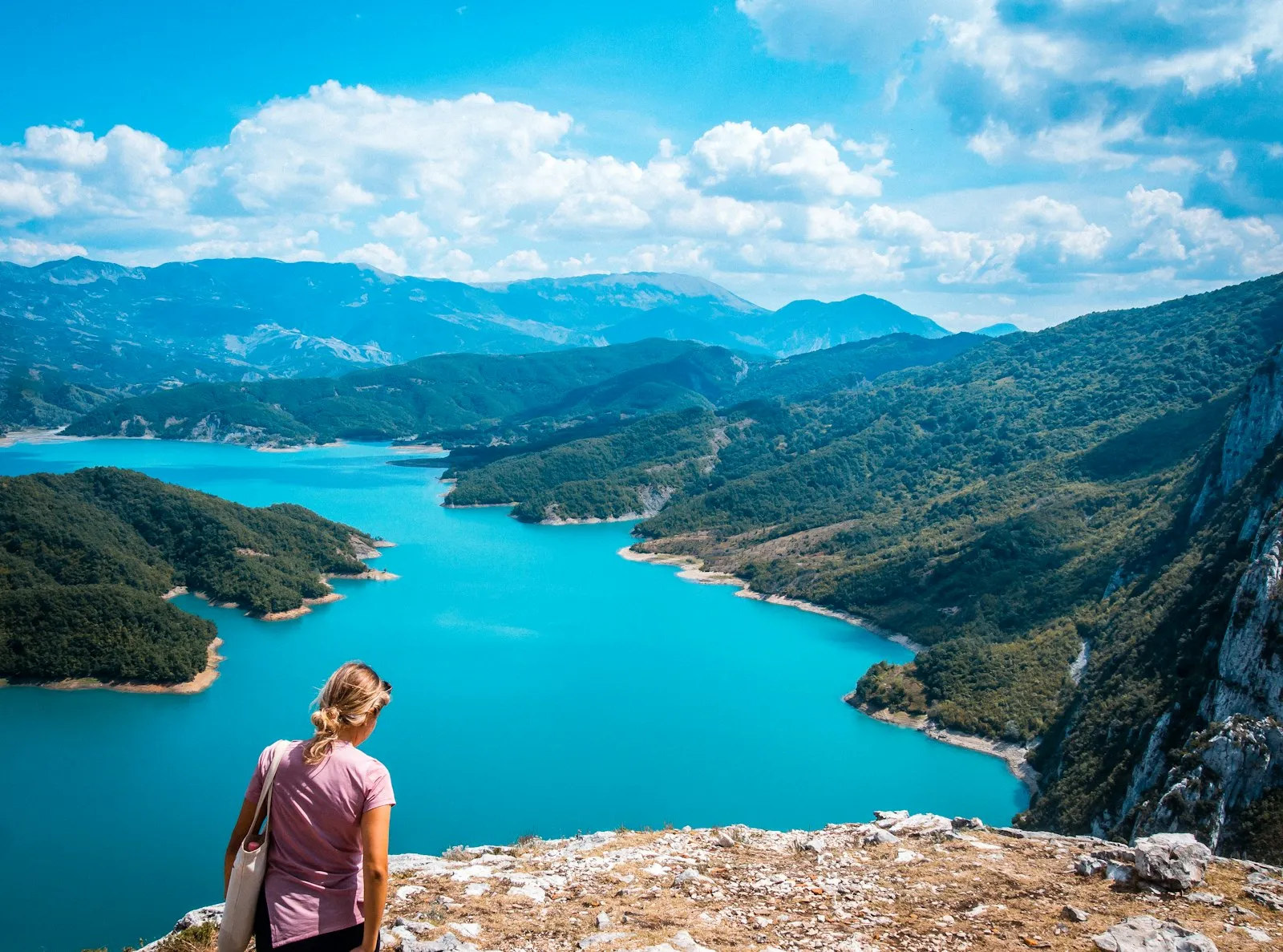
The most beautiful lakes in Albania include ancient Lake Ohrid and Lake Prespa in the south-east, vast Lake Shkodër in the north, the fjord-like Komani reservoir in the Alps, turquoise Lake Bovilla near Tirana and the glacial lakes of Lura. Most are easy to visit on a day trip or as part of a wider route around the country.
Albania’s lakes are surprisingly varied: some are shared with neighbouring countries and steeped in history, others are dramatic reservoirs set in mountain gorges, and a few are small karst lakes or high mountain tarns. Here is what makes each one special and what to do there.
Lake Ohrid: ancient, deep and partly Albanian
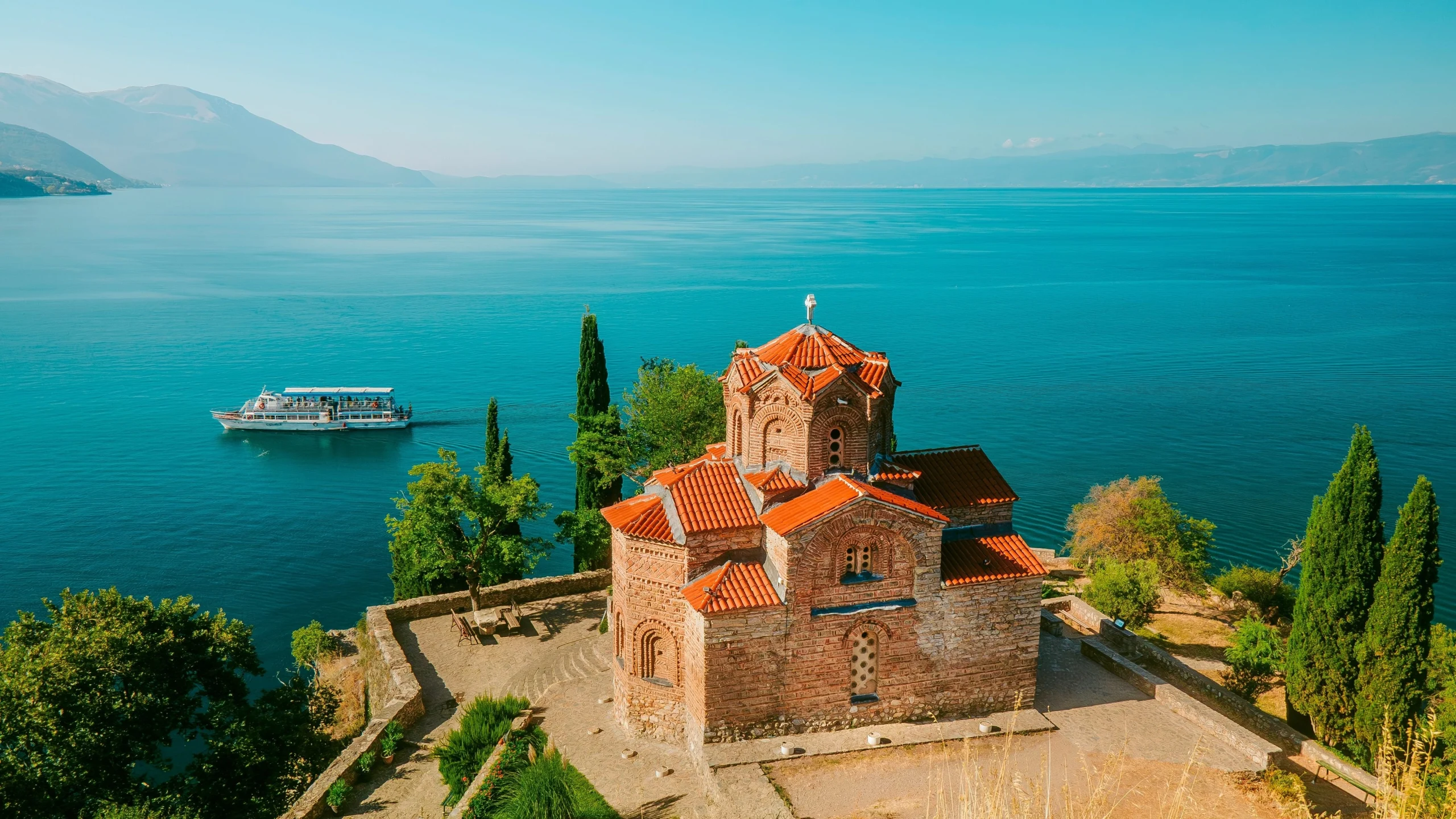
Lake Ohrid straddles the border with North Macedonia, with roughly a third of its surface in Albania. It is one of the oldest lakes in Europe – well over a million years old – and plunges to almost 300 metres deep. Its natural and cultural heritage is listed by UNESCO, and the listing was extended to the Albanian shore in 2019.
On the Albanian side, Pogradec has a long lakeside promenade, while the village of Lin, on a small peninsula to the north, preserves the mosaics of an early Christian church. Near the border, the springs of Drilon feed clear streams through a shady park into the lake. The lake’s famous endemic trout, known in Albania as koran, is a protected species.
Ohrid’s old town and the monastery of St Naum lie on the Macedonian shore – our Ohrid and St Naum day tour from Tirana covers both. Visiting them means crossing an international border, so remember your passport.
Lake Prespa: three countries and an island church
Higher and wilder than Ohrid, Great Prespa sits at around 850 metres and is shared by Albania, North Macedonia and Greece. Albania’s shore lies within Prespa National Park, created in 1999, where reed beds, rocky shores and quiet villages attract Dalmatian and great white pelicans in summer.
The highlight is the tiny island of Maligrad, reached by boat from the Pustec area, where a cave church dedicated to St Mary holds frescoes dating from 1369. Prespa also has a hidden link with its neighbour: its water drains underground through karst channels and resurfaces in springs that feed Lake Ohrid. Find out more on our Lake Prespa page – it is an easy add-on to a stay in Korçë.
Lake Shkodër: the Balkans’ largest lake
Shared with Montenegro, Lake Shkodër is the largest lake in the Balkans, its area swelling and shrinking with the seasons. About a third of it lies in Albania, where it is protected as a nature reserve and recognised as a wetland of international importance.
The lake is one of Europe’s great bird habitats, with around 270 species recorded, including the rare Dalmatian pelican. On the Albanian shore, the villages of Shiroka and Zogaj have lakeside restaurants serving fresh fish, and the view from Rozafa Castle above Shkodër takes in the lake, the rivers and the mountains. Kayaking, cycling along the shore and sunset dinners are the classic ways to enjoy it.
Komani Lake: Albania’s fjord
Komani Lake is a reservoir on the Drin River, created by a hydroelectric dam completed in the late 1980s. Stretching for around 34 km between sheer rock walls and forested slopes, it is often compared to a Scandinavian fjord.
The classic experience is the boat journey between Koman and Fierza, which takes around two and a half hours and connects with the road to Valbona, making it a key link in the popular Theth–Valbona loop. Shorter boat trips run to the turquoise Shala River, a tributary loved for swimming and riverside lunches. Services are seasonal, so check current schedules locally.
Lake Bovilla and Tirana’s city lakes
North-east of Tirana, Lake Bovilla is a reservoir completed in the 1990s that now supplies most of the capital’s drinking water. Ringed by steep cliffs, its startling turquoise colour is best seen from above, and the short hike up nearby Gamti mountain offers the classic panorama.
Because it is a drinking-water reservoir, swimming is not allowed, but the scenery more than makes up for it. Our Lake Bovilla and Gamti Mountain hike is an easy day out from Tirana, and our guide to Bovilla Reservoir has more background. Closer to the centre, Farka Lake on the south-eastern edge of the city and the artificial lake in Tirana’s Grand Park are pleasant spots for a walk.
Karst and glacial lakes: Belsh, Viroi and Lura
Belsh
The small town of Belsh sits on the Dumre plateau, a gypsum landscape dotted with more than 80 karst lakes. Belsh’s own lake has a lakeside promenade and cafés, making it a popular coffee stop on the way to Berat – our Berat and Belsh day tour pauses here.
Viroi
About 3 km north-west of Gjirokastër, Lake Viroi is fed by a karst spring, Mëma e Viroit, that keeps its water remarkably clear. Its level changes through the year, and underwater caves attract divers. The area is protected as a nature reserve and natural monument, and it makes a calm add-on to a day in Gjirokastër.
Lura
For a genuine adventure, head to Lurë-Dejë Mountain National Park in the north-east, where around a dozen glacial lakes lie among beech and pine forests at roughly 1,200–1,700 metres. The best known, the Lake of Flowers (Liqeni i Luleve), is famous for the white water lilies that bloom on its surface in early summer, while the Great Lake (Liqeni i Madh) is the largest. Roads into the park are rough in places and a four-wheel-drive vehicle is often recommended, so check conditions before you set off and consider going with a local guide.
Planning your lake trips
- Best for swimming: Ohrid and Shkodër in summer, plus the Shala River for a cold, refreshing dip.
- Best for birdwatching: Shkodër and Prespa, with migrating birds in spring and autumn and pelicans at Prespa in summer.
- Best for boat trips: Komani, from late spring to early autumn.
- Best near Tirana: Bovilla, Farka and the Grand Park lake.
- Best for adventure: the glacial lakes of Lura in summer.
Frequently asked questions
What is the largest lake in Albania?
Lake Shkodër is the largest lake in Albania and in the whole Balkan Peninsula. It is shared with Montenegro, with roughly a third of its surface on the Albanian side, and its area varies noticeably between the wet and dry seasons. Lake Ohrid, shared with North Macedonia, is the deepest, plunging to almost 300 metres.
Can you swim in Albania’s lakes?
Yes, in many of them. Lake Ohrid around Pogradec and the shores of Lake Shkodër are popular for summer swimming, and the Shala River offers a bracing dip after the boat ride across Komani Lake. Swimming is not allowed in Lake Bovilla, which supplies Tirana’s drinking water. Always check local signs and conditions, especially at reservoirs.
Which lake is closest to Tirana?
The artificial lake in Tirana’s Grand Park is right in the city, and Farka Lake lies on the south-eastern outskirts. For a more scenic outing, Lake Bovilla is north-east of the capital and is usually combined with a short hike up Gamti mountain for the best views. Allow at least half a day, as the final stretch of road is slow.
Is Lake Ohrid in Albania or North Macedonia?
Both. The border runs through the lake, with roughly a third of its surface in Albania and the rest in North Macedonia. Pogradec is the main town on the Albanian shore, while the historic town of Ohrid and the monastery of St Naum are on the Macedonian side. It is easy to see both shores on the same trip.
When is the best time to visit Albania’s lakes?
Late spring to early autumn is best for most lakes. Boat services on Komani are seasonal, the roads to Lura are easiest in summer, and swimming is most pleasant from June to September. Spring and autumn are ideal for walking and birdwatching, with fewer visitors and softer light around Ohrid, Prespa and Shkodër.
See Albania’s lakes with us
Want to see the lakes without the logistics? Our North Albania in 3 Days tour combines Krujë, Shkodër and Theth with a boat trip on Komani Lake and the Shala River, and you can contact us to build lakes such as Ohrid and Prespa into a private itinerary.