Skanderbeg – Gjergj Kastrioti, born around 1405 – is Albania’s national hero: the nobleman who abandoned Ottoman service in 1443, united Albanian lords in the League of Lezhë in 1444 and resisted Ottoman armies until his death in 1468. The best places to follow his story are Krujë, his stronghold and home of the Skanderbeg Museum; Lezhë, where he formed his alliance and was buried; and Tirana, whose main square bears his name.
The double-headed eagle of his banner lives on in Albania’s flag, his statue stands in cities from Pristina to Rome, and his name is everywhere – on squares, schools and even brandy labels. Here is a short guide to the man and the places where his legend still feels close.
Who was Skanderbeg?
Born into the Kastrioti family, Gjergj was sent as a young hostage to the Ottoman court, where he trained as an officer and rose high in the sultan’s service. The Ottomans called him İskender Bey – “Lord Alexander”, after Alexander the Great – which became Skanderbeg in the West.
In November 1443, during the Battle of Niš, he deserted the Ottoman army, rode to Krujë and, according to tradition, took the castle with a forged letter from the sultan before raising a red banner bearing a black double-headed eagle. On 2 March 1444 he gathered Albanian nobles in Lezhë to form the League of Lezhë, and later that year he won his first major victory at Torvioll.
For the next quarter of a century he fought off repeated Ottoman campaigns, often heavily outnumbered. His resistance made him famous across Europe, and Pope Calixtus III honoured him with the title Athleta Christi, “champion of Christ”. Skanderbeg died in Lezhë on 17 January 1468, probably of malaria.
His legend only grew after his death. Vivaldi wrote an opera about him, Scanderbeg, first staged in Florence in 1718, and in the 19th century the poet Naim Frashëri’s epic Istori e Skënderbeut helped turn him into the great symbol of the Albanian national awakening.
Krujë: Skanderbeg’s stronghold
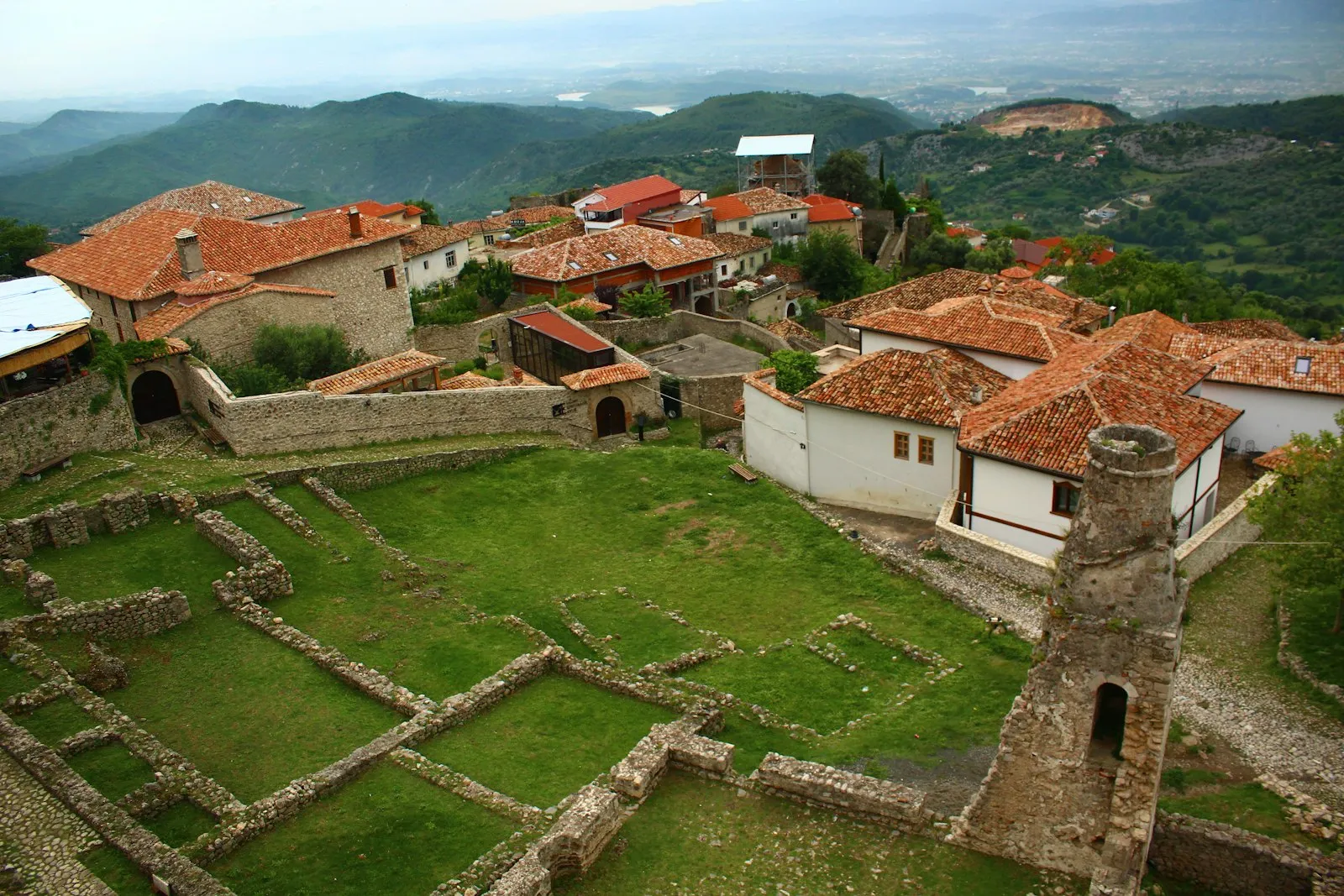
Perched on a mountainside less than an hour from Tirana, Krujë was the heart of Skanderbeg’s resistance. Its castle withstood major Ottoman sieges in 1450 and 1466–67 and fell only in 1478, a decade after his death, when the starving defenders surrendered.
Inside the walls of Kruja Castle, the Skanderbeg Museum opened in 1982 in a building designed by the architects Pirro Vaso and Pranvera Hoxha, inspired by traditional stone towers. Its galleries tell his story through paintings, murals, weapons and armour, including a replica of his famous goat-crested helmet – the original is kept at the Kunsthistorisches Museum in Vienna.
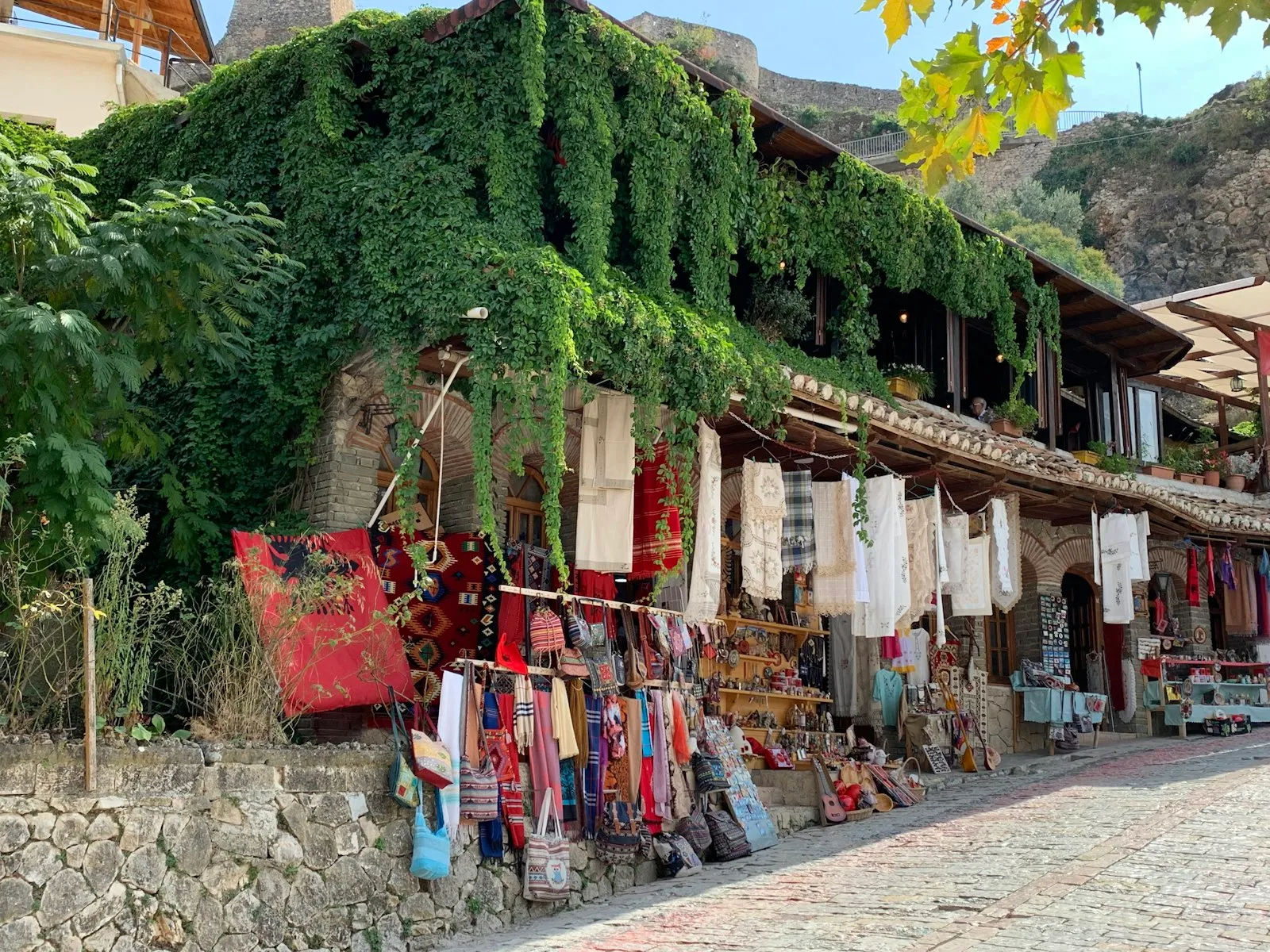
Nearby, the Ethnographic Museum, set in a traditional house inside the castle walls, recreates domestic life of past centuries, and the cobbled bazaar below the castle sells carpets, felt, copperware and antiques. In the town square stands an equestrian statue of Skanderbeg by the sculptor Janaq Paço, unveiled in 1959. For more on the town itself, read our guide to Krujë.
Lezhë: the League and the grave
About an hour north of Tirana on the road to Shkodër, Lezhë is where Skanderbeg brought Albanian princes together in 1444 – and where he died 24 years later. He was buried in the town’s Church of St Nicholas, which the Ottomans later converted into a mosque.
According to tradition, when Ottoman soldiers found his grave they opened it and made amulets from his bones, believing they would bring courage to whoever wore them, so the tomb you see today is symbolic. In 1981 the ruins of the church were turned into a memorial, a quiet and moving place that remains an important site of national remembrance. Above the town, the hilltop castle of Lezhë offers wide views over the coastal plain and is worth the climb if you have time.
Tirana: Skanderbeg Square
Albania’s capital honours him at its very centre. In the middle of Skanderbeg Square stands a bronze equestrian statue unveiled in 1968 to mark 500 years since his death, the work of the sculptor Odhise Paskali and his collaborators.
The square around it has since been remodelled as a vast pedestrian space, framed by the National History Museum, the Et’hem Bey Mosque and the Clock Tower. A visit to the museum is a good way to place Skanderbeg’s era within the wider story of Albania before you head to Krujë.
More places linked to Skanderbeg
- Ardenica Monastery: between Lushnjë and Fier, this is where Skanderbeg married Donika Arianiti on 21 April 1451. The monastery dates back to the late 13th century, and its church has 18th-century frescoes.
- Petrela Castle: a hilltop fortress south-east of Tirana that, according to tradition, was held by his sister Mamica. It formed part of a chain of castles that could signal to Krujë with fires.
- Beyond Albania: statues of the hero stand in Pristina, Skopje, Rome, Brussels, Geneva and London, a sign of how far his fame travelled.
Planning a Skanderbeg trail
The three main sites line up neatly along the road north from Tirana. A full day lets you start at Skanderbeg Square, drive up to Krujë for the castle, museum and bazaar, then continue to Lezhë for the memorial before returning – or carry on to Shkodër for the night.
- Allow two to three hours in Krujë, including the museum and the bazaar.
- Check opening days in advance, as museums often close one day a week.
- Wear comfortable shoes: Krujë’s cobbled lanes are steep and slippery when wet.
- Add Ardenica on a trip south towards Apollonia and Berat, and Petrela on the way to Elbasan.
Frequently asked questions
Who was Skanderbeg?
Skanderbeg, born Gjergj Kastrioti around 1405, was an Albanian nobleman who served in the Ottoman army before deserting in 1443 and leading Albanian resistance against the Ottoman Empire until his death in 1468. He united local lords in the League of Lezhë in 1444 and is celebrated as Albania’s national hero, a central figure in the country’s identity.
Where is Skanderbeg buried?
Skanderbeg was buried in the Church of St Nicholas in Lezhë, where he died in January 1468. According to tradition, Ottoman soldiers later opened his grave and turned his bones into amulets, so his remains have never been found. Since 1981 the church ruins have housed a memorial with a symbolic tomb, which visitors can see today.
Is the Skanderbeg Museum in Krujë worth visiting?
Yes, especially if you are interested in history. The museum, opened in 1982 inside Krujë’s castle walls, tells Skanderbeg’s story through paintings, murals, weapons and a replica of his famous helmet, and the building itself is striking. Combine it with the Ethnographic Museum, the castle viewpoints and the old bazaar for a rewarding half-day trip from Tirana.
How do you get from Tirana to Krujë?
Krujë is less than an hour’s drive north of Tirana, depending on traffic. Buses and minibuses also run between the two, though departure points and schedules can change, so ask locally for the latest information. For an easy option, join a guided day trip that combines Krujë with sights such as Lake Bovilla or Shkodër and includes transport.
Where did Skanderbeg get married?
Skanderbeg married Donika Arianiti, daughter of the nobleman Gjergj Arianiti, at Ardenica Monastery near Lushnjë on 21 April 1451. The marriage strengthened his ties with one of the most powerful noble families of the time. The monastery, whose origins go back to the late 13th century, still stands on the road between Lushnjë and Fier.
Follow Skanderbeg’s trail with us
Ready to follow in his footsteps? Our Bovilla Lake and Kruja City day tour includes a guided walk through Krujë Castle and the bazaar, while our North Albania in 3 Days tour begins with Krujë and Shkodër before heading into the Alps.