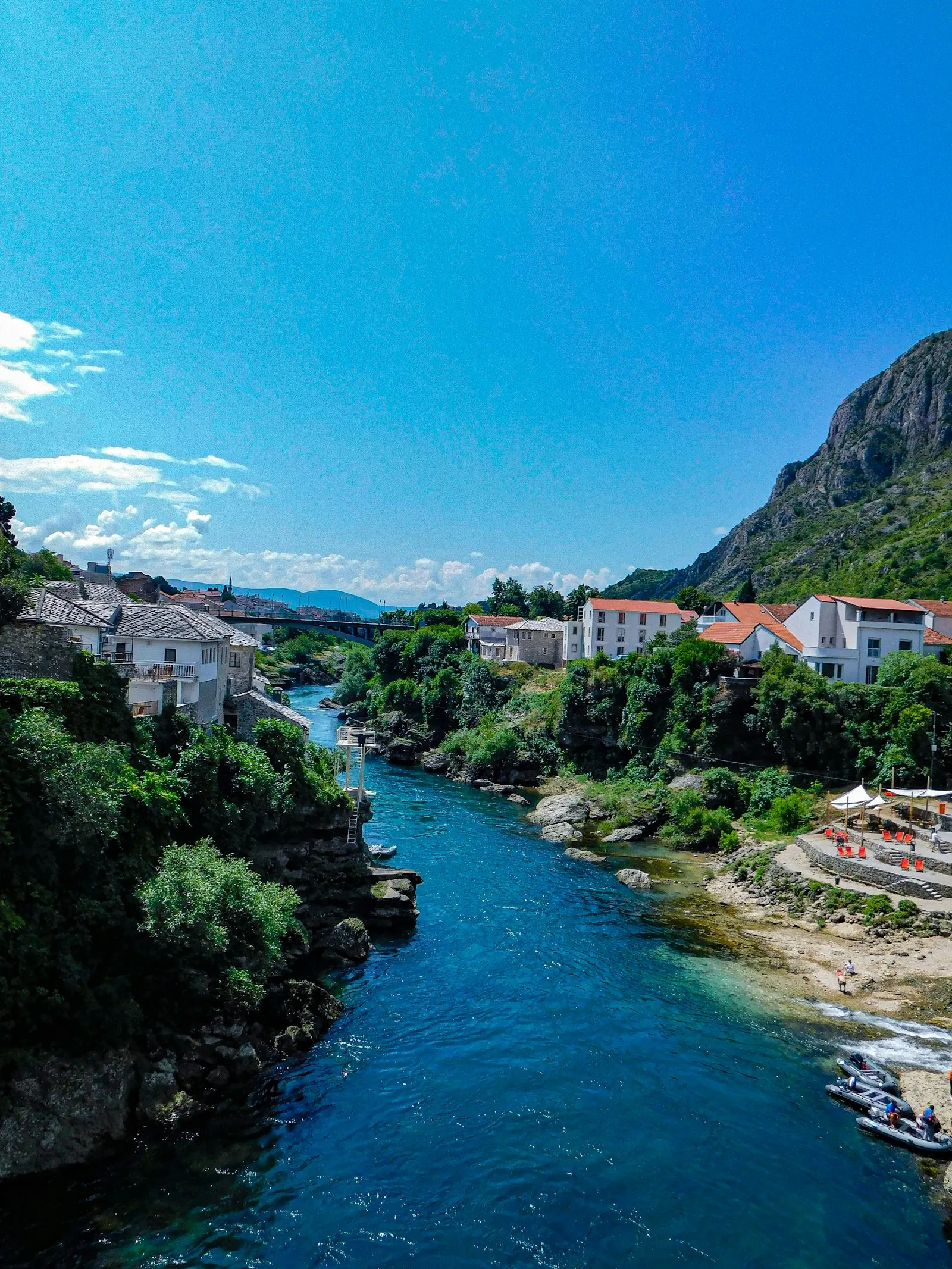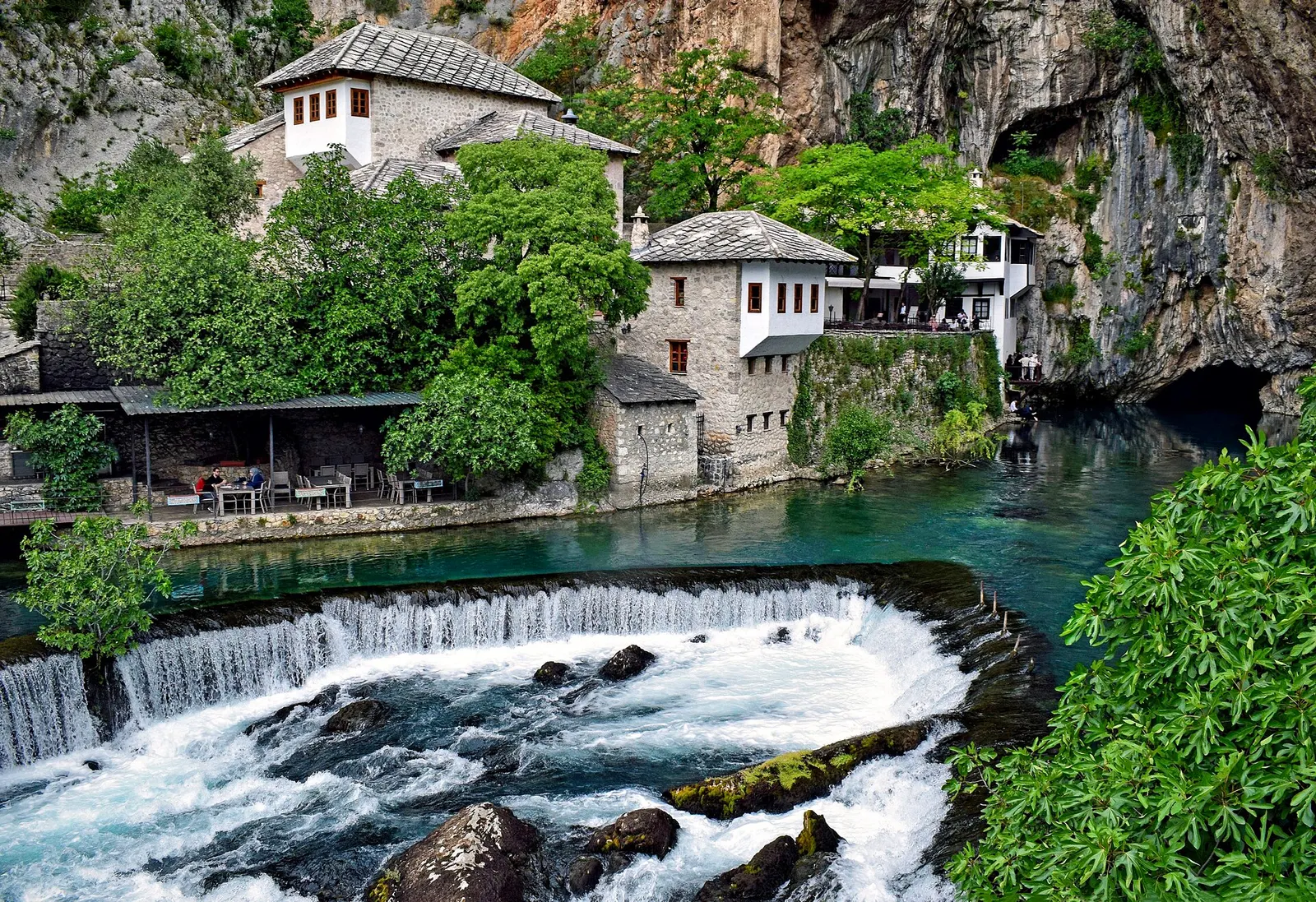
The Buna emerges from a large cave beneath the rock face as one of the most powerful karst springs in Europe, its cold, clear water rushing out into a turquoise pool. The tekke was most likely established soon after the Ottomans took control of Herzegovina, around 1520 at the latest, as a place of prayer and contemplation for Sufi dervishes. The present guesthouse building predates 1664 and was reconstructed in 1851, and the complex also includes a small türbe, or mausoleum.
Inside, visitors can see the simple wooden rooms, carpeted prayer spaces and latticed windows looking straight onto the water. Modest clothing is expected, and headscarves are usually provided for women. Outside, riverside cafés serve fresh trout and Bosnian coffee, and in summer small boats take visitors to the mouth of the cave. Above the village rise the ruins of Blagaj Fort, the medieval seat of Herzegovina’s rulers.
Easily combined with a day in Mostar, Blagaj is one of the most peaceful and photogenic places in Bosnia and Herzegovina.